


Negative affect heightens opiate withdrawal-induced hyperalgesia in heroin dependent individuals
- PMID: 21745048
- PMCID: PMC3209757
- DOI: 10.1080/10550887.2011.581985
Negative affect heightens opiate withdrawal-induced hyperalgesia in heroin dependent individuals
Abstract
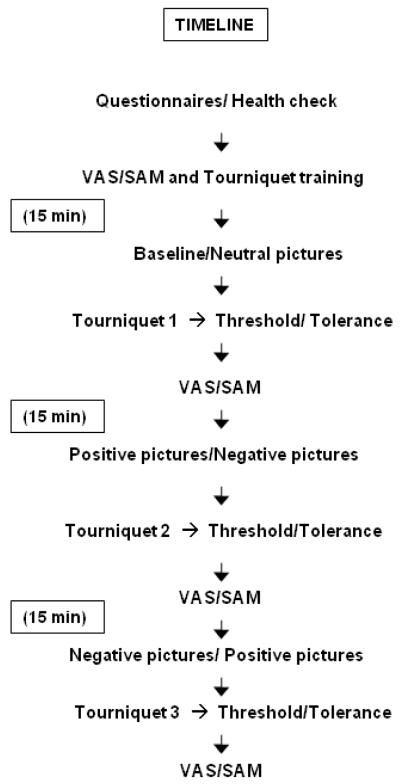
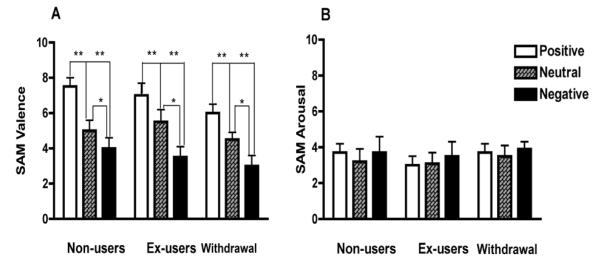
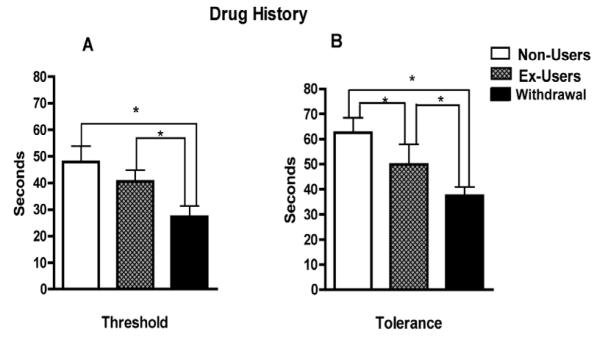
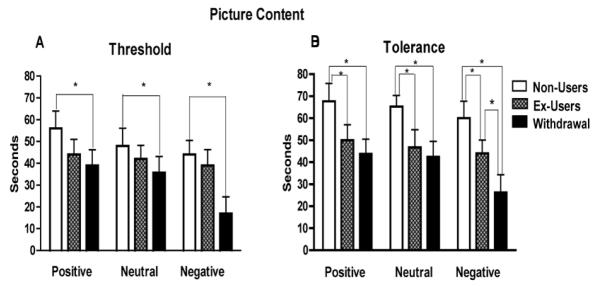
This study examined the effect of emotion on opiate withdrawal induced hyperalgesia to determine whether emotional states modulate the magnitude of hyperalgesia. One hundred Hispanic men were recruited into one of three groups: heroin withdrawal, long-term heroin abstinence, and control. Participants were presented with pictures to induce neutral, positive, and negative emotional states. Affective valence, arousal, pain threshold, and tolerance to ischemic pain were measured. When pain threshold and tolerance were compared, the withdrawal group displayed significant heightened pain sensitivity when negative affect was induced. The authors also found that former heroin addicts showed heightened pain sensitivity following months of abstinence.
Figures
References
-
- Merskey Editorial The need of a taxonomy. Pain. 1979;6:247–252.
-
- de Wied M, Verbaten MN. Affective pictures processing, attention, and pain tolerance. Pain. 2001;90:163–172. - PubMed
-
- Gelkopf M, Kreitler S. Is humor only fun, and alternative cure or magic? The cognitive therapeutic potential of humor. J Cognit Psychother. 1996;10:235–254.
-
- Meagher MW, Arnau RC, Rhudy JL. Pain and emotion: effects of affective picture modulation. Psychosom Med. 2001;63:79–90. - PubMed
Publication types
MeSH terms
Grants and funding
LinkOut - more resources
Full Text Sources
Medical