


Androgen receptor and its splice variants in prostate cancer
- PMID: 21748469
- PMCID: PMC3729216
- DOI: 10.1007/s00018-011-0766-7
Androgen receptor and its splice variants in prostate cancer
Abstract
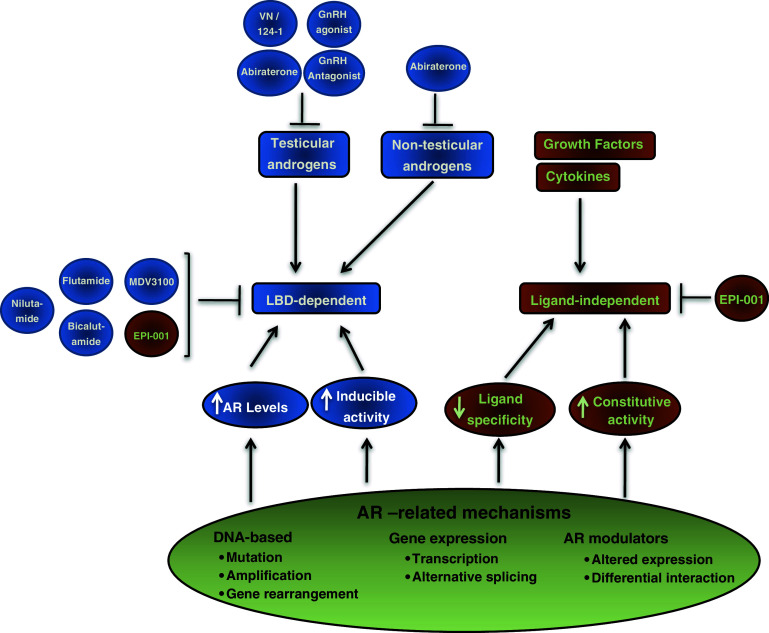
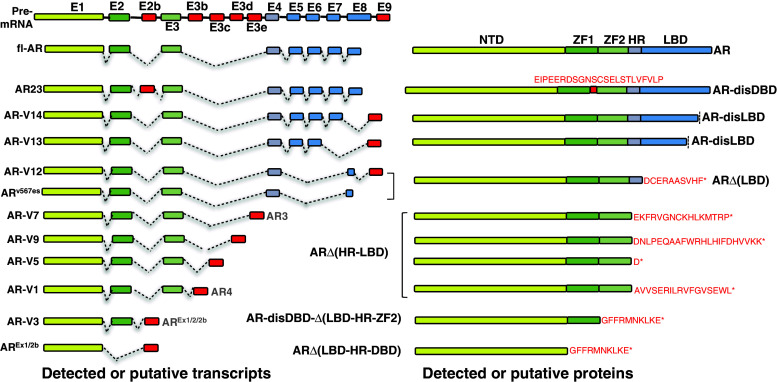
Androgen receptor (AR) is a transcription factor that becomes active upon binding to androgens via its ligand-binding domain (LBD) or in response to signaling cascades initiated by growth factors and cytokines. The activity of AR requires regions within the N-terminal domain (NTD) in a manner that is distinct from the activation of related steroid hormone receptors. Unequivocal evidence has been amassed to consider that the AR axis is the most critical pathway for the progression of prostate cancer. Qualitatively distinct insights into AR pathobiology have been garnered including that AR-regulated gene expression is stage-specifically modulated during disease progression and that the ligand requirement for AR activity could be rendered dispensable because of the expression of constitutively active AR splice variants that are devoid of LBD. The recent appreciation of the clinical challenge that stems from non-gonadal androgens that are not inhibited by traditional hormonal therapies has been tangibly translated into the development of more potent drugs that can potentially lead towards achieving an androgen-free environment. The pre-clinical evidence that proves that AR NTD is a druggable target also forecasts a further paradigm shift in the management of advanced prostate cancer. These advancements together with the identification of more robust AR antagonists and their promising clinical outcome have renewed the hope that targeting the AR pathway remains a sound strategy in the clinical management of prostate cancer. Here, we address these developments with a greater emphasis on the rapidly growing literature on AR splice variants.
Figures
References
Publication types
MeSH terms
Substances
Grants and funding
LinkOut - more resources
Full Text Sources
Other Literature Sources
Medical
Research Materials
