


New insights into the mechanism of fertilization in nematodes
- PMID: 21749902
- PMCID: PMC3273857
- DOI: 10.1016/B978-0-12-386039-2.00006-7
New insights into the mechanism of fertilization in nematodes
Abstract
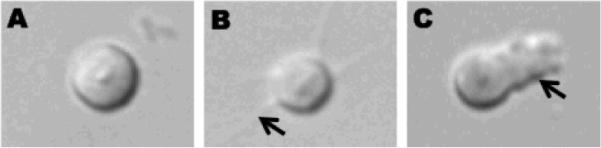
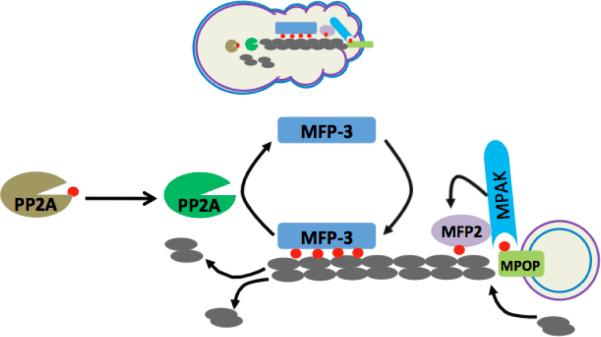
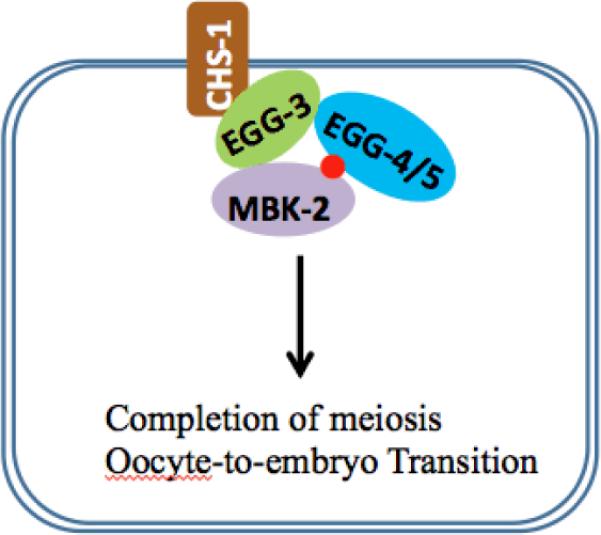
Fertilization results from the fusion of male and female gametes in all sexually reproducing organisms. Much of nematode fertility work was focused on Caenorhabditis elegans and Ascaris suum. The C. elegans hermaphrodite produces a limited number of sperm initially and then commits to the exclusive production of oocytes. The postmeiotic differentiation called spermiogenesis converts sessile spermatids into motile spermatozoa. The motility of spermatozoa depends on dynamic assembly and disassembly of a major sperm protein-based cytoskeleton uniquely found in nematodes. Both self-derived and male-derived spermatozoa are stored in spermatheca, the site of fertilization in hermaphrodites. The oocyte is arrested in meiotic prophase I until a sperm-derived signal relieves the inhibition allowing the meiotic maturation to occur. Oocyte undergoes meiotic maturation, enters into spermatheca, gets fertilized, completes meiosis, and exits into uterus as a zygote. This review focuses on our current understanding of the events around fertilization in nematodes.
Copyright © 2011 Elsevier Inc. All rights reserved.
Figures
References
-
- Abbas M, Cain GD. In vitro activation and behavior of the ameboid sperm of Ascaris suum (Nematoda) Cell Tissue Res. 1979;200:273–84. - PubMed
-
- Baker AM, Roberts TM, Stewart M. 2.6 A resolution crystal structure of helices of the motile major sperm protein (MSP) of Caenorhabditis elegans. J Mol Biol. 2002;319:491–9. - PubMed
-
- Brattig NW, Schwohl A, Rickert R, Buttner DW. The filarial parasite Onchocerca volvulus generates the lipid mediator prostaglandin E(2) Microbes Infect. 2006;8:873–9. - PubMed
Publication types
MeSH terms
Grants and funding
LinkOut - more resources
Full Text Sources
