The handling of missing data in molecular epidemiology studies
- PMID: 21750174
- PMCID: PMC5508724
- DOI: 10.1158/1055-9965.EPI-10-1311
The handling of missing data in molecular epidemiology studies
Abstract
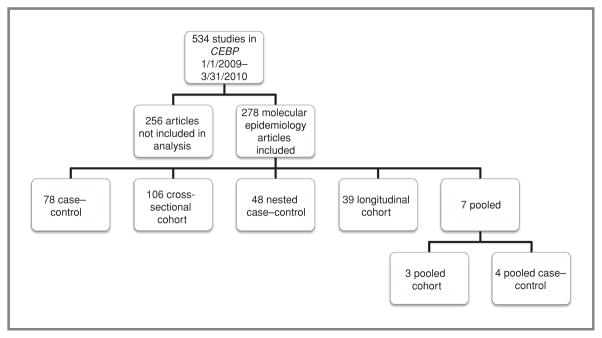
Molecular epidemiology studies face a missing data problem, as biospecimen or imaging data are often collected on only a proportion of subjects eligible for study. We investigated all molecular epidemiology studies published as Research Articles, Short Communications, or Null Results in Brief in Cancer Epidemiology, Biomarkers & Prevention from January 1, 2009, to March 31, 2010, to characterize the extent that missing data were present and to elucidate how the issue was addressed. Of 278 molecular epidemiology studies assessed, most (95%) had missing data on a key variable (66%) and/or used availability of data (often, but not always the biomarker data) as inclusion criterion for study entry (45%). Despite this, only 10% compared subjects included in the analysis with those excluded from the analysis and 88% with missing data conducted a complete-case analysis, a method known to yield biased and inefficient estimates when the data are not missing completely at random. Our findings provide evidence that missing data methods are underutilized in molecular epidemiology studies, which may deleteriously affect the interpretation of results. We provide practical guidelines for the analysis and interpretation of molecular epidemiology studies with missing data.
©2011 AACR.
Conflict of interest statement
No potential conflicts of interest were disclosed.
Figures

Comment in
-
Incomplete data: what you don't know might hurt you.Cancer Epidemiol Biomarkers Prev. 2011 Aug;20(8):1567-70. doi: 10.1158/1055-9965.EPI-11-0505. Epub 2011 Jul 12. Cancer Epidemiol Biomarkers Prev. 2011. PMID: 21750173 Free PMC article.
References
-
- Greenland S, Finkle WD. A critical look at methods for handling missing covariates in epidemiologic regression analyses. Am J Epidemiol. 1995;142:1255–64. - PubMed
-
- Rubin DB. Multiple imputation after 18+ years. J Am Stat Assoc. 1996;91:473–89.
-
- Little R, Rubin DB. Statistical analysis with missing data. New York: Wiley-Interscience; 1987.
Publication types
MeSH terms
Grants and funding
LinkOut - more resources
Full Text Sources