


Epoetin alpha decreases the number of erythrocyte transfusions in patients with acute lymphoblastic leukemia, lymphoblastic lymphoma, and Burkitt leukemia/lymphoma: results of a randomized clinical trial
- PMID: 21751205
- PMCID: PMC3919032
- DOI: 10.1002/cncr.26341
Epoetin alpha decreases the number of erythrocyte transfusions in patients with acute lymphoblastic leukemia, lymphoblastic lymphoma, and Burkitt leukemia/lymphoma: results of a randomized clinical trial
Abstract
Background: Anemia is an expected consequence of intensive chemotherapy regimens administered to patients with acute leukemia. This study was designed to determine whether epoetin alpha would decrease the number of transfusion events and units of packed erythrocytes (PRBCs) transfused, and the secondary objective was to study the effects of epoetin alpha on quality of life (QOL) and complete remission (CR) rates.
Methods: Patients with acute lymphoblastic leukemia (ALL), lymphoblastic lymphoma (LL), or Burkitt lymphoma (BL) who were receiving frontline myelosuppressive chemotherapy were randomized to receive epoetin alpha or no epoetin during the first 6 cycles of their planned chemotherapy. QOL was assessed by using the Edmonton Symptom Assessment Scale (ESAS) and the Functional Assessment of Cancer Therapy (FACT)-Anemia questionnaires.
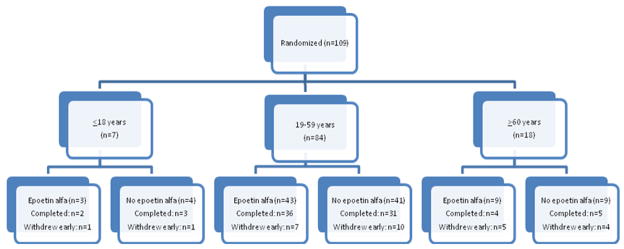
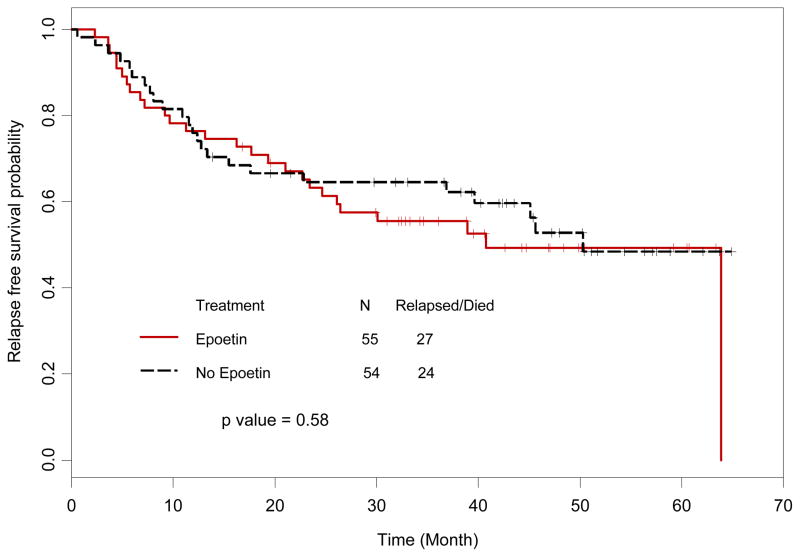
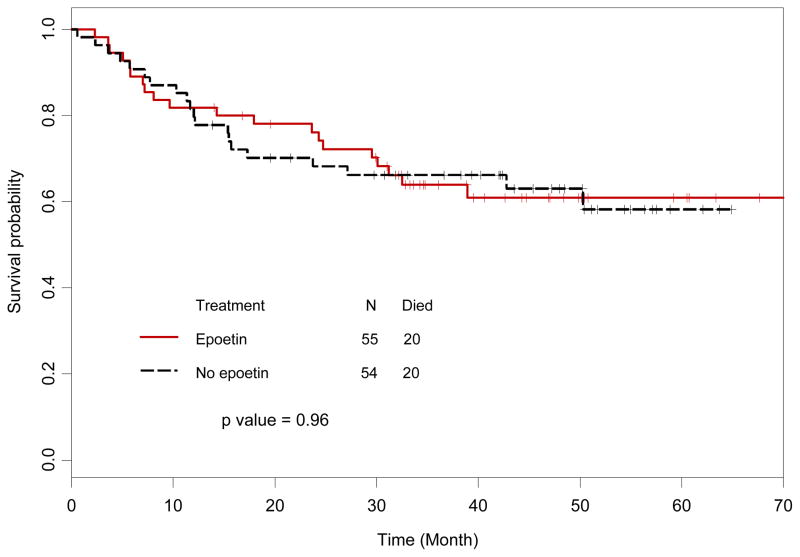
Results: Fifty-five patients were randomized to receive epoetin alpha, and 54 patients received no epoetin. Transfusion data were available for 79 of 81 evaluable patients (98%) who completed the treatment/observation period. The trial was stopped early because of poor accrual before the target of 123 evaluable patients was met. A mean of 10.6 units of PRBCs over 5 months were administered to those who received epoetin alpha compared with 13 units for those who did not receive epoetin (P = .04). There was no significant difference in QOL as assessed by the FACT-Anemia or ESAS instruments. The CR rate and the 3-year CR duration were not affected adversely by use of epoetin alpha.
Conclusions: Epoetin alpha decreased the number of PRBC transfusions and did not appear to have a negative impact on remission duration. No difference in QOL was observed.
Copyright © 2011 American Cancer Society.
Figures
References
Publication types
MeSH terms
Substances
Grants and funding
LinkOut - more resources
Full Text Sources
Medical
Miscellaneous
