


Acupuncture in the inpatient acute care setting: a pragmatic, randomized control trial
- PMID: 21754946
- PMCID: PMC3132464
- DOI: 10.1155/2012/309762
Acupuncture in the inpatient acute care setting: a pragmatic, randomized control trial
Abstract
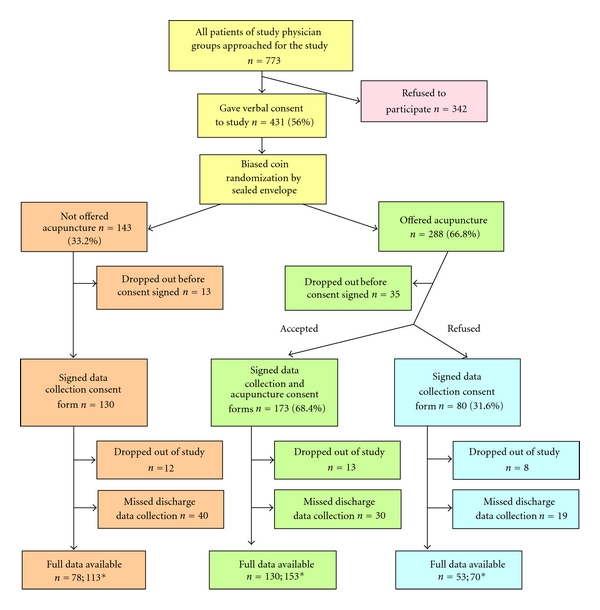
Purpose. To evaluate the acceptance and effectiveness of acupuncture in a hospital setting. Methods. This 18-month pragmatic randomized controlled trial used a two-tiered consent process for all patients admitted to the acute care unit by study physician groups. The primary study comparison was between those randomized (using biased-coin randomization after initial consent) to be offered acupuncture or not. The primary outcome was length of stay (LOS). Other measures include costs, self-reported anxiety, depression, health status, and patient satisfaction. Results. Of the 383 patients consented to the study, 253 were randomized to be offered acupuncture, and 130 were not offered acupuncture. Of those offered acupuncture, 173 (69%) accepted and received daily acupuncture. On average, patients offered acupuncture had longer LOSs (4.9 versus 4.1 days) than those not offered acupuncture (P = .047). Adjustment for diagnosis and severity mix reduced this difference and its significance (P = .108). No other significant differences in outcomes were found. Patients who were more anxious (P = .000) or depressed (P = .017) at admission tended to more often accept acupuncture when offered. Conclusion. Acupuncture is accepted by a majority of hospitalized acute care patients. However, it did not reduce LOS in this already short-stay population.
Figures
References
-
- Hospitalizations in the US. 2002. http://www.ahrq.gov/data/hcup/factbk6/factbk6a.htm.
-
- Sisko A, Truffer C, Smith S, et al. Health spending projections through 2018: recession effects add uncertainty to the outlook. Health Affairs. 2009;28(2):w346–w357. - PubMed
-
- Traditional Chinese Medicine: An Introduction. 2010. http://nccam.nih.gov/health/whatiscam/chinesemed.htm.
-
- Zou DCW, Katsuhiko I, Rigda R, Tippett M, Holloway R. Inhibition of transient lower esophageal sphincter relaxations by electrical acupoint stimulation. American Journal of Physiology—Gastrointestinal and Liver Physiology. 2005;289(2):G197–G201. - PubMed
-
- White A, Foster NE, Cummings M, Barlas P. Acupuncture treatment for chronic knee pain: a systematic review. Rheumatology. 2007;46(3):384–390. - PubMed
LinkOut - more resources
Full Text Sources
