


Metabolic, endocrine, and immune consequences of sleep deprivation
- PMID: 21754974
- PMCID: PMC3132857
- DOI: 10.2174/1874306401105010031
Metabolic, endocrine, and immune consequences of sleep deprivation
Abstract
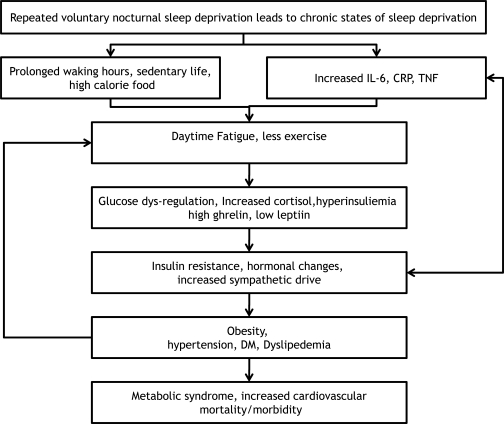
Over the last three to four decades, it has been observed that the average total hours of sleep have decreased to less than seven hours per person per night. Concomitantly, global figures relating to obesity and diabetes mellitus have increased in an alarming fashion in adults and children, and it has been hypothesized that neuro-hormonal changes accompanying this behavioral sleep deprivation may lead to insulin resistance and, subsequently, to diabetes mellitus. Sleep deprivation has been associated with multiple physiological changes, including increased cortisol and ghrelin levels, decreased leptin levels and impaired glucose metabolism. Experimental studies have also shown an increase in inflammatory and pro-inflammatory markers, which are indicators of body stress, under sleep deprivation. This review elaborates further on this hypothesis, exploring the molecular basis for the link between both entities and the underlying pathophysiology that results in insulin resistance and diabetes mellitus. We review the results of experimental and epidemiological studies, specifically examining the relationship between sleep duration and the immune and endocrine systems.
Keywords: Sleep deprivation; diabetes mellitus; ghrelin; glucose intolerance; insulin resistance; leptin.; obesity.
Figures
References
-
- Tononi G, Cirelli C. Sleep function and synaptic homeostasis. Sleep Med Rev. 2006;10(1):49–62. - PubMed
-
- Dinges DF. The state of sleep deprivation: from functional biology to functional consequences. Sleep Med Rev. 2006;10(5):303–5. - PubMed
-
- Peirano PD, Algarin CR. Sleep in brain development. Biol Res. 2007;40(4):471–8. - PubMed
-
- Durmer JS, Dinges DF. Neurocognitive consequences of sleep deprivation. Semin Neurol. 2005;25(1):117–29. - PubMed
LinkOut - more resources
Full Text Sources