


Endoplasmic reticulum stress-related inflammation and cardiovascular diseases
- PMID: 21755026
- PMCID: PMC3132612
- DOI: 10.4061/2011/259462
Endoplasmic reticulum stress-related inflammation and cardiovascular diseases
Abstract
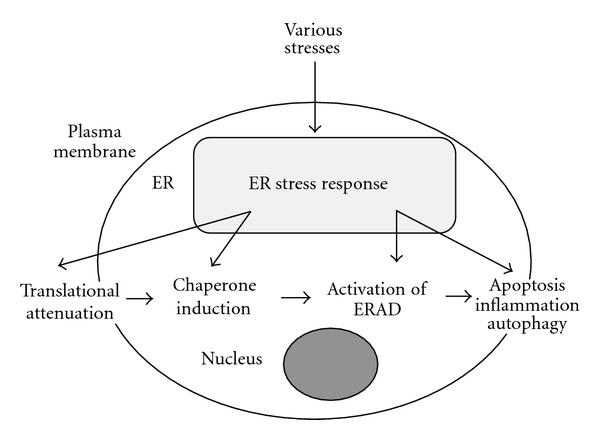
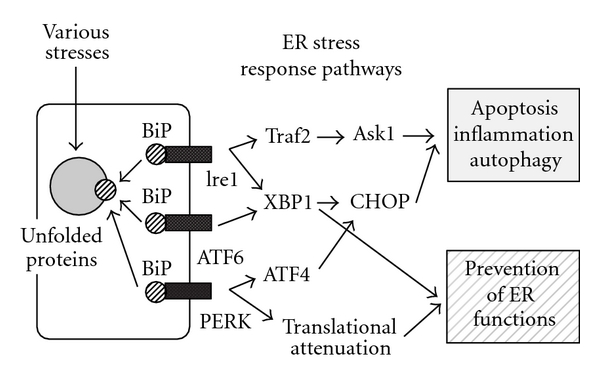
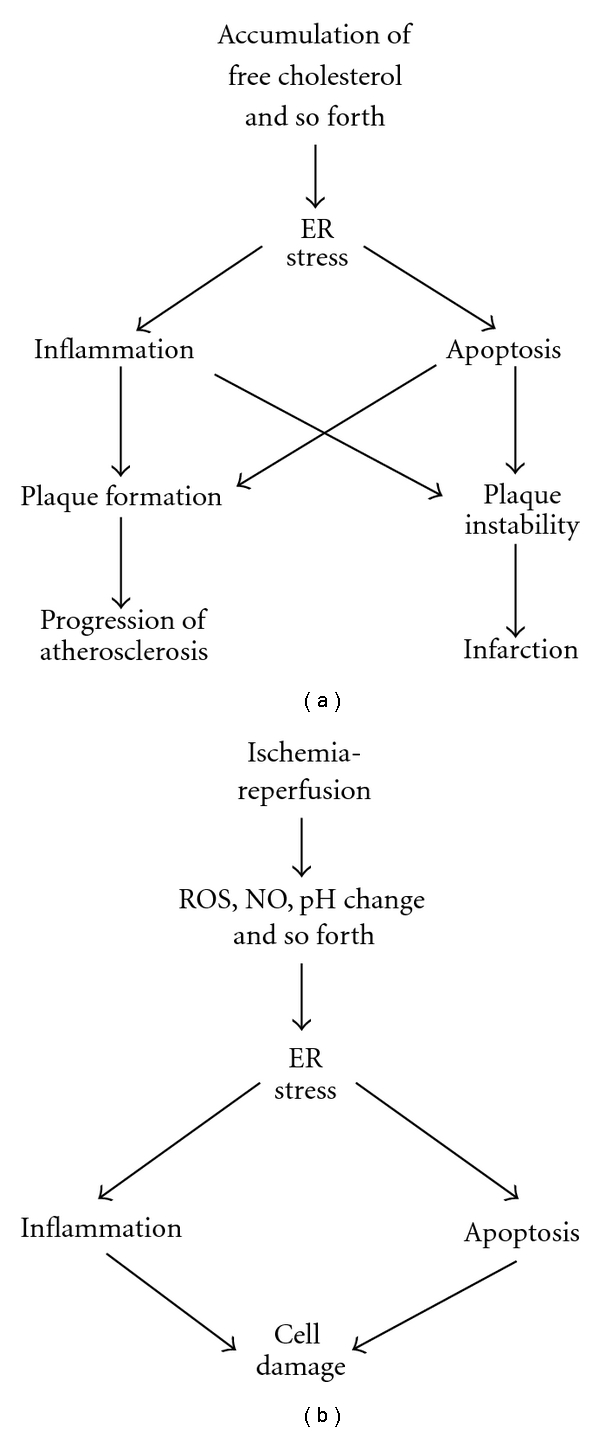
The endoplasmic reticulum (ER) is the site of synthesis and maturation of proteins designed for secretion or for localization on the cell membrane. Various types of stress from both inside and outside cells disturb ER function, thus causing unfolded or misfolded proteins to accumulate in the ER. To improve and maintain the ER functions against such stresses, the ER stress response pathway is activated. However, when the stress is prolonged or severe, apoptosis pathways are activated to remove damaged cells. It was recently reported that the ER stress pathway is also involved in the inflammatory response, whereby inflammation induces ER stress, and ER stress induces an inflammatory response. Therefore, the ER stress response pathway is involved in various diseases, including cardiovascular diseases such as atherosclerosis and ischemic diseases, in various ways. The ER stress pathway may represent a novel target for the treatment of these diseases.
Figures
References
-
- Schröder M, Kaufman RJ. The mammalian unfolded protein response. Annual Review of Biochemistry. 2005;74:739–789. - PubMed
-
- Gotoh T, Mori M. Nitric oxide and endoplasmic reticulum stress. Arteriosclerosis, Thrombosis & Vascular Biology. 2006;26(7):1439–1446. - PubMed
-
- Yoshida H. ER stress and diseases. FEBS Journal. 2007;274(3):630–658. - PubMed
-
- Li Y, Schwabe RF, DeVries-Seimon T, et al. Free cholesterol-loaded macrophages are an abundant source of tumor necrosis factor-α and interleukin-6: model of NF-κB- and map kinase-dependent inflammation in advanced atherosclerosis. Journal of Biological Chemistry. 2005;280(23):21763–21772. - PubMed
LinkOut - more resources
Full Text Sources
Other Literature Sources
