


The anatomy of spatial neglect
- PMID: 21756924
- PMCID: PMC3348466
- DOI: 10.1016/j.neuropsychologia.2011.06.027
The anatomy of spatial neglect
Abstract
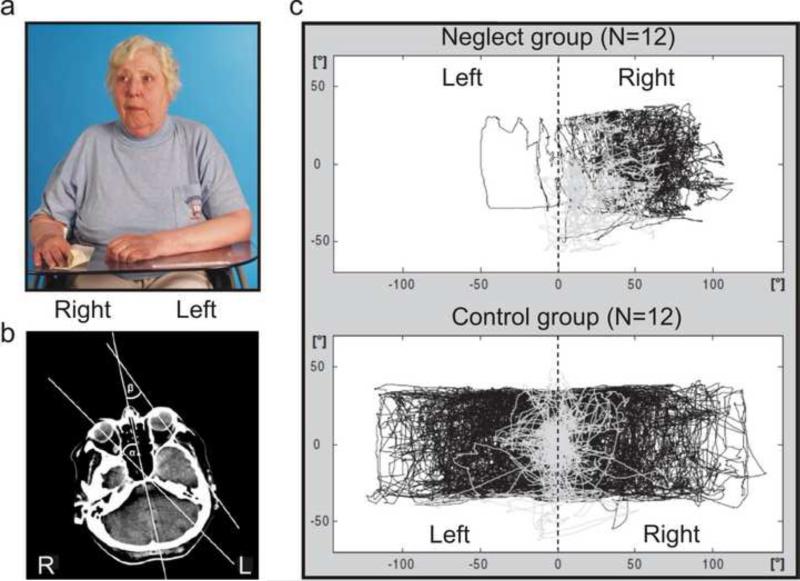
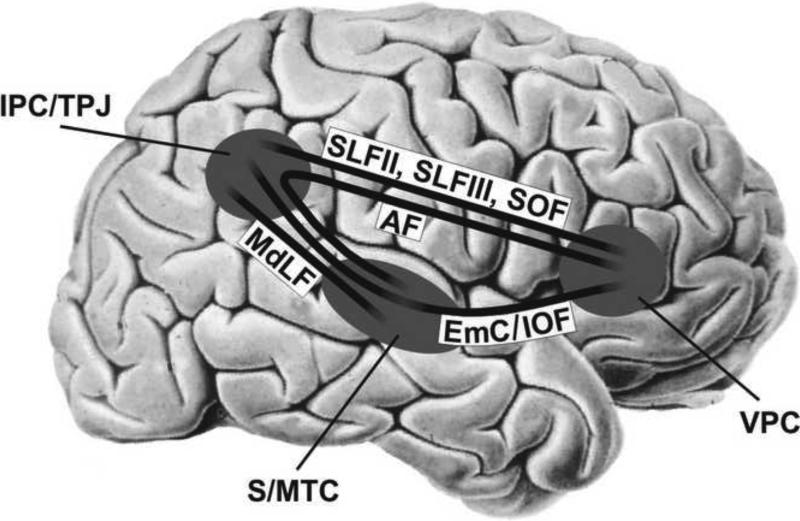
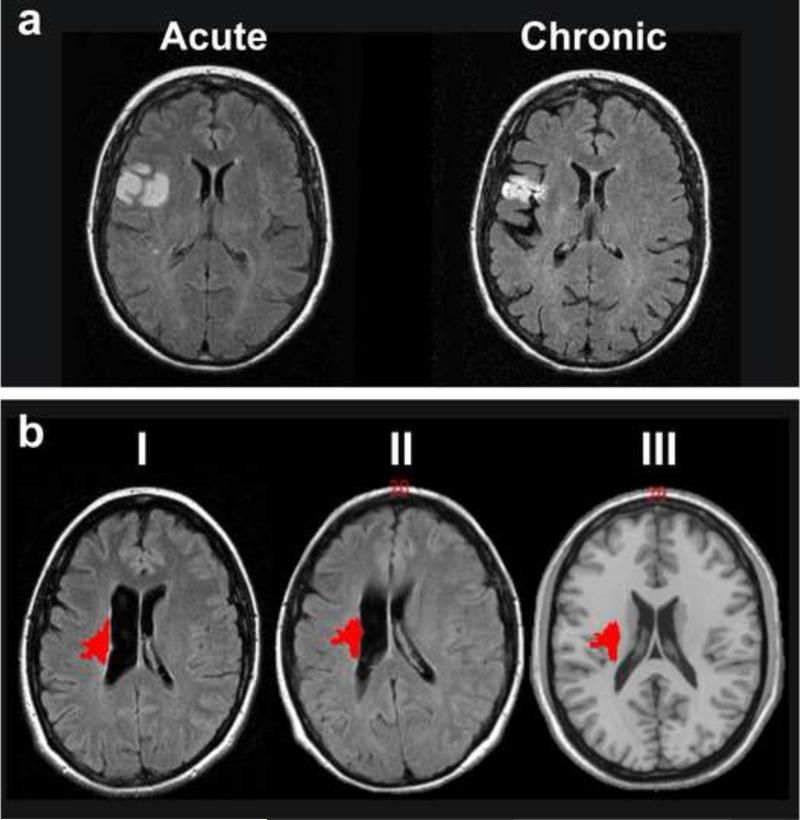
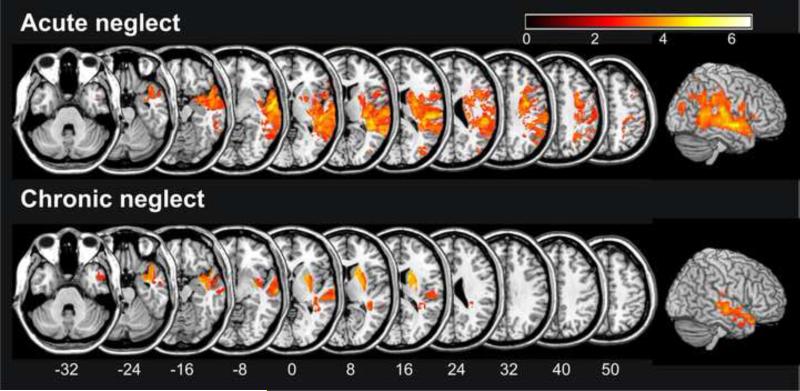
Spatial neglect is often perceived as a "heterogeneous collection of symptoms" with controversial anatomical correlates. However, a clear framework for core and satellite symptoms exists. Here we review the literature when viewed from the perspective of these different syndromes, and find clear pattern of anatomical injury. Specifically, the combined symptoms of biased gaze direction and search - with no awareness of these symptoms-is seen following structural damage to (particularly right hemisphere) perisylvian regions. Object centered deficits such as biased line bisection are due to more posterior (and possibly inferior) injury. Finally, extinction is associated with damage to the temporo-parietal junction. Further, we describe key choices that must be made to parse the spatial and attentional syndromes that result from right hemisphere injury, including the investigation of both acute and chronic injury as well as the use of functional and structural modalities.
Copyright © 2011 Elsevier Ltd. All rights reserved.
Figures
References
-
- Becker E, Karnath H-O. Incidence of visual extinction after left versus right hemisphere stroke. Stroke. 2007;38:3172–3174. - PubMed
-
- Becker E, Karnath H-O. Neuroimaging of eye position reveals spatial neglect. Brain. 2010;133:909–914. - PubMed
-
- Behrmann M, Watt S, Black SE, Barton JJ. Impaired visual search in patients with unilateral neglect: an oculographic analysis. Neuropsychologia. 1997;35:1445–1458. - PubMed
-
- Bense S, Stephan T, Yousry TA, Brandt T, Dieterich M. Multisensory cortical signal increases and decreases during vestibular galvanic stimulation (fMRI). Journal of Neurophysiology. 2001;85:886–899. - PubMed
Publication types
MeSH terms
Grants and funding
LinkOut - more resources
Full Text Sources
