Review
. 2011;20(5):397-415.
doi: 10.1159/000327655. Epub 2011 Jul 11.

Optical imaging in cancer research: basic principles, tumor detection, and therapeutic monitoring

Affiliations
Review

Optical imaging in cancer research: basic principles, tumor detection, and therapeutic monitoring

Metasebya Solomon et al. Med Princ Pract. 2011.

Abstract

Accurate and rapid detection of diseases is of great importance for assessing the molecular basis of pathogenesis, preventing the onset of complications, and implementing a tailored therapeutic regimen. The ability of optical imaging to transcend wide spatial imaging scales ranging from cells to organ systems has rejuvenated interest in using this technology for medical imaging. Moreover, optical imaging has at its disposal diverse contrast mechanisms for distinguishing normal from pathologic processes and tissues. To accommodate these signaling strategies, an array of imaging techniques has been developed. Importantly, light absorption, and emission methods, as well as hybrid optical imaging approaches are amenable to both small animal and human studies. Typically, complex methods are needed to extract quantitative data from deep tissues. This review focuses on the development of optical imaging platforms, image processing techniques, and molecular probes, as well as their applications in cancer diagnosis, staging, and monitoring therapeutic response.


Figures

Fig. 1
Fig. 1
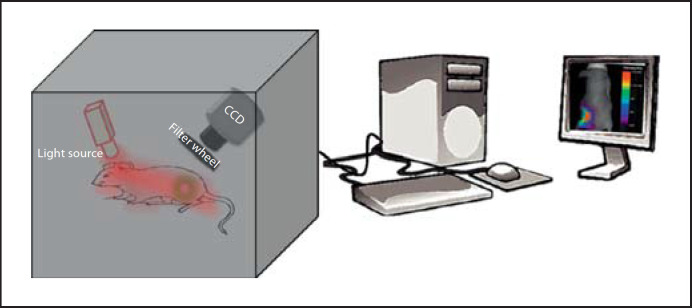
Schematics of a typical planar reflectance imaging. CCD = Charge-coupled device.
Fig. 2
Fig. 2
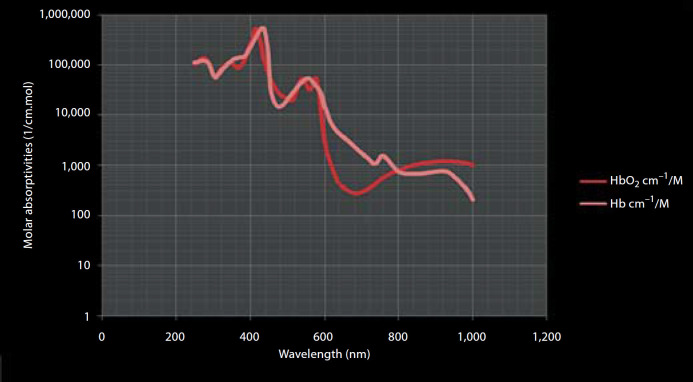
Absorption spectra for oxygenated and deoxygenated blood. HbO2 = Oxyhemoglobin.
Fig. 3
Fig. 3
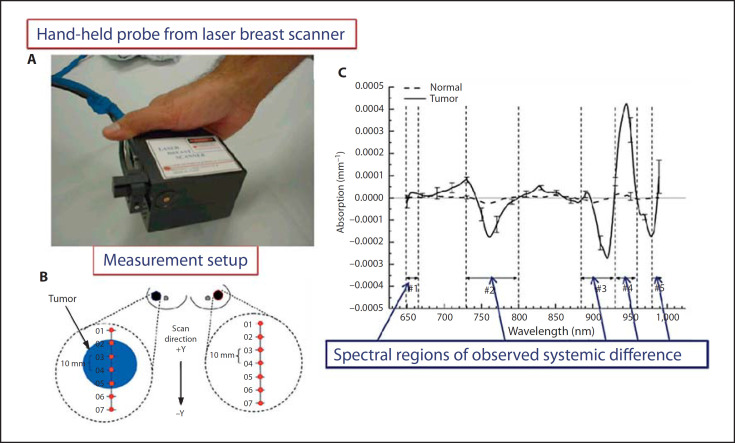
Optical spectroscopy for primary tumor imaging. A Hand-held probe from laser breast scanner in contact with the breast during data acquisition. B Measurement setup showing the points across line scan. C Graph showing average tumor-specific component-based biochemical and physical property changes such as hemoglobin, oxyhemoglobin, water, and bulk lipid. Reprinted with permission from Kukreti et al. [72].
Fig. 4
Fig. 4
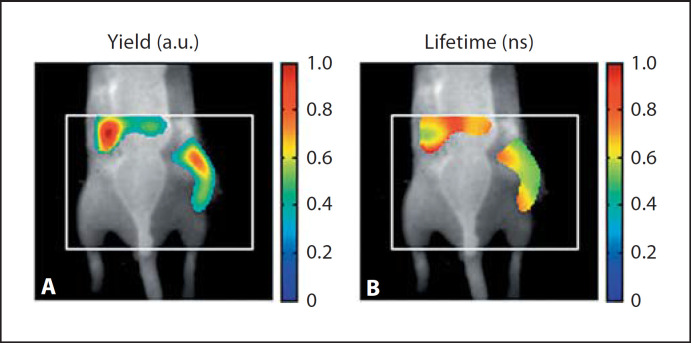
In vivo imaging with fluorescence molecular tomography. A Fluorescence yield for a tumor-bearing mouse, imaged 24 h after injection of a targeted agent (cypate-c [RGDfK]). The subcutaneous tumor locates on the right flank along with accumulation in the liver. B Coregistered fluorescence lifetime image from an equivalent vertical slice of a three-dimensional image. The tumor region lifetime is found to be τ = 0.6 ns. Reprinted with permission from Nothdurft et al. [83].
Fig. 5
Fig. 5
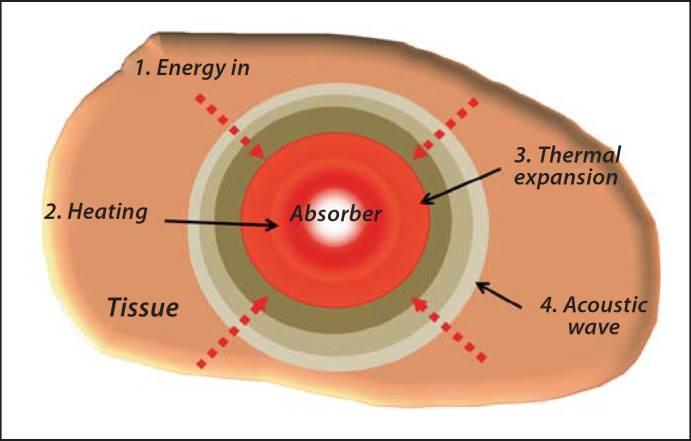
Generation of the acoustic wave for PAI.
Fig. 6
Fig. 6
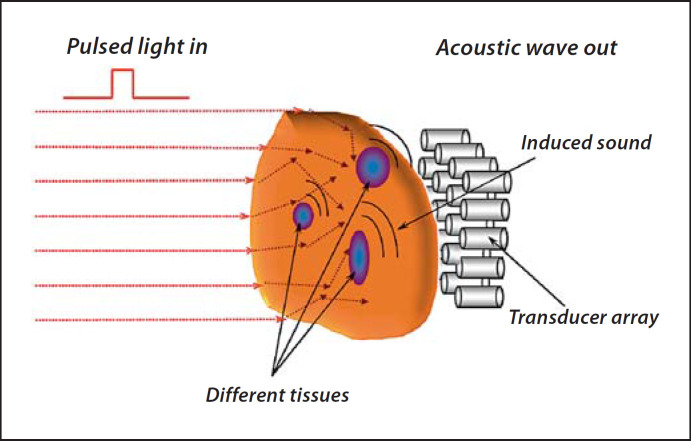
Illustration of the PAI approach.
Fig. 7
Fig. 7
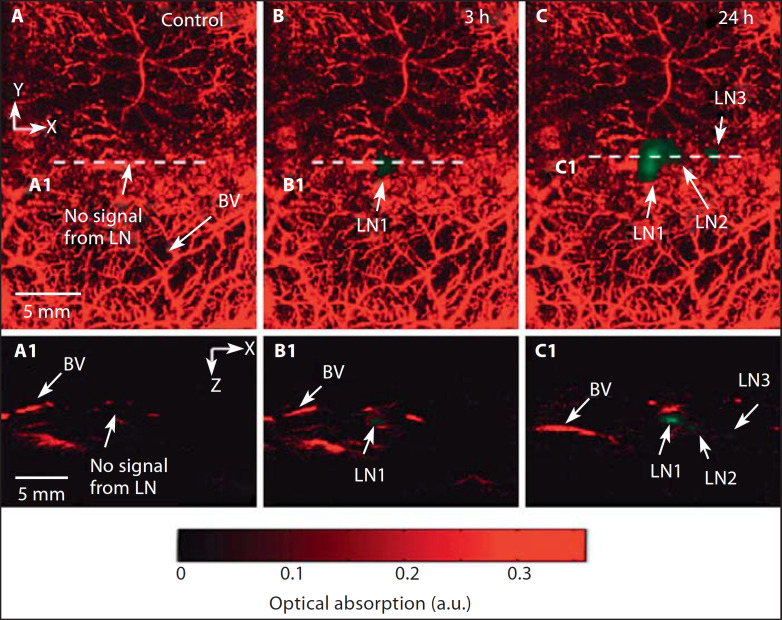
In vivo PAI and ultrasound imaging of fluorescent sentinel lymph node. A Control image acquired before injection of nanoparticles. B Photoacoustic image at 3 h after injection. C Photoacoustic image at 24 h after injection. A1, B1, C1 B-scan images along the cuts A1, B1 and C1, respectively. Reprinted with permission from Akers et al. [100].
Fig. 8
Fig. 8
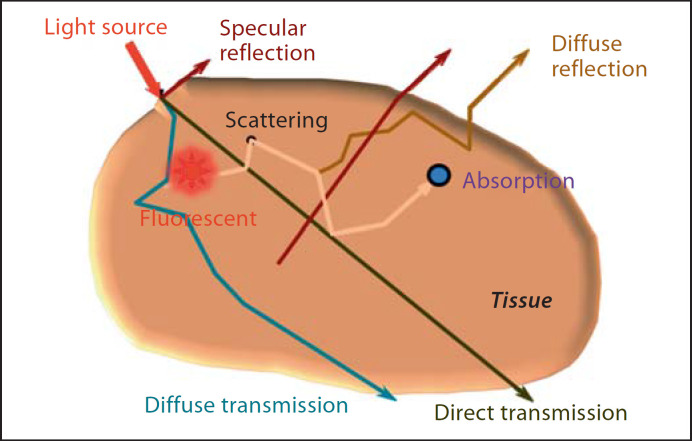
Light propagation in turbid medium such as biological tissue.
Fig. 9
Fig. 9
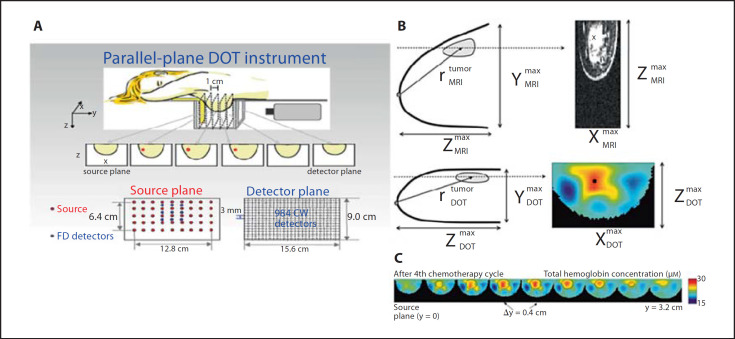
Breast tumor imaging and chemotherapy monitoring. A DOT instrument. B DOT-reconstructed breast image compared to MRI image. C DOT was used for tracking progress of a female patient with breast cancer during neoadjuvant chemotherapy. The reconstructed hemoglobin concentration and tumor volume shows a decrease after each chemotherapy session. Reprinted with permission from Choe et al. [29].
Fig. 10
Fig. 10
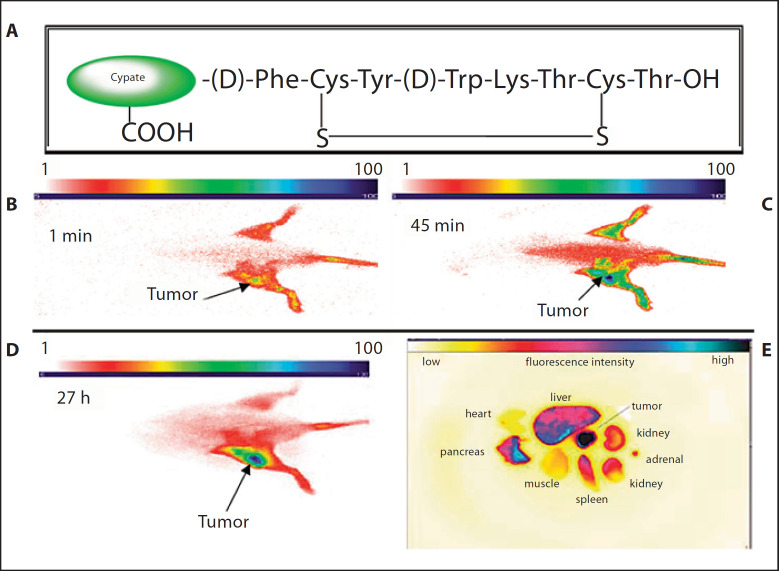
Structure of cypate-octreotate imaging agent (A) and fluorescence images of pancreatic tumor-bearing rat at 1 min (B), 45 min (C) and 27 h (D) after injection of the optical probe. Ex vivo fluorescence image of representative major organs (E) shows fluorescence intensity of excised organs tissue. Modified figure reprinted with permission from Achilefu [12].
Fig. 11
Fig. 11
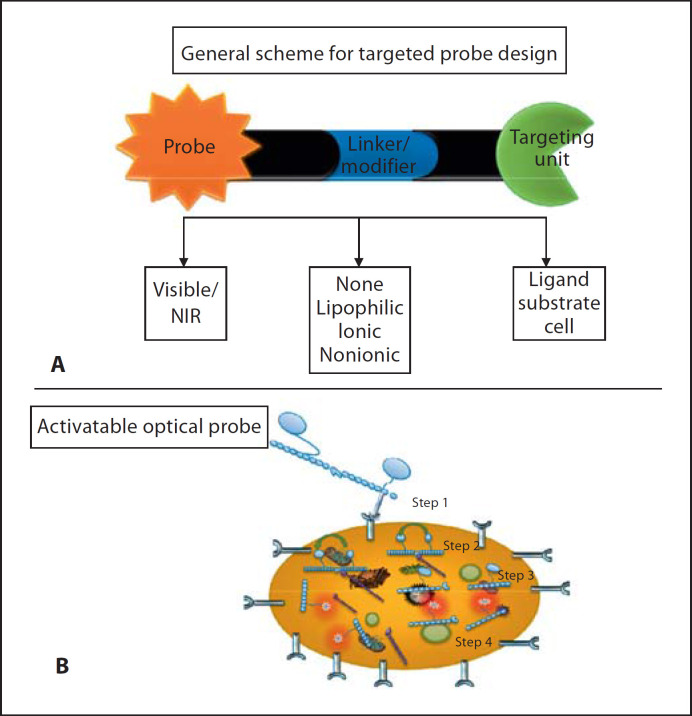
Schematic design of targeting nonactivatable optical probe (A) and process of utilizing targeted activatable FRET probe (B). Step 1: Internalization of protease activatable molecular probe via a membrane receptor. Step 2: Transmission of excitation energy from donor to acceptor dye quenches the fluorescence of donor. Steps 3 and 4: Recovering fluorescence after releasing quencher moiety when probe binds to active site of diagnostic enzymes.

References

    1. Hebden JC, Arridge , SR, Delpy DT. Optical imaging in medicine. I. Experimental techniques. Phys Med Biol. 1997;42:825–840. - PubMed
    1. Sokolov K, Follen M, Richards-Kortum R. Optical spectroscopy for detection of neoplasia. Curr Opin Chem Biol. 2002;6:651–658. - PubMed
    1. Tuchin VV. Tissue optics: light scattering methods and instruments for medical diagnosis. ed 2. Bellingham: SPIE Publications; 2007.
    1. Vo-Dinh T. Biomedical Photonics Handbook. Boca Raton: CRC Press LLC; 2003.
    1. Wang LV. Photoacoustic imaging and spectroscopy. Boca Raton: CRC; 2009.

MeSH terms

Substances