Horizontal alveolar bone loss: A periodontal orphan
- PMID: 21760673
- PMCID: PMC3100862
- DOI: 10.4103/0972-124X.75914
Horizontal alveolar bone loss: A periodontal orphan
Abstract
Background: Attempts to successfully regenerate lost alveolar bone have always been a clinician's dream. Angular defects, at least, have a fairer chance, but the same cannot be said about horizontal bone loss. The purpose of the present study was to evaluate the prevalence of horizontal alveolar bone loss and vertical bone defects in periodontal patients; and later, to correlate it with the treatment modalities available in the literature for horizontal and vertical bone defects.
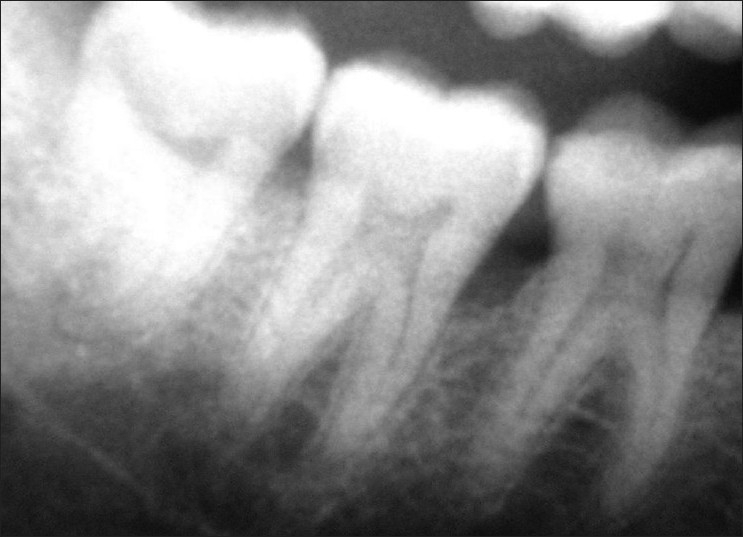
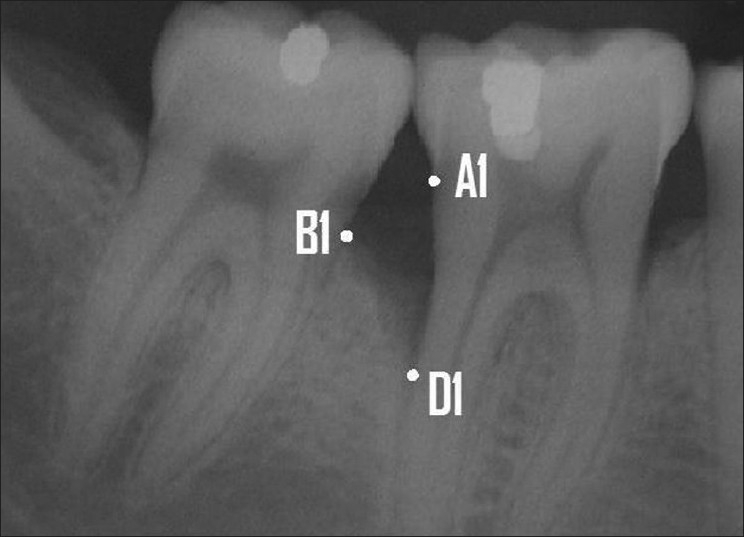
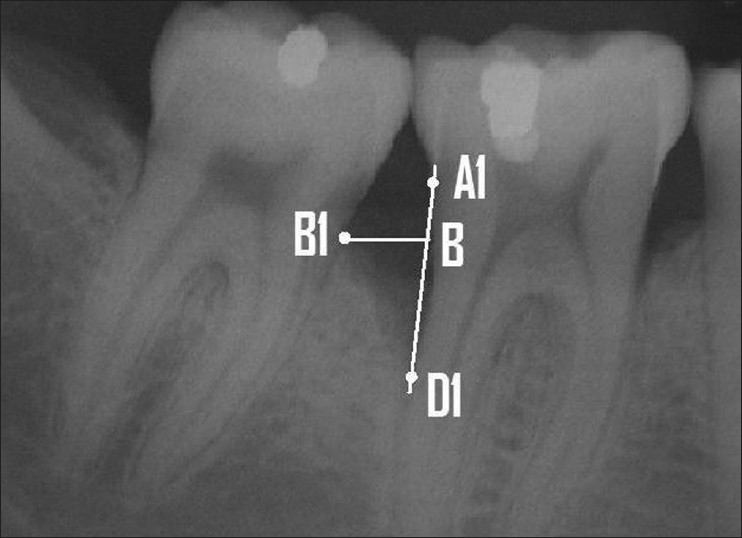
Materials and methods: The study was conducted in two parts. Part I was the radiographic evaluation of 150 orthopantomographs (OPGs) (of patients diagnosed with chronic periodontitis and seeking periodontal care), which were digitized and read using the AutoCAD 2006 software. All the periodontitis-affected teeth were categorized as teeth with vertical defects (if the defect angle was ≤45° and defect depth was ≥3 mm) or as having horizontal bone loss. Part II of the study comprised search of the literature on treatment modalities for horizontal and vertical bone loss in four selected periodontal journals.
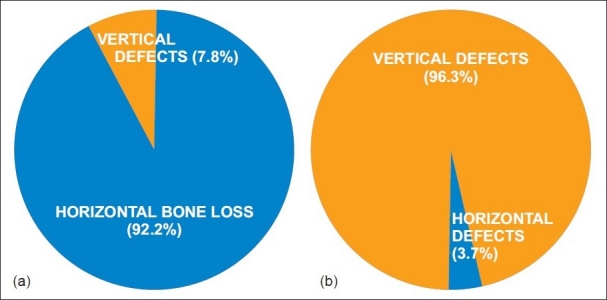
Results: Out of the 150 OPGs studied, 54 (36%) OPGs showed one or more vertical defects. Totally, 3,371 teeth were studied, out of which horizontal bone loss was found in 3,107 (92.2%) teeth, and vertical defects were found only in 264 (7.8%) of the teeth, which was statistically significant (P<.001). Search of the selected journals revealed 477 papers have addressed the treatment modalities for vertical and horizontal types of bone loss specifically. Out of the 477 papers, 461 (96.3%) have addressed vertical bone loss, and 18 (3.7%) have addressed treatment options for horizontal bone loss. Two papers have addressed both types of bone loss and are included in both categories.
Conclusion: Horizontal bone loss is more prevalent than vertical bone loss but has been sidelined by researchers as very few papers have been published on the subject of regenerative treatment modalities for this type of bone loss. This study should be an impetus for greater attention to an otherwise ubiquitous periodontal challenge.
Keywords: Horizontal bone loss; orthopantomographs; vertical / angular defects.
Conflict of interest statement
Figures

References
-
- Kotschy P, Laky M. Reconstruction of supracrestal alveolar bone lost as a result of severe chronic periodontitis: Five – year outcome: Case report. Int J Periodontics Restorative Dent. 2006;26:425–31. - PubMed
-
- Xu Y, Wei W. A Comparative study of systemic subantimicrobial and topical treatment of minocycline in experimental periodontitis of rats. Arch Oral Biol. 2006;51:794–803. - PubMed
-
- Jeffcoat MK, Reddy MS, Moreland LW, Koopman WJ. Effects of nonsteroidal antiinflammatory drugs on bone loss in chronic inflammatory disease. Ann N Y Acad Sci. 1993;696:292–302. - PubMed
-
- Lane N, Armitage GC, Loomer P, Hsieh S, Majumdar S, Wang HY, et al. Bisphosphonate therapy improves the outcome of conventional periodontal treatment: Results of a 12-month, randomized, placebo-controlled study. J Periodontol. 2005;76:1113–22. - PubMed
-
- Jeffcoat MK, Cizza G, Shih WJ, Genco R, Lombardi A. Efficacy of bisphosphonates for the control of alveolar bone loss in periodontitis. J Int Acad Periodontol. 2007;9:70–6. - PubMed