


Prenatal programming of human neurological function
- PMID: 21760821
- PMCID: PMC3133795
- DOI: 10.1155/2011/837596
Prenatal programming of human neurological function
Abstract
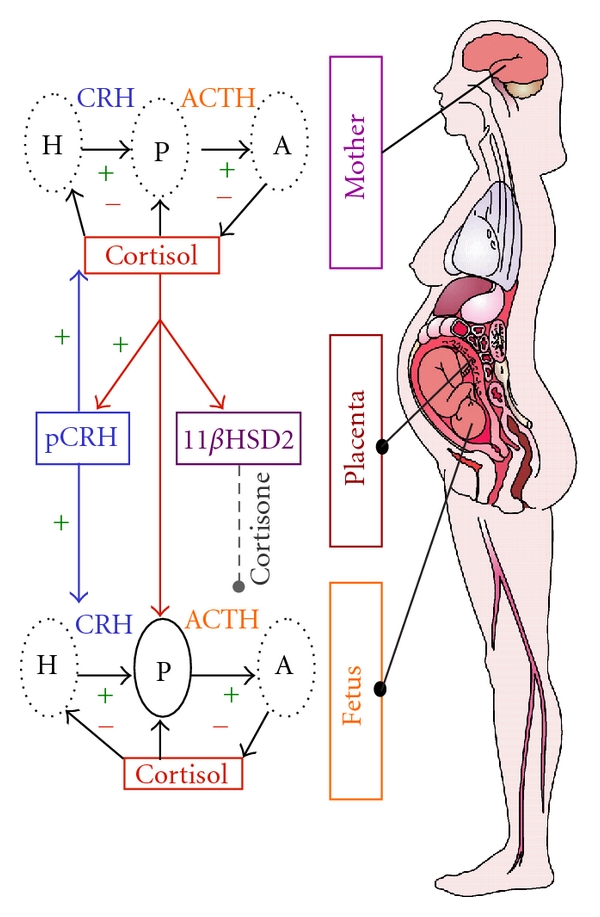
The human placenta expresses the genes for proopiomelanocortin and the major stress hormone, corticotropin-releasing hormone (CRH), profoundly altering the "fight or flight" stress system in mother and fetus. As pregnancy progresses, the levels of these stress hormones, including maternal cortisol, increase dramatically. These endocrine changes are important for fetal maturation, but if the levels are altered (e.g., in response to stress), they influence (program) the fetal nervous system with long-term consequences. The evidence indicates that fetal exposure to elevated levels of stress hormones (i) delays fetal nervous system maturation, (ii) restricts the neuromuscular development and alters the stress response of the neonate, (iii) impairs mental development and increases fearful behavior in the infant, and (iv) may result in diminished gray matter volume in children. The studies reviewed indicate that fetal exposure to stress peptides and hormones exerts profound programming influences on the nervous system and may increase the risk for emotional and cognitive impairment.
Figures

References
-
- Barker DJP. Mothers, Babies and Health in Later Life. 2nd edition. Edinburgh, UK: Churchill Livingston; 1998.
-
- Creasy RK, Resnik R. Maternal-Fetal Medicine: Principles and Practice. Philadelphia, Pa, USA: W. B. Saunders Company; 1994.
-
- Johnston MV. Neurotransmitters and vulnerability of the developing brain. Brain and Development. 1995;17(5):301–306. - PubMed
-
- Sandman CA, Davis EP. Gestational stress influences cognition and behavior. Future Neurology. 2010;5(5):675–690.
-
- Lowry PJ. Corticotropin-releasing factor and its binding protein in human plasma. In: Proceedings of the Ciba Foundation Symposium, vol. 172; 1993; pp. 108–115. - PubMed
Grants and funding
LinkOut - more resources
Full Text Sources
Research Materials
