


Negative pressure wound therapy to prevent seromas and treat surgical incisions after total hip arthroplasty
- PMID: 21761149
- PMCID: PMC3311811
- DOI: 10.1007/s00264-011-1321-8
Negative pressure wound therapy to prevent seromas and treat surgical incisions after total hip arthroplasty
Abstract
Purpose: The purpose of this study was to evaluate the use of negative pressure wound therapy (NPWT) to improve wound healing after total hip arthroplasty (THA) and its influence on the development of postoperative seromas in the wound area.
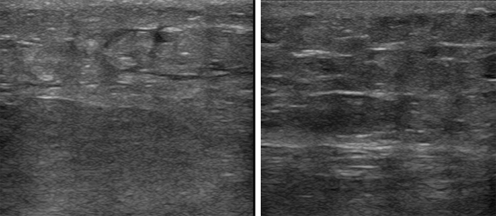
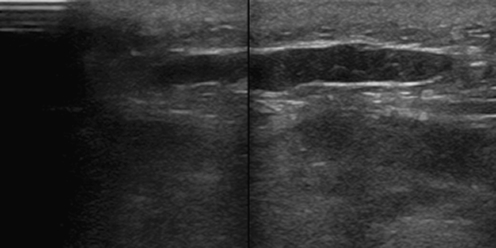
Materials: The study is a prospective randomised evaluation of NPWT in patients with large surgical wounds after THA, randomising patients to either a standard dressing (group A) or a NPWT (group B) over the wound area. The wound area was examined with ultrasound to measure the postoperative seromas in both groups on the fifth and tenth postoperative days.
Results: There were 19 patients randomised in this study. Ten days after surgery, group A (ten patients, 70.5 ± 11.01 years of age) developed seromas with an average size of 5.08 ml and group B (nine patients, 66.22 ± 17.83 years of age) 1.97 ml. The difference was significant (p = 0.021).
Conclusion: NPWT has been used on many different types of traumatic and non traumatic wounds. This prospective, randomised study has demonstrated decreased development of postoperative seromas in the wound and improved wound healing.
Figures
References
-
- Kanakaris NK, Thanasas C, Keramaris N, Kontakis G, Granick MS, Giannoudis PV. The efficacy of negative pressure wound therapy in the management of lower extremity trauma: review of clinical evidence. Injury. 2007;38(Suppl 5):S9–S18. - PubMed
-
- Runkel N, Krug E, Berg L, Lee C, Hudson D, Birke-Sorensen H, Depoorter M, Dunn R, Jeffery S, Duteille F, Bruhin A, Caravaggi C, Chariker M, Dowsett C, Ferreira F, Martinez JM, Grudzien G, Ichioka S, Ingemansson R, Malmsjo M, Rome P, Vig S, Martin R, Smith J (2011) Evidence-based recommendations for the use of negative pressure wound therapy in traumatic wounds and reconstructive surgery: steps towards an international consensus. Injury 42 Suppl 1:S1–12. doi:10.1016/S0020-1383(11)00041-6 - PubMed
-
- Stannard JP, Singanamala N, Volgas DA (2010) Fix and flap in the era of vacuum suction devices: what do we know in terms of evidence based medicine? Injury 41(8):780–786. doi:10.1016/j.injury.2009.08.011 - PubMed
Publication types
MeSH terms
LinkOut - more resources
Full Text Sources
Other Literature Sources
Medical
