Comparative Study
. 2011 Oct;10(7):805-816.
doi: 10.1111/j.1601-183X.2011.00720.x. Epub 2011 Aug 15.

NR2B-deficient mice are more sensitive to the locomotor stimulant and depressant effects of ethanol

Affiliations
Comparative Study

NR2B-deficient mice are more sensitive to the locomotor stimulant and depressant effects of ethanol

Kimberly A Badanich et al. Genes Brain Behav. 2011 Oct.

Abstract

The NR2B subunit of N-methyl d-aspartate glutamate receptors influences pharmacological properties and confers greater sensitivity to the modulatory effects of ethanol. This study examined behavioral responses to acute ethanol in a conditional knockout mouse model that allowed for a delayed genetic deletion of the NR2B subunit to avoid mouse lethality. Mice lacking the NR2B gene (knockout) were produced by mating NR2B[f/f] mice with CAMKIIa-driven tTA transgenic mice and the tetO-CRE transgenic mice. Adult male and female offspring representing each of the resultant genotypes (knockout, CAM, CRE and wildtype mice) were tested for open-field locomotor activity following acute low- and high-dose ethanol challenge as well as loss of righting reflex. Findings indicate that male and female mice lacking the NR2B subunit exhibited greater overall activity in comparison to other genotypes during the baseline locomotor activity test. NR2B knockout mice exhibited an exaggerated stimulant response to 1.5 g/kg (i.p.) and an exaggerated depressant response to 3.0 g/kg (i.p.) ethanol challenge. In addition, NR2B knockout mice slept longer following a high dose of ethanol (4.0 g/kg, i.p.). To evaluate pharmacokinetics, clearance rates of ethanol (1.5, 4.0 g/kg, i.p.) were measured and showed that female NR2B knockouts had a faster rate of metabolism only at the higher ethanol dose. Western blot analyses confirmed significant reduction in NR2B expression in the forebrain of knockout mice. Collectively, these data indicate that the NR2B subunit of the N-methyl d-aspartate glutamate receptor is involved in regulating low-dose stimulant effects of ethanol and the depressant/hypnotic effects of ethanol.


Figures

Figure 1
Figure 1. Conditional knockdown of the NR2B subunit of the NMDA receptor in NR2B deficient (KO) mice
A significant reduction in protein levels of NR2B was observed in (a) dorsomedial prefrontal cortex (dmPFC), (b) dorsal hippocampus (HPC), (c) dorsolateral striatum (DLS), and (d) nucleus accumbens (NAc) in NR2B deficient (KO) mice in comparison with wildtype (WT), CAM, and CRE mice (n = 4-7 males/genotype). NR1 expression levels in NR2B deficient mice were also significantly reduced in each of these regions. No significant changes in NR2A subunit expression levels were observed in any of the genotypes. * = differs from WT, CRE, CAM
Figure 2
Figure 2. Conditional knockdown of the NR2B subunit of the NMDA receptor in NR2B deficient (KO) mice
A significant reduction in protein levels of NR2B was observed in (a) amygdala (AMY) and (b) bed nucleus of stria terminalis (BNST), but not in (c) mesencaphalic reticular formation (RF) or (d) medulla in NR2B deficient (KO) mice in comparison with wildtype (WT), CAM, and CRE mice (n = 4-7 males/genotype). NR1 expression levels in NR2B deficient mice were also significantly reduced in amygdala and BNST. No significant changes in NR2A subunit expression levels were observed in any of the genotypes. * = differs from WT, CRE, CAM
Figure 3
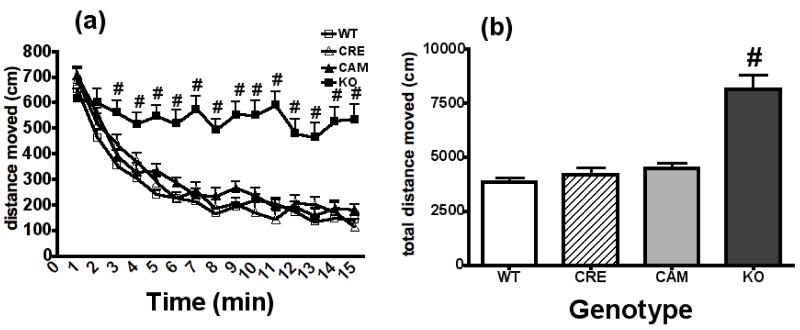
Figure 3. Lack of locomotor habituation in NR2B deficient mice
NR2B deficient (KO) mice had greater levels of locomotor activity in a novel open field. Distance moved (cm) is shown for WT, CRE, CAM and KO mice in (a) 1-min bins to depict time course of activity levels and (b) total distance moved for the entire 15-min session. # = significantly different from all other genotypes. Sample sizes were as follows WT = 26, CRE = 11, CAM = 21, KO = 32.
Figure 4
Figure 4. Dose response effects of Ethanol in WT and NR2B deficient mice
All genotypes (WT, CRE, CAM, KO) show dose response effects of Ethanol on locomotor activity with 1.5 g/kg Ethanol stimulating activity and 3.0 g/kg Ethanol reducing activity. Distance moved (cm) is shown for (a) WT, (b) CRE, (c) CAM and (d) KO mice in 1-min bins to depict time course of activity levels. * = differs from saline; # = differs from WT. sample sizes were as follows: WT: 16 males, 10 females; CRE: 8 males, 3 females; CAM: 10 males, 11 females; KO: 13 males, 19 females.
Figure 5
Figure 5. NR2B deficient mice are more sensitive to the stimulating and sedating effects of Ethanol
To control for baseline hyperactivity in NR2B deficient (KO) mice, data were expressed as difference scores (distance moved following 1.5 or 3.0 g/kg ethanol – group mean for distance moved following saline). Even when baseline hyperactivity is accounted for, NR2B deficient (KO) mice exhibited an exaggerated stimulant response to 1.5 g/kg ethanol, as well an augmented reduction in activity following the 3.0 g/kg challenge in comparison to control littermates * = differs from saline; ^ differs from 1.5 g/kg EtOH, # differs from WT, CRE, CAM. Same mice from Figure 4.
Figure 6
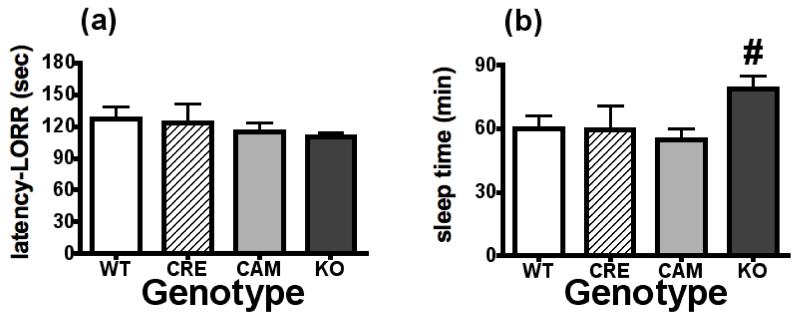
Figure 6. NR2B deficient mice are more sensitive to the hypnotic effects of Ethanol
(a) NR2B deficient (KO) mice were not different from the other genotypes in how long it took them to lose their righting reflex. (b) NR2B deficient (KO) mice did however have longer sleep times following 4.0 g/kg Ethanol. # = significantly different from WT, CRE, CAM. Sample sizes were as follows: WT = 21, CRE = 11, CAM = 19, KO = 26.
Figure 7
Figure 7. Female NR2B deficient mice have a more rapid clearance of high dose ethanol
To determine if NR2B deficient (KO) mice metabolize ethanol at a different rate than control littermates, mice from each of the genotypes were injected with 1.5 and 4.0 g/kg ethanol (i.p.) and blood samples were taken at various times. Overall there were no differences in the clearance rate of ethanol between the genotypes. Only the female KO mice had a steeper slope (i.e., more rapid clearance rate of high dose ethanol) than control littermates. There were no differences in slope or intercept for any of the genotypes at the low ethanol dose. Sample sizes = 12/genotype except CAM females = 3.

References

    1. Becker HC. Effects of the imidazobenzodiazepine RO15-4513 on the stimulant and depressant actions of ethanol on spontaneous locomotor activity. Life Sci. 1988;43(7):643–50. - PubMed
    1. Bejanian M, Jones BL, Alkana RL. Low-level hyperbaric antagonism of ethanol-induced locomotor depression in C57BL/6J mice: dose response. Alcohol Clin Exp Res. 1993;17(5):935–9. - PubMed
    1. Beleslin DB, Djokanović N, Jovanović Mićić D, Samardzić R. Opposite effects of GABAA and NMDA receptor antagonists on ethanol-induced behavioral sleep in rats. Alcohol. 1997;14(2):167–73. - PubMed
    1. Blevins T, Mirshahi T, Chandler LJ, Woodward JJ. Effects of acute and chronic ethanol exposure on heteromeric N-methyl-D-aspartate receptors expressed in HEK 293 cells. J Neurochem. 1997;69:2345–54. - PubMed
    1. Boyce-Rustay JM, Cunningham CL. The role of NMDA receptor binding sites in ethanol place conditioning. Behav Neurosci. 2004;118:822–34. - PubMed

Publication types

MeSH terms

Substances