


Transmission of influenza on international flights, may 2009
- PMID: 21762571
- PMCID: PMC3381396
- DOI: 10.3201/eid1707.101135
Transmission of influenza on international flights, may 2009
Abstract
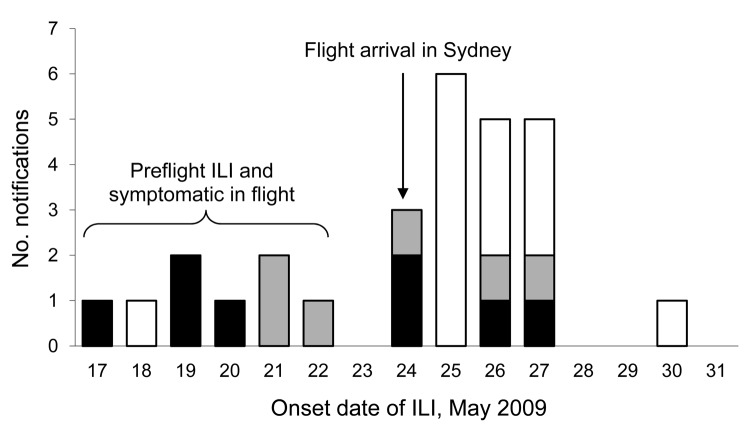
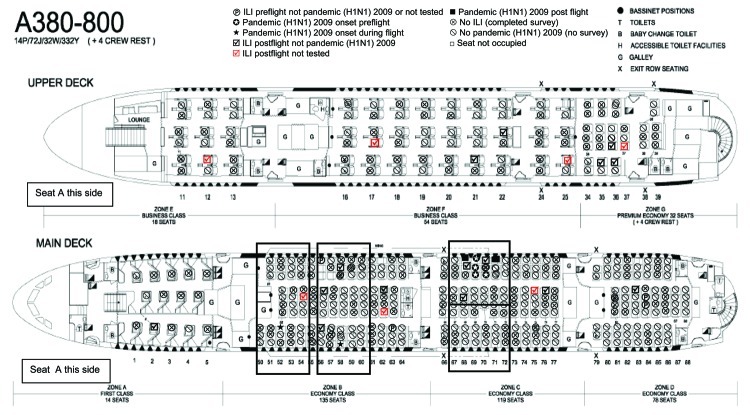
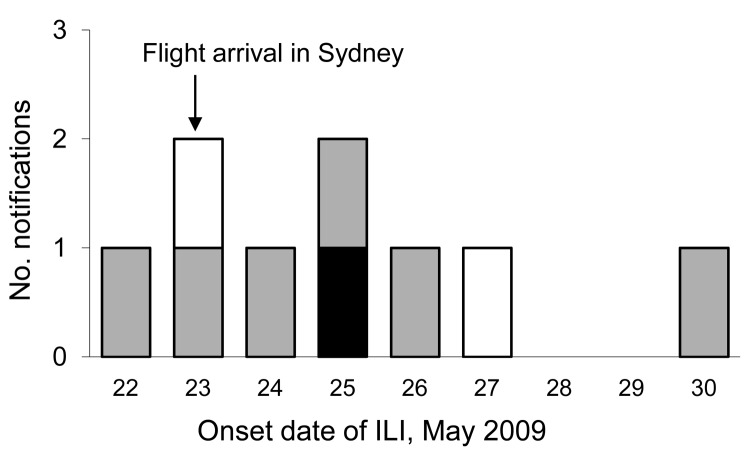
Understanding the dynamics of influenza transmission on international flights is necessary for prioritizing public health response to pandemic incursions. A retrospective cohort study to ascertain in-flight transmission of pandemic (H1N1) 2009 and influenza-like illness (ILI) was undertaken for 2 long-haul flights entering Australia during May 2009. Combined results, including survey responses from 319 (43%) of 738 passengers, showed that 13 (2%) had an ILI in flight and an ILI developed in 32 (5%) passengers during the first week post arrival. Passengers were at 3.6% increased risk of contracting pandemic (H1N1) 2009 if they sat in the same row as or within 2 rows of persons who were symptomatic preflight. A closer exposed zone (2 seats in front, 2 seats behind, and 2 seats either side) increased the risk for postflight disease to 7.7%. Efficiency of contact tracing without compromising the effectiveness of the public health intervention might be improved by limiting the exposed zone.
Figures
References
-
- Chan M. Statement made at Secretary-General’s briefing to the United Nations General Assembly on the H1N1 influenza situation via videoconference from Geneva, Switzerland, 4 May 2009. [cited 2009 Dec 22]. http://www.who.int/dg/speeches/2009/influenza_a_h1n1_situation_20090504/...
-
- Australian Government Department of Health and Ageing. Australian Health Management Plan for Pandemic Influenza (AMPPI), 2008. [cited 2009 Dec 10]. http://www.health.gov.au/internet/panflu/publishing.nsf/Content/8435EDE9...
-
- Horvath JS, McKinnon M, Roberts L. The Australian response: pandemic influenza preparedness. Med J Aust. 2006;185:S35–8. - PubMed
Publication types
MeSH terms
LinkOut - more resources
Full Text Sources
Medical
Research Materials