. 2011 Aug 15;187(4):1877-83.
doi: 10.4049/jimmunol.1101248. Epub 2011 Jul 15.

Vitamin A deficiency impairs vaccine-elicited gastrointestinal immunity

Affiliations

Vitamin A deficiency impairs vaccine-elicited gastrointestinal immunity

David R Kaufman et al. J Immunol. .

Abstract

Vitamin A deficiency is highly prevalent in much of the developing world, where vaccination programs are of paramount importance to public health. However, the impact of vitamin A deficiency on the immunogenicity and protective efficacy of vaccines has not been defined previously. In this article, we show that the vitamin A metabolite retinoic acid is critical for trafficking of vaccine-elicited T lymphocytes to the gastrointestinal mucosa and for vaccine protective efficacy in mice. Moderate vitamin A deficiency abrogated Ag-specific T lymphocyte trafficking to the gastrointestinal tract, gastrointestinal cellular immune responses, and protection against a mucosal challenge following immunization with a recombinant adenovirus vaccine vector. Oral vitamin A supplementation as well as retinoic acid administration fully restored the mucosal immune responses and vaccine protective efficacy. These data suggest that oral vitamin A supplementation may be important for optimizing the success of vaccines against HIV-1 and other mucosal pathogens in the developing world, highlighting a critical relationship between host nutritional status and vaccine efficacy.


Conflict of interest statement

DISCLOSURES

The authors have no financial conflicts of interest.

Figures
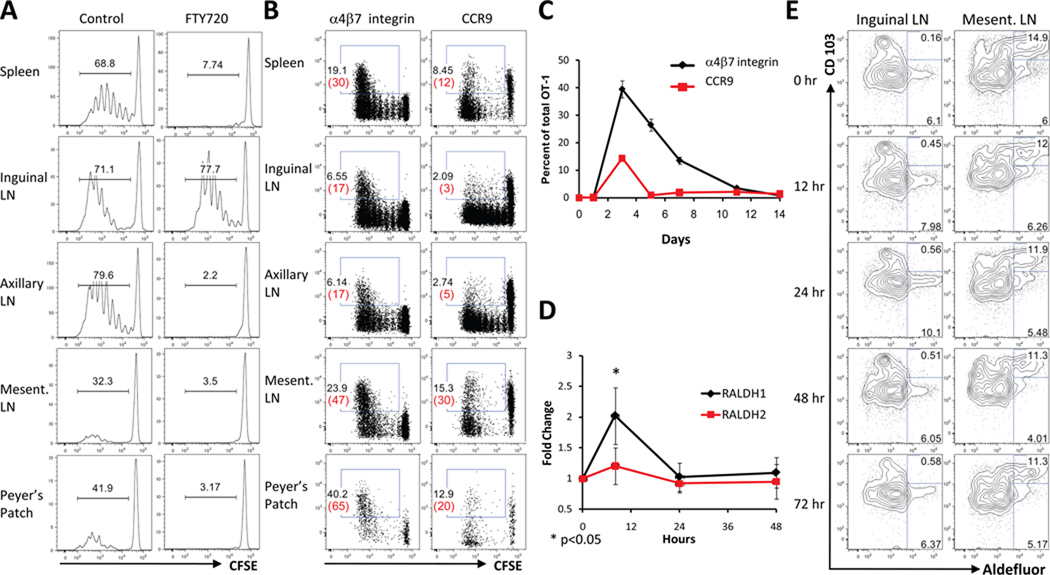
FIGURE 1
FIGURE 1. Vaccine-elicited CD8+ T-lymphocyte priming and mucosal homing marker upregulation
A, Localization of vaccine-elicited CD8+ T-lymphocyte priming. 2.5×10⁶ CFSE-labeled OT-I CD8+ T-lymphocytes were adoptively transferred to naïve, CD45-congenic recipients (B6.SJL; n=8/group) that were untreated or treated IP from 48 hours prior to immunization with FTY720. Mice were immunized IM in the quadriceps with 109 VP rAd5-Ova and proliferation was assessed by CFSE dilution on day 3 following immunization. B, Vaccine-elicited mucosal homing marker upregulation. Following adoptive transfer and immunization as in A, CCR9 and α4β7 integrin upregulation was evaluated on proliferating CD8+ T-lymphocytes at day 3 following immunization. Numbers in black and red represent percentages of total and proliferating OT-I cells, respectively. C, Kinetics of α4β7 integrin upregulation in blood following adoptive transfer and immunization as in b). D, Induction of Aldh1a1 and Aldh1a2 mRNA, encoding RALDH1 and RALDH2, following rAd immunization. C57BL/6 mice (n=4/group) were immunized IM with 109 VP rAd5-Gag. RALDH expression was determined in inguinal LN by real-time PCR. E, DC aldehyde dehydrogenase activity following rAd immunization. C57BL/6 mice (n=4/group) were immunized as in d). DC were isolated from inguinal and mesenteric LN and aldehhyde dehydrogenase activity in DC subsets was determined by Aldefluor assay. Error bars are +/−S.E.
FIGURE 2
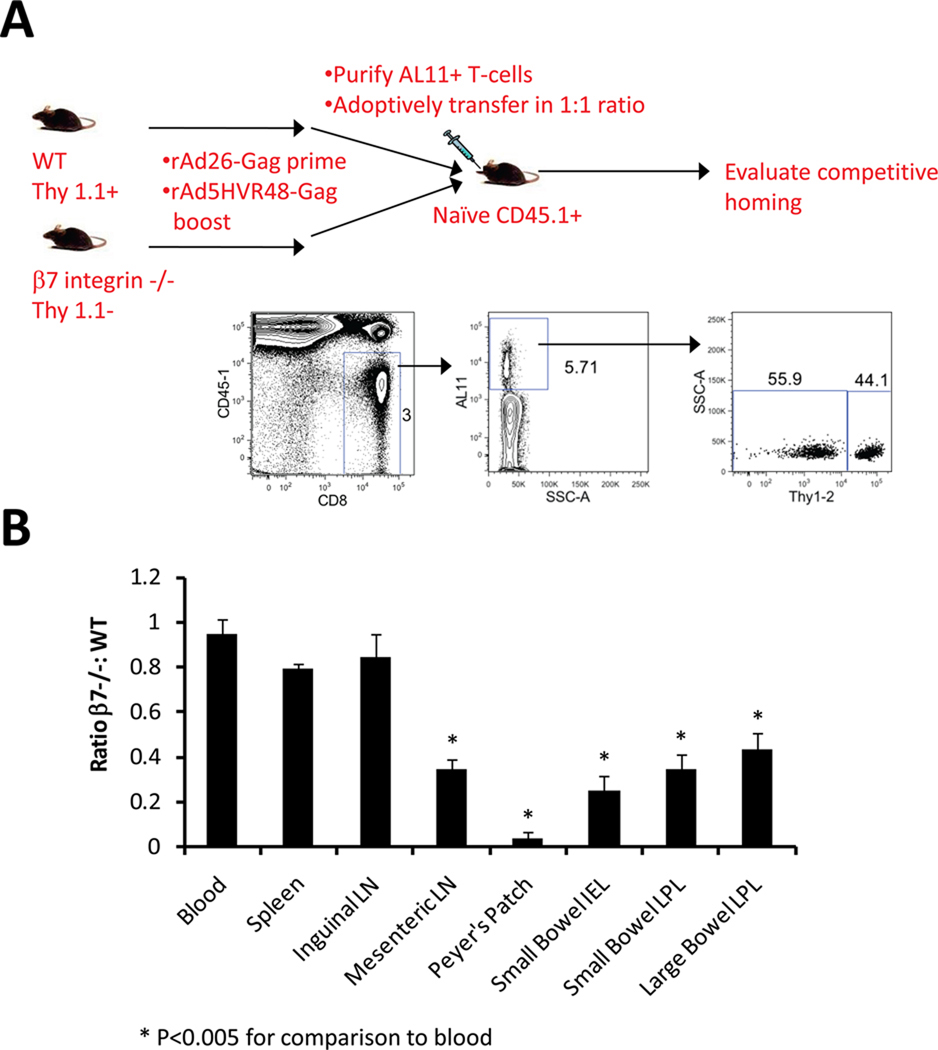
FIGURE 2. Vaccine-elicited CD8+ T-lymphocyte trafficking to the gastrointestinal mucosa is β7 integrin dependent
A, Experimental design for competitive adoptive transfers. Naïve B6.PL (Thy 1.1+ CD45.2+) and β7 integrin −/−(Thy 1.2+ CD45.2+) mice were primed at week 0 with 109 VP rAd26-Gag and boosted at week 6 with 109 VP rAd5HVR48-Gag. At day 10 following the boost immunization, equal numbers of peripheral WT and β7 integrin −/− Gag-specific CD8+ T-lymphocytes were competitively adoptively transferred to naïve B6.SJL (Thy 1.2+ CD45.1+) recipients (n=4/group). Trafficking of WT and β7 integrin −/− CD8+ T-lymphocytes was evaluated at day 10 following transfer. B, The ratio of WT to β7 integrin −/− Gag-specific CD8+ T-lymphocytes was determined at each anatomic site. Error bars are +/−S.E.
FIGURE 3
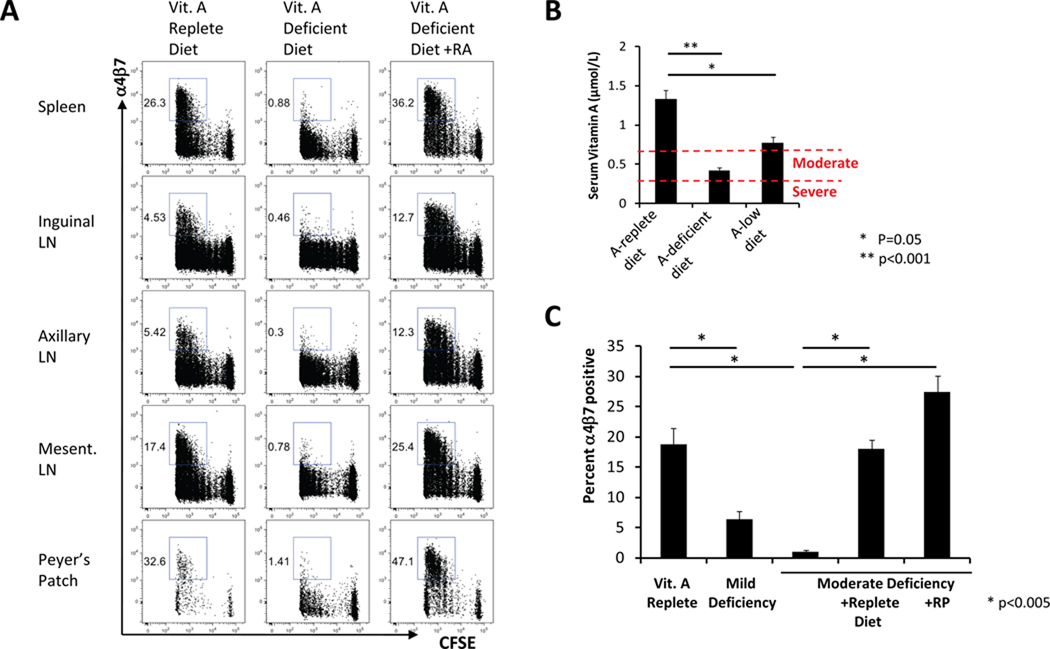
FIGURE 3. Vaccine-induced mucosal homing marker upregulation is abrogated by vitamin A deficiency but restored by RA or oral vitamin A
A, Mucosal homing marker upregulation in vitamin A deficient hosts. 2.5×10⁶ CFSE-labeled OT-I CD8+ T-lymphocytes were adoptively transferred to vitamin A sufficient or vitamin A deficient, CD45-congenic recipients (B6.SJL; n=4/group). RA supplementation was given as indicated on days −1 and +1 relative to immunization. Recipient mice were immunized IM with 109 VP rAd5-Ova. α4β7 integrin upregulation was evaluated at day 3 following immunization. B, Serum retinol levels were determined by HPLC in mice (n=8/group) bred on vitamin A sufficient, vitamin A deficient or 400 IU/kg vitamin A diets. C, Adoptive transfer and immunization was performed as in A using mice (n=4/group) bred on the indicated diets. Oral vitamin A supplementation was provided either by gavage with 600 IU RP on days −1 and −3 relative to immunization or with a vitamin A-sufficient diet for 1 week prior to immunization. Error bars are +/−S.E.
FIGURE 4
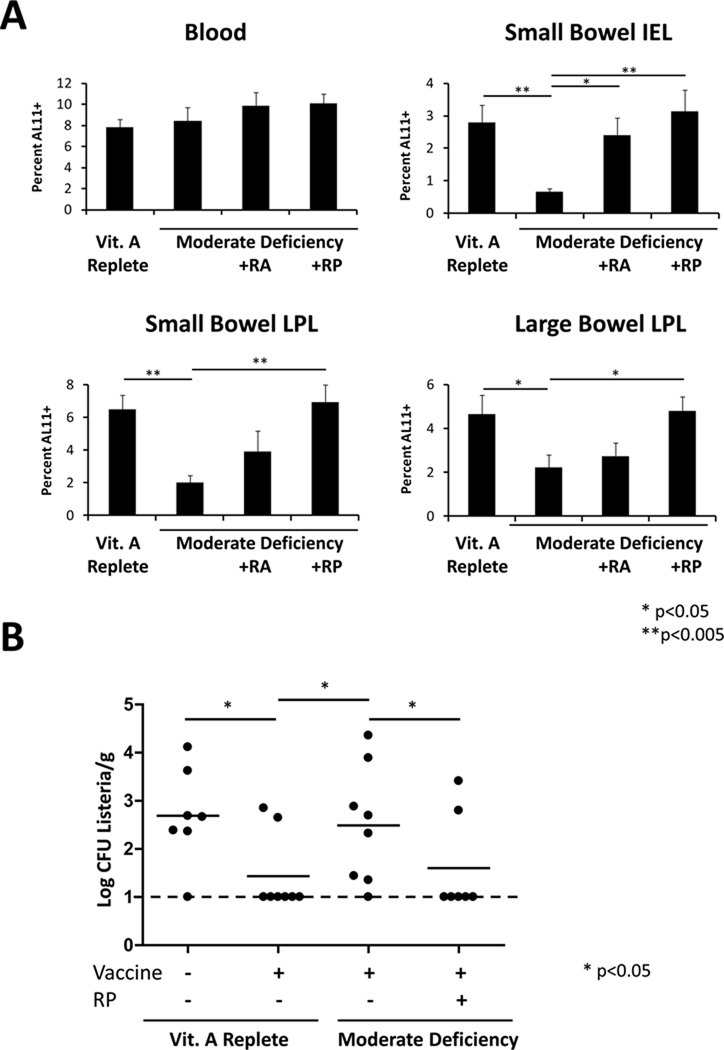
FIGURE 4. Vitamin A deficiency abrogates vaccine-elicited protection from gastrointestinal mucosal challenge
A, Control and vitamin A deficient C57BL/6 mice (n=8/group) were immunized IM with 109 VP rAd5HVR48-Gag. At week 2 following immunization, Gag-specific CD8+ T-lymphocyte responses were assessed in the blood and small bowel mucosa by Db/AL11 tetramer-binding assays. Mice were supplemented as indicated with RA at days −1 and +1 relative to immunization or orally with RP at days −3 and −1 relative to immunization. LPL: lamina propria lymphocytes. IEL: intraepithelial lymphocytes. Error bars are +/− S.E. B, Vitamin A replete or deficient C57BL/6 mice were immunized IM with 109 VP rAd5-luc-SIINFEKL. Oral vitamin A supplementation was provided by gavage with 600 IU RP on days −1 and −3 relative to immunization. At day 21 following immunization, mice were challenged orally with Lm-Ova by gavage. At day 3 following challenge, liver homogenates were prepared and quantitative colony counts performed by plating serial dilutions of the homogenates.

References

    1. WHO. Global prevalence of vitamin A deficiency in populations at risk 1995–2005: WHO global database on vitamin A deficiency. Geneva: World Health Organization; 2009.
    1. DeCicco KL, Zolfaghari R, Li N, Ross AC. Retinoic acid and polyriboinosinic acid act synergistically to enhance the antibody response to tetanus toxoid during vitamin A deficiency: possible involvement of interleukin-2 receptor-beta, signal transducer and activator of transcription-1, and interferon regulatory factor-1. J. Infect. Dis. 2000;182 Suppl 1:S29–S36. - PubMed
    1. Ross AC. Vitamin A deficiency and retinoid repletion regulate the antibody response to bacterial antigens and the maintenance of natural killer cells. Clin. Immunol. Immunopathol. 1996;80:S63–S72. - PubMed
    1. Rahman MM, Mahalanabis D, Hossain S, Wahed MA, Alvarez JO, Siber GR, Thompson C, Santosham M, Fuchs GJ. Simultaneous vitamin A administration at routine immunization contact enhances antibody response to diphtheria vaccine in infants younger than six months. J. Nutr. 1999;129:2192–2195. - PubMed
    1. Bhaskaram P, Rao KV. Enhancement in seroconversion to measles vaccine with simultaneous administration of vitamin A in 9-months-old Indian infants. Indian J. Pediatr. 1997;64:503–509. - PubMed

Publication types