


Platinum-based drugs disrupt STAT6-mediated suppression of immune responses against cancer in humans and mice
- PMID: 21765211
- PMCID: PMC3148725
- DOI: 10.1172/JCI43656
Platinum-based drugs disrupt STAT6-mediated suppression of immune responses against cancer in humans and mice
Abstract
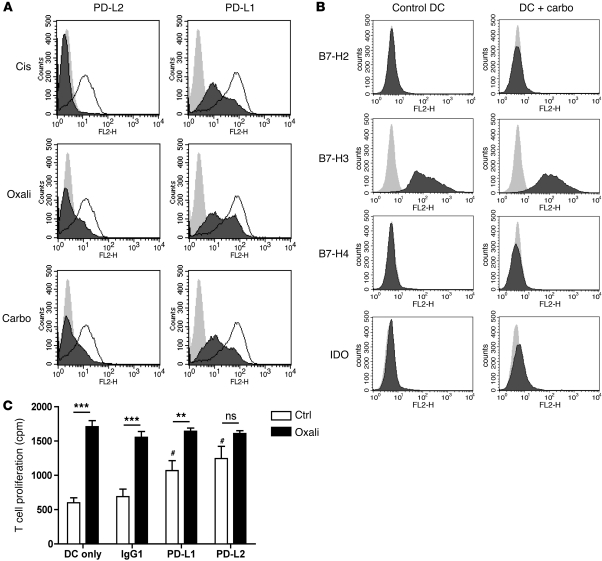
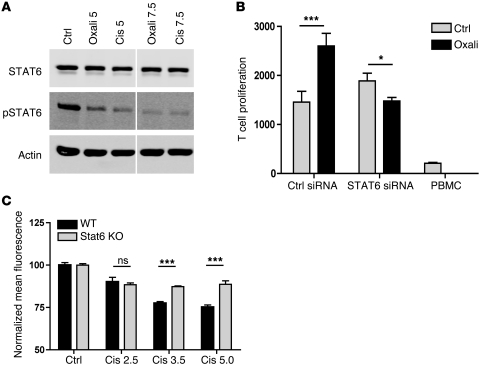
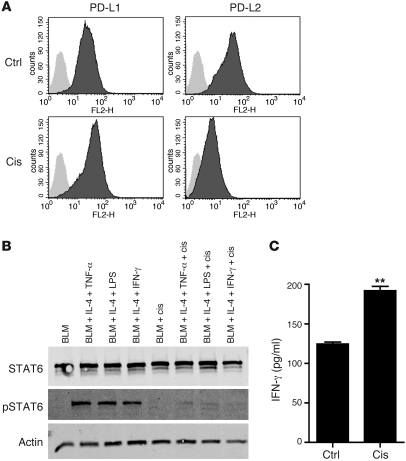
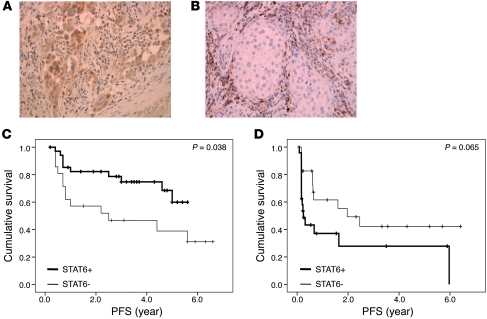
Tumor microenvironments feature immune inhibitory mechanisms that prevent T cells from generating effective antitumor immune responses. Therapeutic interventions aimed at disrupting these inhibitory mechanisms have been shown to enhance antitumor immunity, but they lack direct cytotoxic effects. Here, we investigated the effect of cytotoxic cancer chemotherapeutics on immune inhibitory pathways. We observed that exposure to platinum-based chemotherapeutics markedly reduced expression of the T cell inhibitory molecule programmed death receptor-ligand 2 (PD-L2) on both human DCs and human tumor cells. Downregulation of PD-L2 resulted in enhanced antigen-specific proliferation and Th1 cytokine secretion as well as enhanced recognition of tumor cells by T cells. Further analysis revealed that STAT6 controlled downregulation of PD-L2. Consistent with these data, patients with STAT6-expressing head and neck cancer displayed enhanced recurrence-free survival upon treatment with cisplatin-based chemoradiation compared with patients with STAT6-negative tumors, demonstrating the clinical relevance of platinum-induced STAT6 modulation. We therefore conclude that platinum-based anticancer drugs can enhance the immunostimulatory potential of DCs and decrease the immunosuppressive capability of tumor cells. This dual action of platinum compounds may extend their therapeutic application in cancer patients and provides a rationale for their use in combination with immunostimulatory compounds.
Figures
Comment in
-
Signal transduction: The old dog's new tricks.Nat Rev Clin Oncol. 2011 Aug 23;8(10):569. doi: 10.1038/nrclinonc.2011.131. Nat Rev Clin Oncol. 2011. PMID: 21862979 No abstract available.
References
-
- Nowak AK, et al. Induction of tumor cell apoptosis in vivo increases tumor antigen cross-presentation, cross-priming rather than cross-tolerizing host tumor-specific CD8 T cells. J Immunol. 2003;170(10):4905–4913. - PubMed
-
- Obeid M, et al. Calreticulin exposure dictates the immunogenicity of cancer cell death. Nat Med. 2007;13(1):54–61. - PubMed
Publication types
MeSH terms
Substances
LinkOut - more resources
Full Text Sources
Other Literature Sources
Medical
Research Materials
Miscellaneous
