


The urban built environment and mobility in older adults: a comprehensive review
- PMID: 21766033
- PMCID: PMC3134204
- DOI: 10.4061/2011/816106
The urban built environment and mobility in older adults: a comprehensive review
Abstract
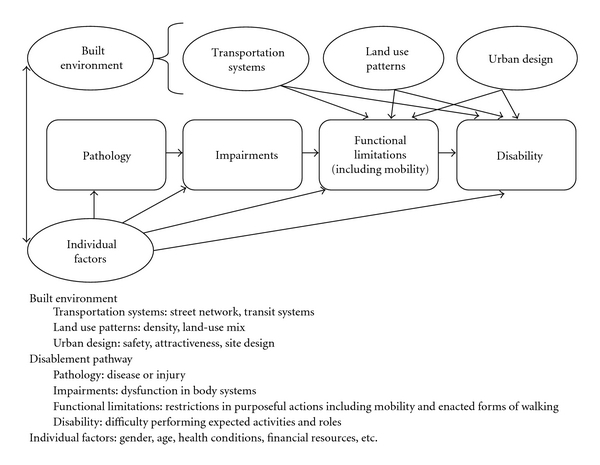
Mobility restrictions in older adults are common and increase the likelihood of negative health outcomes and premature mortality. The effect of built environment on mobility in older populations, among whom environmental effects may be strongest, is the focus of a growing body of the literature. We reviewed recent research (1990-2010) that examined associations of objective measures of the built environment with mobility and disability in adults aged 60 years or older. Seventeen empirical articles were identified. The existing literature suggests that mobility is associated with higher street connectivity leading to shorter pedestrian distances, street and traffic conditions such as safety measures, and proximity to destinations such as retail establishments, parks, and green spaces. Existing research is limited by differences in exposure and outcome assessments and use of cross-sectional study designs. This research could lead to policy interventions that allow older adults to live more healthy and active lives in their communities.
Figures
References
-
- Webber SC, Porter MM, Menec VH. Mobility in older adults: a comprehensive framework. The Gerontologist. 2010;50(4):443–450. - PubMed
-
- DiPietro L. Physical activity in aging: changes in patterns and their relationship to health and function. The Journals of Gerontology. Series A. 2001;56(2):13–22. - PubMed
-
- Frank L, Kerr J, Rosenberg D, King A. Healthy aging and where you live: community design relationships with physical activity and body weight in older Americans. Journal of Physical Activity and Health. 2010;7, supplement 1:S82–S90. - PubMed
-
- Lampinen P, Heikkinen E. Reduced mobility and physical activity as predictors of depressive symptoms among community-dwelling older adults: an eight-year follow-up study. Aging Clinical and Experimental Research. 2003;15(3):205–211. - PubMed
-
- Glass TA, Balfour JL, et al. Neighborhoods, aging, and functional limitations. In: Kawachi I, Berkman LF, et al., editors. Neighborhoods and Health. New York, NY, USA: Oxford University Press; 2003. pp. 303–334.
Grants and funding
LinkOut - more resources
Full Text Sources
