Incident-specific and individual-level moderators of brief intervention effects with mandated college students
- PMID: 21766975
- PMCID: PMC3676278
- DOI: 10.1037/a0024508
Incident-specific and individual-level moderators of brief intervention effects with mandated college students
Abstract
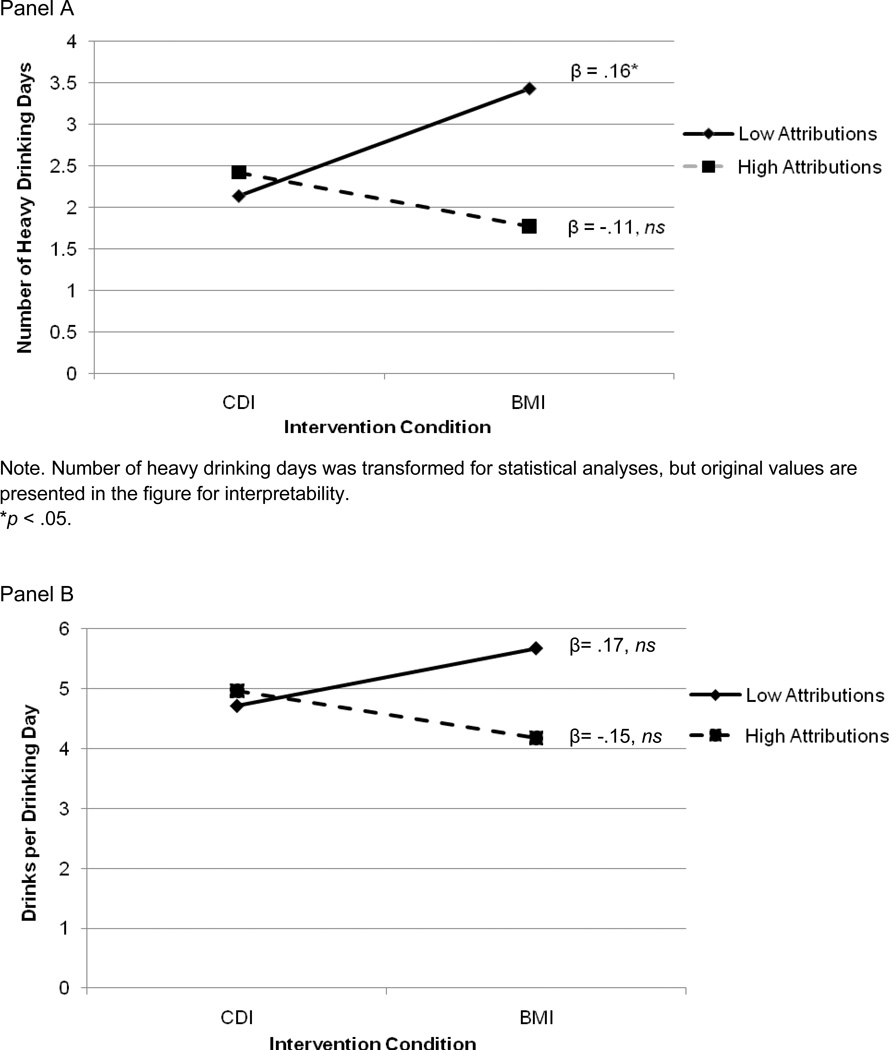
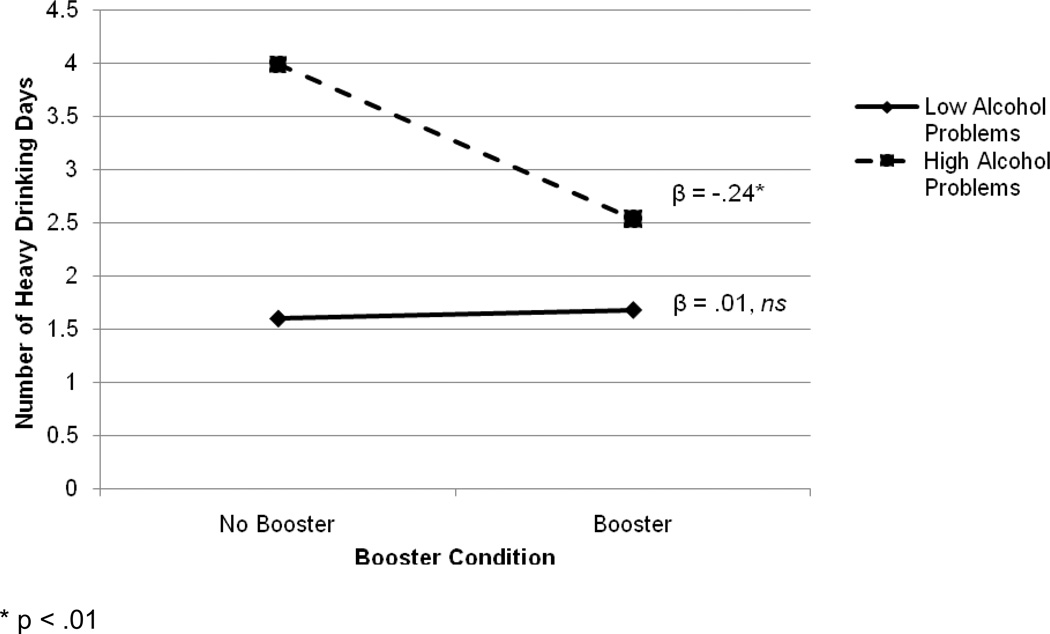
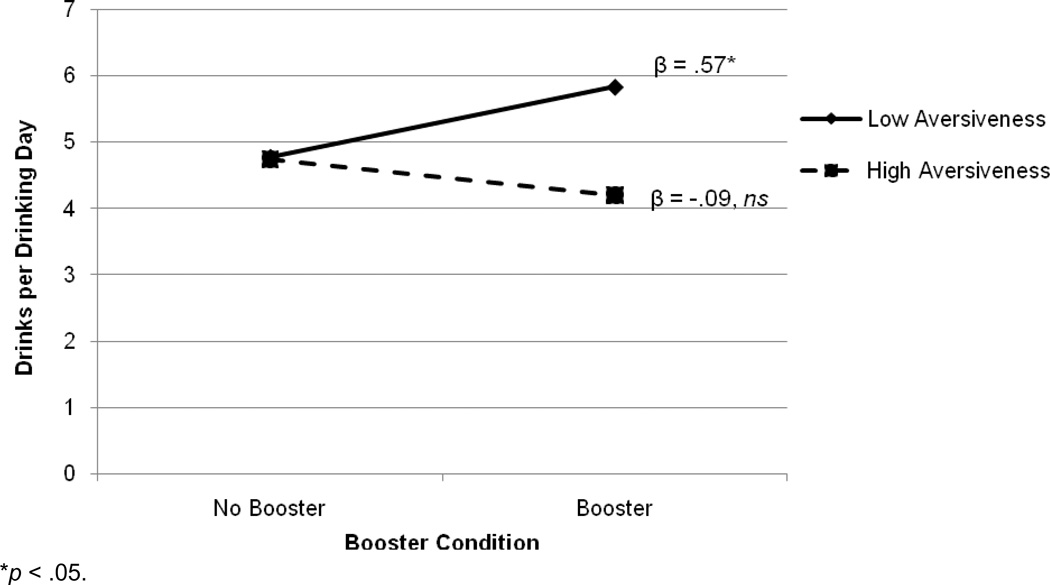
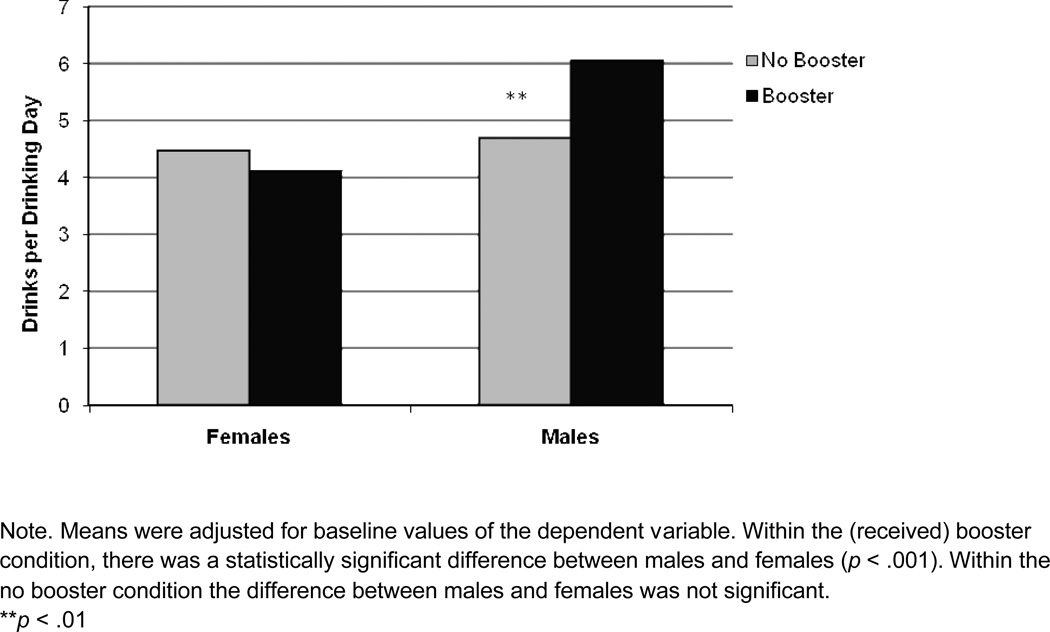
Brief Motivational Interventions (BMI) and Computer-delivered interventions (CDI) have been successful in reducing drinking behaviors with mandated college students. However, research examining moderators of intervention effects have found mixed results. The current study sought to replicate and extend the research on moderators of intervention efficacy with mandated students. Baseline alcohol-related problems, readiness to change, gender, incident consequences, and participant responses to the event (personal attributions about the incident, aversiveness of the incident) were examined as moderators of intervention and booster condition efficacy on alcohol use and problems. Mandated students (N = 225) were randomized to complete either a BMI or CDI (Alcohol 101; Century Council, 1998), with or without a 1-month booster session, following a campus alcohol sanction. Outcomes were measured three months after baseline. Attributions moderated intervention condition such that participants low in personal attributions for their incident showed significantly less drinking following a CDI than a BMI. Men and individuals who reported low incident aversiveness showed higher drinks per occasion after receiving a booster, while individuals high in alcohol-related problems reported fewer heavy drinking days after completing a booster session. Findings suggest that identifying specific characteristics related to the precipitating event may inform intervention approaches in this high-risk population; however, additional research is needed to offer concrete guidance to practitioners in the field.
Figures
References
-
- Aiken LS, West SG. Multiple regression: Testing and interpreting interactions. Thousand Oaks: Sage; 1991.
-
- Barnett NP, Lebeau-Craven R, O'Leary TA, Colby SM, Rohsenow DJ, Monti PM, et al. Predictors of motivation to change after medical treatment for drinking-related events in adolescents. Psychol Addict Behav. 2002;16(2):106–112. - PubMed