The effect of homework compliance on treatment outcomes for participants with myalgic encephalomyelitis/chronic fatigue syndrome
- PMID: 21767035
- PMCID: PMC3166212
- DOI: 10.1037/a0024118
The effect of homework compliance on treatment outcomes for participants with myalgic encephalomyelitis/chronic fatigue syndrome
Abstract
Purpose: This study examined the relationship between level of treatment engagement through completion of homework on treatment outcomes within nonpharmacological interventions for participants with ME/CFS.
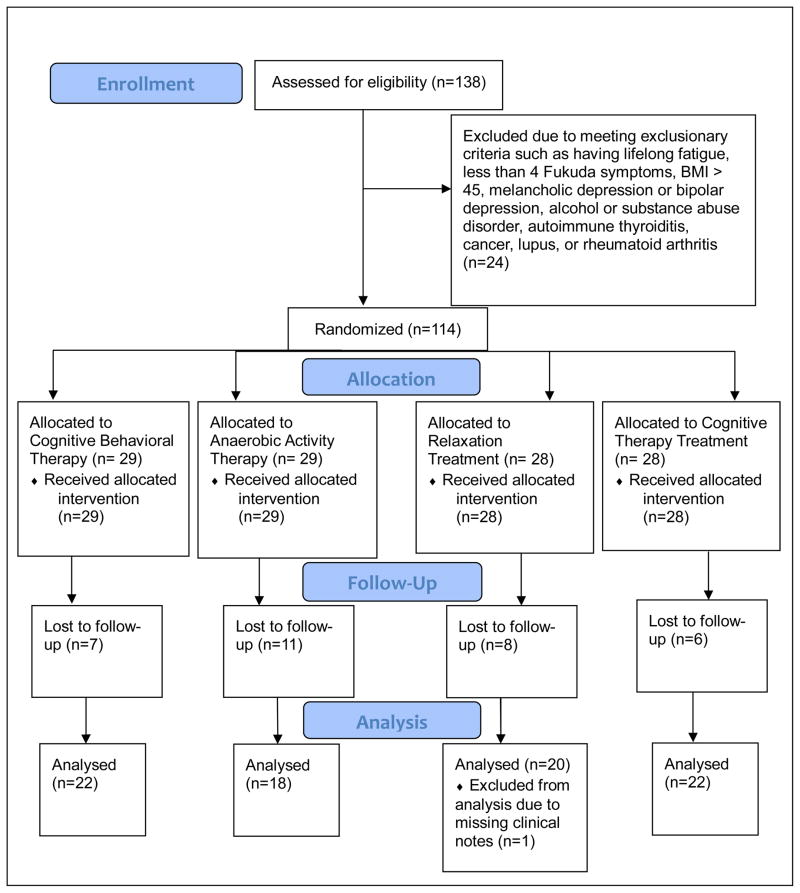
Method: A sample of 82 participants with ME/CFS was randomly assigned to one of four nonpharmacological interventions. Each intervention involved 13 sessions over the course of 6 months. Change scores were computed for self-report measures taken at baseline and 12-month follow-up. Homework compliance was calculated as the percentage of completed assignments across the total number of sessions and grouped into three categories: minimum (0-25%), moderate (25.1-75%), or maximum (75.1-100%).
Results: Findings revealed that after controlling for treatment condition, those who completed a maximum amount of homework had greater improvement on a number of self-report outcome measures involving role, social, and mental health functioning. There were no differential improvements in physical and fatigue functioning based on level of homework compliance.
Implications: Findings from this study suggest homework compliance can have a positive influence on some aspects of physical, social, and mental health functioning in participants with ME/CFS. It should be emphasized that these interventions do not cure this illness. The lack of significant changes in physical functioning and fatigue levels suggests a need for more multidisciplinary treatment approaches that can elicit improvement in these areas.
References
-
- Addis ME, Jacobson NS. A closer look at the treatment rationale and homework compliance in cognitive behavioral therapy for depression. Cognitive Therapy and Research. 2000;24(3):313–326.
-
- Anderson JS, Ferrans CE. The quality of life of persons with chronic fatigue syndrome. Journal of Nervous and Mental Disease. 1997;185(6):359–367. - PubMed
-
- Antoni MH, Carrico AW, Duran RE, Spitzer S, Penedo F, Ironson G, Schneiderman N. Randomized clinical trial of cognitive behavioral stress management on human immunodeficiency virus viral load in gay men treated with highly active antiretroviral therapy. Psychosomatic Medicine. 2006a;68:143–151. - PubMed
-
- Arnau R, Meagher M, Norris M, Bramson R. Psychometric evaluation of the Beck Depression Inventory-II with primary care medical participants. Health Psychology. 2001;20:112–119. - PubMed