. 2011 Jul 21;10(1):54-64.
doi: 10.1016/j.chom.2011.06.005.

Foxp3(+) regulatory T cell expansion required for sustaining pregnancy compromises host defense against prenatal bacterial pathogens

Affiliations

Foxp3(+) regulatory T cell expansion required for sustaining pregnancy compromises host defense against prenatal bacterial pathogens

Jared H Rowe et al. Cell Host Microbe. .

Abstract

Although pregnancy confers unique susceptibility to infection, the pregnancy-associated immune defects that erode host defense remain largely undefined. Herein, we demonstrate that expansion of immune-suppressive Foxp3(+) regulatory T cells (Tregs) which occurs physiologically during pregnancy or when experimentally induced in transgenic mice caused enhanced susceptibility to prenatal pathogens including Listeria and Salmonella species. Reciprocally, infection susceptibility was uniformly reduced with Treg ablation. Importantly however, the sustained expansion of maternal Tregs was essential for maintaining immune tolerance to the developing fetus because even partial transient ablation of Foxp3-expressing cells fractured maternal tolerance to fetal antigen and triggered fetal resorption. Interestingly, Foxp3 cell-intrinsic defects in the immune-suppressive cytokine IL-10 alone were sufficient to override Treg-mediated infection susceptibility, while IL-10 was nonessential for sustaining pregnancy. Thus, maternal Treg expansion required for sustaining pregnancy creates naturally occurring holes in host defense that confer prenatal infection susceptibility.


Figures

Figure 1
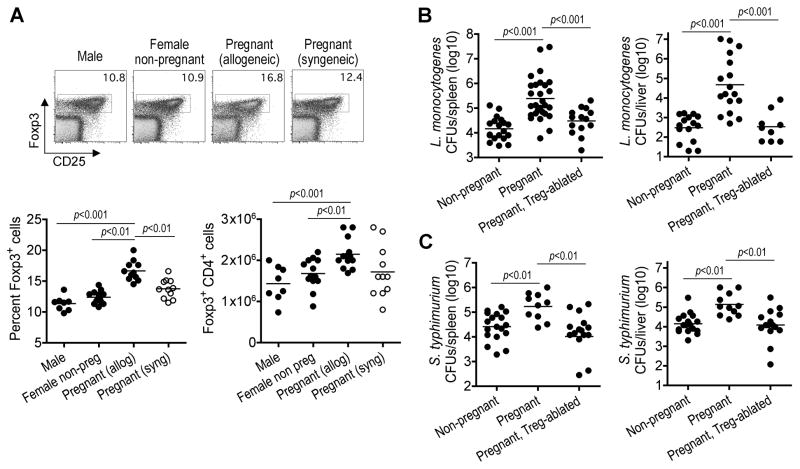
Figure 1. Expanded maternal Foxp3+ Tregs dictate infection susceptibility during pregnancy
(A) Percent and total number Foxp3+ among CD4+ splenocytes in male, virgin female, or pregnant B6 (H-2b) females at mid-gestation after allogeneic mating with Balb/c (H-2d) or syngeneic mating with B6 males. (B, C) Recoverable CFUs three days after infection in non-pregnant, pregnant Treg-sufficient, or pregnant Treg-abated Foxp3DTR/DTR females after allogeneic mating, and initiated on DT beginning mid-gestation and infected with Listeria monocytogenes (B) or Salmonella typhimurium (C) one day later.
Figure 2
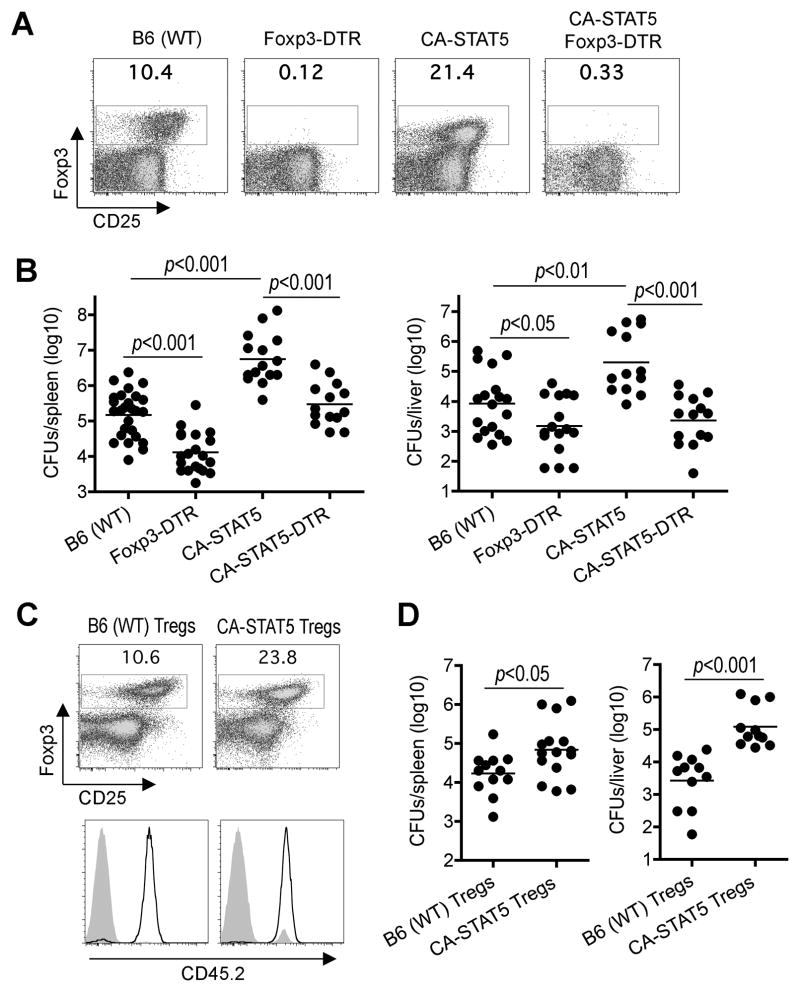
Figure 2. Expanded Foxp3+ Tregs impair host defense against Lm infection
(A) Percent Foxp3+ among CD4+ splenocytes after DT treatment in B6 (WT), Foxp3DTR, CA-STAT5b, or CA-STAT5b Foxp3DTR mice. (B) Recoverable CFUs three days after Lm infection for each group of mice initiated on DT treatment one day prior to infection. (C) Percent Foxp3+ Tregs day 14 after the initiation of sustained DT in Foxp3DTR CD45.1+ mice reconstituted with donor Tregs (CD45.2+) from WT or CA-STAT5b mice (top). CD45.2 expression by Foxp3+ (line) or Foxp3 (shaded) CD4+ T cells (bottom). (D) Recoverable CFUs three days after Lm infection for the mice described in (C).
Figure 3
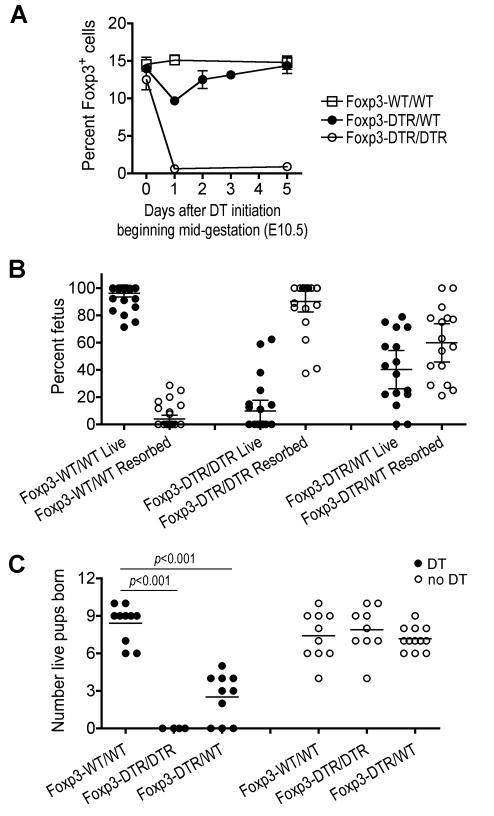
Figure 3. Sustained expansion of maternal Foxp3+ Tregs is required for maintaining pregnancy
(A) Percent Foxp3+ among CD4+ splenocytes during allogeneic pregnancy in Foxp3WT/WT, Foxp3DTR/WT, or Foxp3DTR/DTR mice after the initiation of DT treatment beginning mid-gestation (E10.5). Bar, one standard error. (B) Percent live or resorbed fetuses among total placental-fetus in individual pregnancies for each group of mice day 5 after the initiation of DT beginning mid-gestation. Bar, mean and 95% confidence interval. (C) Number of live pups born after allogeneic mating for each group of female mice either treated with DT for four consecutive days beginning mid-gestation (filled) or without DT treatment (open).
Figure 4
Figure 4. Expanded maternal Tregs sustain tolerance to fetal antigen
(A) Percent and number of adoptively transferred CD90.1+ fetal (OVA323-339)-specific CD4+ (top) or (OVA257-264)-specific CD8+ (bottom) cells among splenocytes in Foxp3WT/WT, Foxp3DTR/DTR, or Foxp3DTR/WT females impregnated by Actin-OVA transgenic males five days after the initiation of DT beginning mid-gestation (E10.5). (B) Percent and number of IFN-γ-producing CD90.1+ CD8+ T cells after in vitro OVA257-264 peptide stimulation (line) or un-stimulated controls (shaded). (C) Percent OVA257-264 peptide-pulsed (CFSElo) relative to untreated control cells (CFSEhi) pre-transfer, or after adoptive transfer into each group of females impregnated by Actin-OVA males initiated on DT treatment beginning mid-gestation.
Figure 5
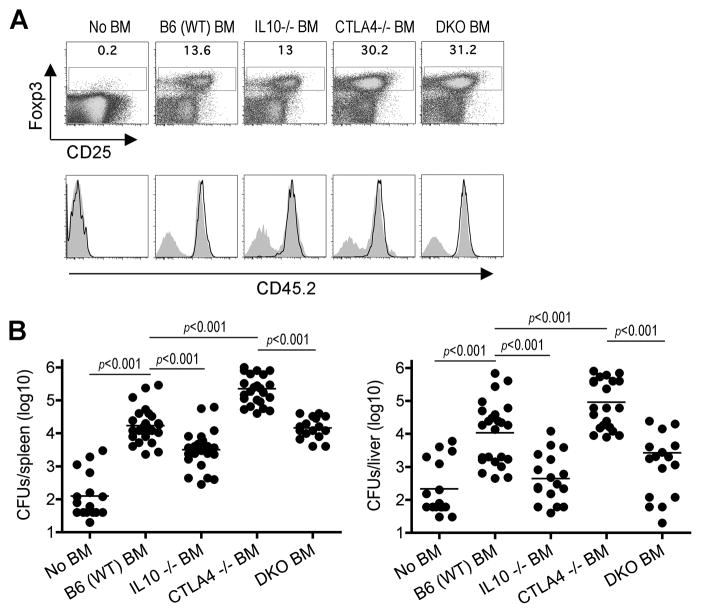
Figure 5. Treg-mediated infection susceptibility requires cell-intrinsic IL-10
(A) Percent Foxp3+ among CD4+ splenocytes day 10 after the initiation of sustained DT in irradiated Foxp3DTR CD45.1+ mice without donor bone marrow, or reconstituted with bone marrow from WT, IL-10-deficient, CTLA-4-deficient mice, or mice with combined defects in both IL-10 and CTLA-4 (DKO) (top). CD45.2 expression by Foxp3+ (line) or Foxp3 (shaded) CD4+ cells (bottom). (B) Recoverable CFUs three days after Lm infection for the mice described in (A).
Figure 6
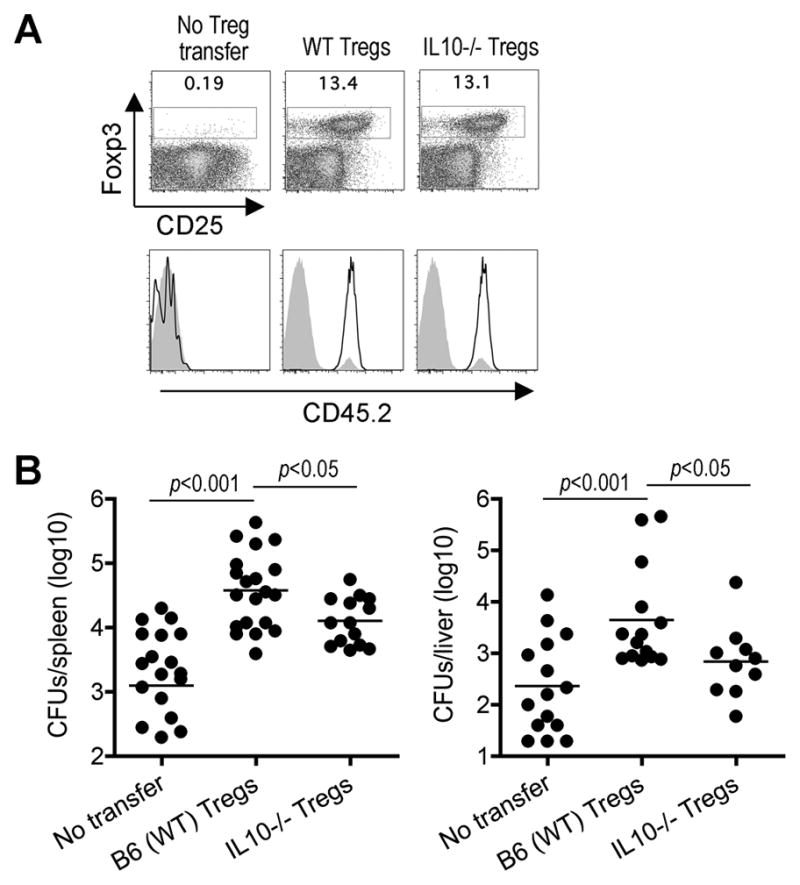
Figure 6. Treg IL-10 impairs resistance against Lm infection
(A) Percent Foxp3+ among CD4+ splenocytes day 12 after the initiation of sustained DT in non-irradiated Foxp3DTR CD45.1+ mice without donor Tregs, or reconstituted with donor Tregs from WT or IL-10-deficient mice (top). CD45.2 expression by Foxp3+ (line) or Foxp3 (shaded) CD4+ cells (bottom). (B) Recoverable CFUs three days after Lm infection for the mice described in (A).
Figure 7
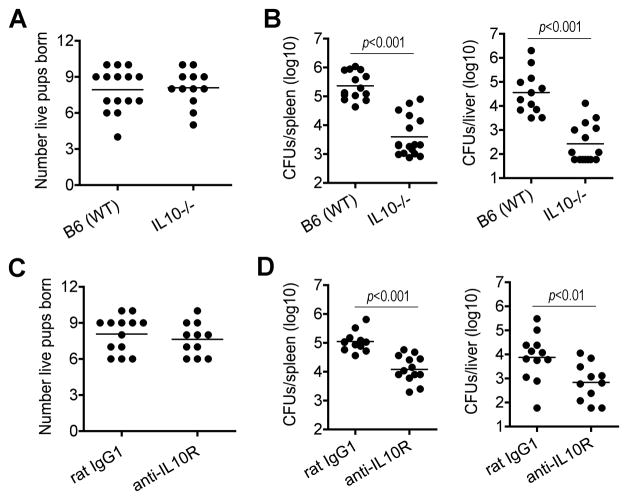
Figure 7. Maternal IL-10 is dispensable for sustaining pregnancy, but impairs host defense against prenatal Lm infection
(A) Number of live pups born for IL-10-deficient or B6 (WT) mice after allogeneic mating with Balb/c males. (B) Recoverable CFUs three days after Lm infection at mid-gestation (E10.5) for IL-10-deficient or B6 (WT) pregnant mice. (C) Number of live pups born for B6 mice after allogeneic mating with Balb/c males treated with anti-IL-10 receptor or isotype control (rat IgG1) antibody beginning mid-gestation. (D) Recoverable CFUs in pregnant B6 mice three days after Lm infection and treatment with anti-IL-10 receptor or isotype control antibody at mid-gestation.

References

    1. Aluvihare VR, Kallikourdis M, Betz AG. Regulatory T cells mediate maternal tolerance to the fetus. Nature immunology. 2004;5:266–271. - PubMed
    1. Asseman C, Mauze S, Leach MW, Coffman RL, Powrie F. An essential role for interleukin 10 in the function of regulatory T cells that inhibit intestinal inflammation. The Journal of experimental medicine. 1999;190:995–1004. - PMC - PubMed
    1. Bakardjiev AI, Theriot JA, Portnoy DA. Listeria monocytogenes traffics from maternal organs to the placenta and back. PLoS pathogens. 2006;2:e66. - PMC - PubMed
    1. Belkaid Y. Regulatory T cells and infection: a dangerous necessity. Nature reviews. 2007;7:875–888. - PubMed
    1. Belkaid Y, Piccirillo CA, Mendez S, Shevach EM, Sacks DL. CD4+CD25+ regulatory T cells control Leishmania major persistence and immunity. Nature. 2002;420:502–507. - PubMed

Publication types

MeSH terms