


Influence of high-pressure processing on the profile of polyglutamyl 5-methyltetrahydrofolate in selected vegetables
- PMID: 21770413
- PMCID: PMC3850051
- DOI: 10.1021/jf201120n
Influence of high-pressure processing on the profile of polyglutamyl 5-methyltetrahydrofolate in selected vegetables
Abstract
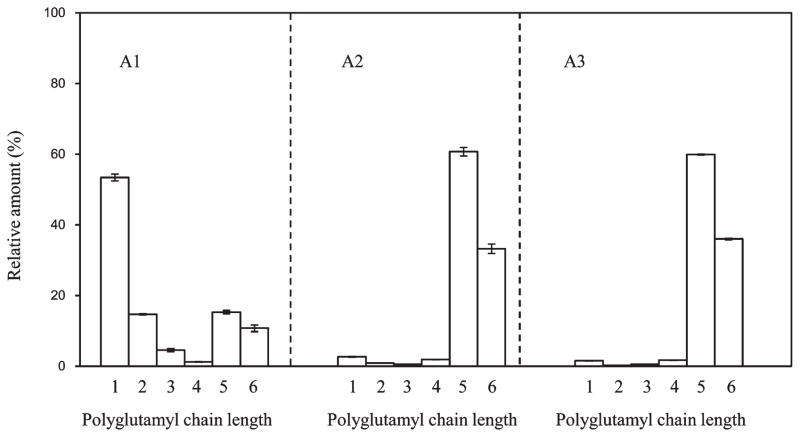
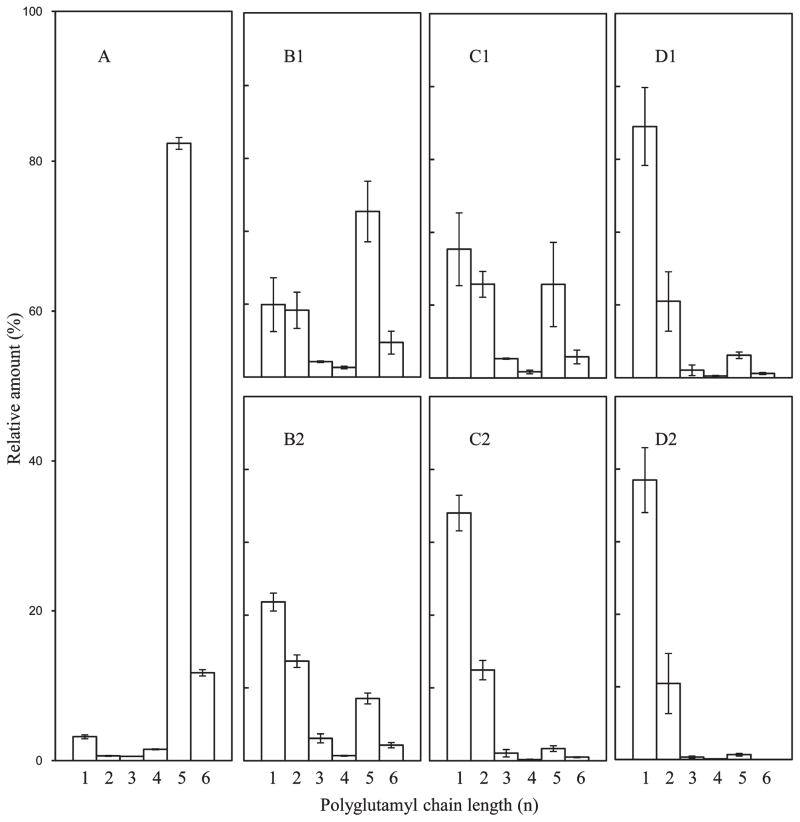
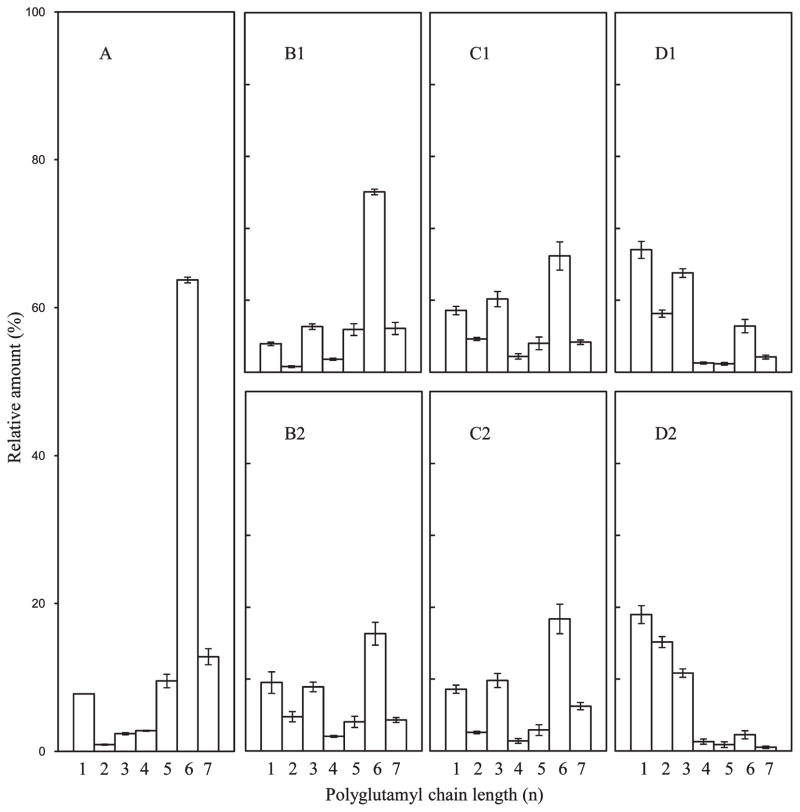
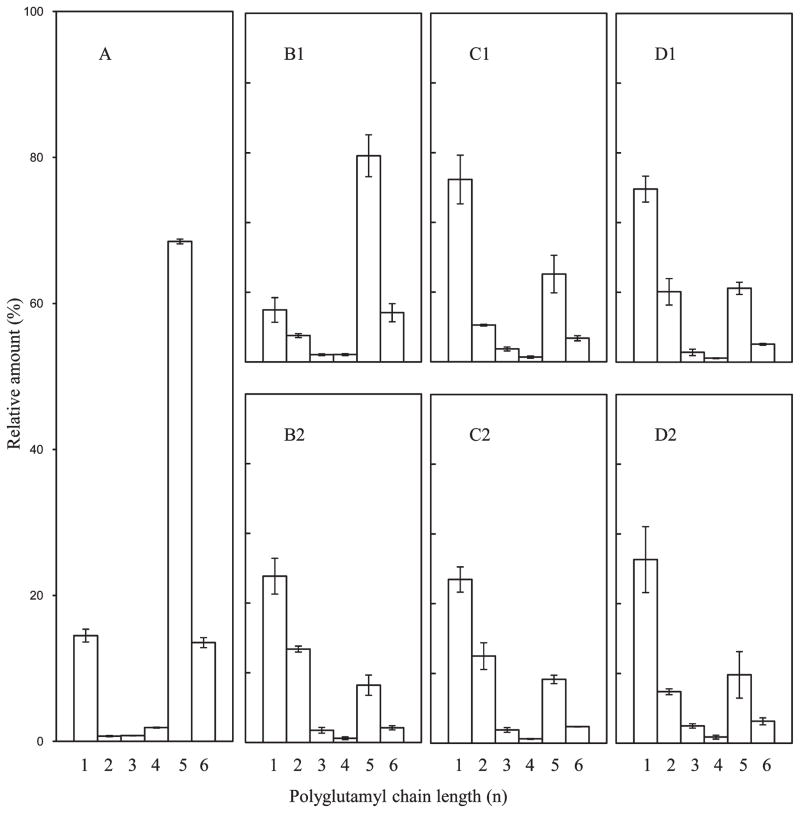
In plants, folate occurs predominantly as 5-methyltetrahydrofolate (5MTHF) polyglutamyl forms. Differences in stability and bioavailability of food folate compared to synthetic folic acid have been attributed to the presence of the polyglutamyl chain. High-pressure processing (HPP) was tested for whether it might shorten polyglutamyl chains of 5MTHF species in fresh vegetables by enabling action of native γ-glutamylhydrolase (GGH). A validated ultrahigh-performance reversed-phase liquid chromatography-tandem mass spectrometry method using stable isotope as internal standard was applied for characterizing 5MTHF polyglutamyl profiles. HPP conditions included 300, 450, and 600 MPa at 30 °C for 0 or 5 min, and vegetables were vacuum-packed before treatment. Investigated vegetables included cauliflower (Brassica oleracea), baby carrots (Daucus carota), and carrot greens (D. carota). HPP treatment caused conversion of polyglutamyl 5MTHF species to short-chain and monoglutamyl forms. Maximal conversion of polyglutamyl folate to monoglutamyl folate occurred at the highest pressure/time combination investigated, 600 MPa/30 °C/5 min. Under this condition, cauliflower monoglutamyl folate increased nearly 4-fold, diglutamyl folate 32-fold, and triglutamyl folate 8-fold; carrot monoglutamyl increased 23-fold and diglutamyl 32-fold; and carrot greens monoglutamyl increased 2.5-fold and the diglutamyl form 19-fold. Although some folate degradation was observed at certain intermediate HPP conditions, total 5MTHF folate was largely preserved at 600 MPa/5 min. Thus, HPP of raw vegetables is a feasible strategy for enhancing vegetable monoglutamate 5MTHF.
Figures
References
-
- Suh JR, Herbig AK, Stover PJ. New perspectives on folate catabolism. Annu Rev Nutr. 2001;21:255–282. - PubMed
-
- Stover PJ. Physiology of folate and vitamin B12 in health and disease. Nutr Rev. 2004;62:s3–s12. - PubMed
-
- Dary O. Nutritional interpretation of folic acid interventions. Nutr Rev. 2009;67:235–244. - PubMed
-
- Blancquaert D, Storozhenko S, Loizeau K, De Steur H, De Brouwer V, Viaene J, Ravanel S, Rébeillé F, Lambert W, Van Der Straeten D. Folates and folic acid: from fundamental research toward sustainable health. Crit Rev Plant Sci. 2010;29:14–35.
-
- Kim YI. Will mandatory folic acid fortification prevent or promote cancer? Am J Clin Nutr. 2004;80:1123–1128. - PubMed
MeSH terms
Substances
Grants and funding
LinkOut - more resources
Full Text Sources
Miscellaneous
