


doi: 10.1155/2011/645743.
Epub 2011 Mar 30.
Incidental cutaneous reaction patterns: epidermolytic hyperkeratosis, acantholytic dyskeratosis, and hailey-hailey-like acantholysis: a potential marker of premalignant skin change
Affiliations
- PMID: 21773039
- PMCID: PMC3135235
- DOI: 10.1155/2011/645743
Item in Clipboard
Incidental cutaneous reaction patterns: epidermolytic hyperkeratosis, acantholytic dyskeratosis, and hailey-hailey-like acantholysis: a potential marker of premalignant skin change
J Skin Cancer.
2011.
Abstract
Focal acantholytic dyskeratosis (FAD), epidermolytic hyperkeratosis (EHK), and Hailey-Hailey-like acantholysis (HH) represent unique histology reaction patterns, which can be associated with defined phenotypic and genotypic alterations. Incidental microscopic foci demonstrating these patterns have been identified in skin and mucosal specimens in association with a gamut of disease processes. These changes, when secondary, are of unclear etiology and significance. The following study further analyzes the incidence and association of these histologic patterns in a routine pathology/dermatopathology practice.
Figures
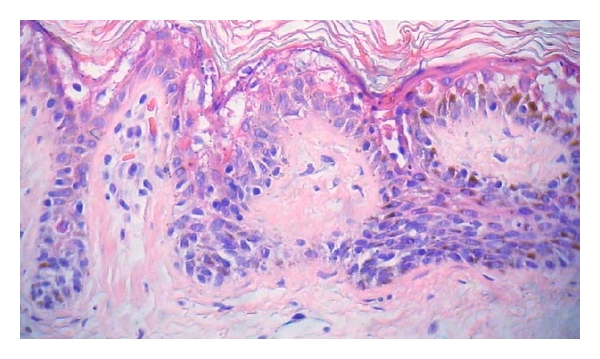
Incidental epidermolytic hyperkeratosis occurring in association with a dysplastic junctional nevus. (200X magnification, hematoxylin, and eosin stain).
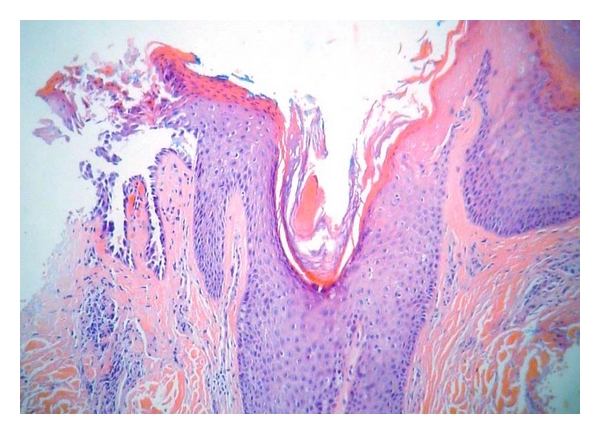
Incidental focal acantholytic dyskeratosis occurring in a biopsy of lichen simplex chronicus. (200X magnification, hematoxylin, and eosin stain).
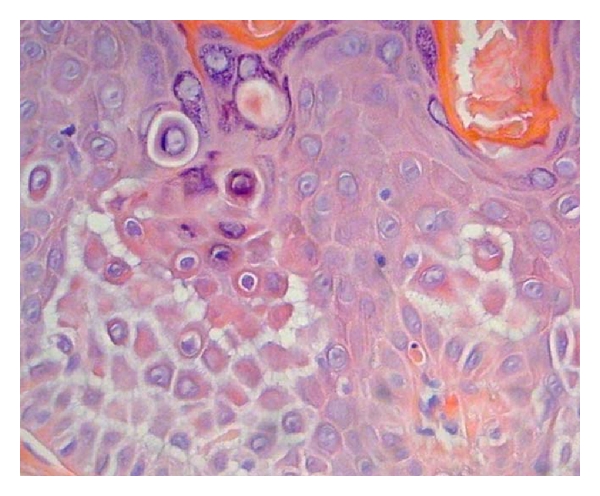
Incidental focal acantholytic dyskeratosis associated with prominent solar elastosis. This occurred in association with an excision of a melanoma in situ. (400X magnification, hematoxylin, and eosin stain).
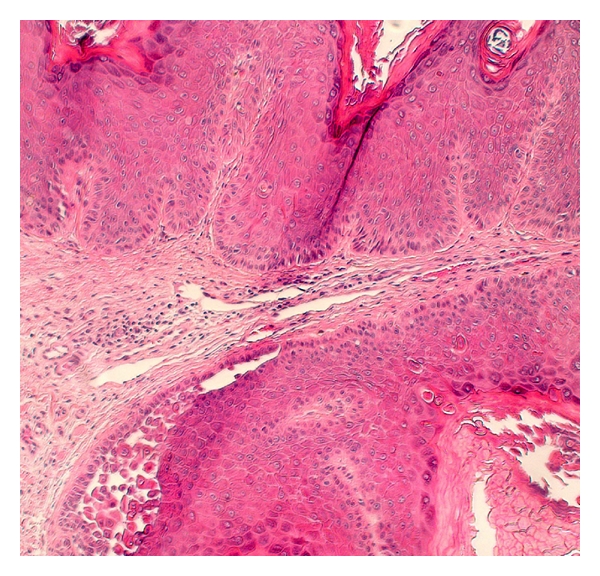
Incidental focus of Hailey-Hailey-like acantholysis, occurring in association with a benign keratosis with features of seborrheic keratosis. (200X magnification, hematoxylin, and eosin stain).
References
-
- Mahaisavariya P, Cohen PR, Rapini RP. Incidental epidermolytic hyperkeratosis. American Journal of Dermatopathology. 1995;17(1):23–28. - PubMed
-
- Zina AM, Bundino S, Pippione MG. Acrosyringial epidermolytic papulosis neviformis. Dermatologica. 1985;171(2):122–125. - PubMed
-
- Mehregan AH. Epidermolytic hyperkeratosis. Incidental findings in the epidermis and in the intraepidermal eccrine sweat duct units. Journal of Cutaneous Pathology. 1978;5(2):76–80. - PubMed
-
- Hutcheson ACS, Nietert PJ, Maize JC. Incidental epidermolytic hyperkeratosis and focal acantholytic dyskeratosis in common acquired melanocytic nevi and atypical melanocytic lesions. Journal of the American Academy of Dermatology. 2004;50(3):388–390. - PubMed
-
- Williams BT, Barr RJ. Epidermolytic hyperkeratosis in nevi: a possible marker for atypia. American Journal of Dermatopathology. 1996;18(2):156–158. - PubMed
LinkOut - more resources
Full Text Sources
Research Materials
