


Age differences in symptom expression in patients with major depression
- PMID: 21773997
- PMCID: PMC3275655
- DOI: 10.1002/gps.2759
Age differences in symptom expression in patients with major depression
Abstract
Objective: The aim of the study was to compare symptom expression in primarily middle-aged (<60) and older (60+) patients who were depressed and determine if symptom profiles differed by age.
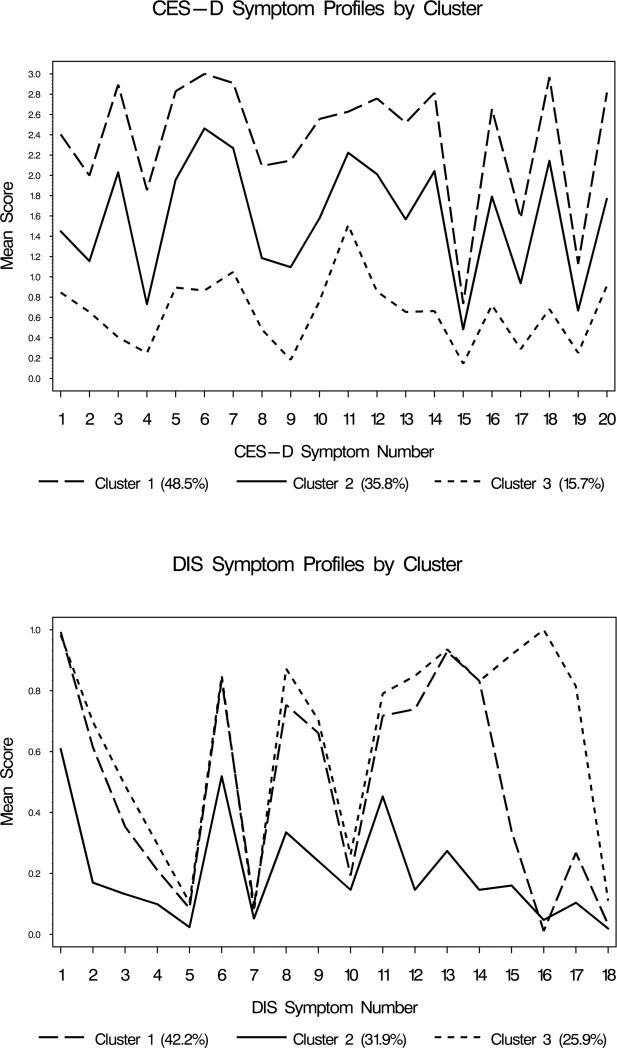
Methods: Patients diagnosed with major depression (N = 664) were screened using the Center for Epidemiologic Studies--Depression scale and sections of the Diagnostic Interview Schedule. Patients were separated into homogeneous clusters based on symptom endorsement using latent class analysis.
Results: Older patients were less likely to endorse crying spells, sadness, feeling fearful, being bothered, or feeling life a failure but were more likely to endorse poor appetite and loss of interest in sex. Older patients were also less likely to report enjoying life, feeling as good as others, feeling worthless, wanting to die, and thinking about suicide. In two latent class models with depressive symptoms as indicators, three-class models best fit the data. Profiles supported heterogeneity in symptom expression. Clusters differed by age when other demographic, clinical, health, and social variables were controlled but did not support age-specific symptom profiles. Overall, older patients had later age of onset, had fewer lifetime spells, were more likely to have ever received electroconvulsive therapy (ECT), and were less likely to have comorbid anxiety. Older patients also had more cognitive impairment, health conditions, and mobility limitations but had higher levels of subjective social support and had experienced fewer stressful life events.
Conclusions: There are age differences in symptom endorsement between younger/middle-aged and older patients with major depression. The data, however, did not identify a symptom profile unique to late-life depression.
Copyright © 2011 John Wiley & Sons, Ltd.
Figures
References
-
- Alexopoulos G, Meyers B, Young R, Campbell S, Silbersweig D, Charlson M. ‘Vascular depression’ hypothesis. Arch Gen Psychiatry. 1997a;54:915–922. - PubMed
-
- Alexopoulos GS, Meyers BS, Young RC, Kakuma T, Silbersweig D, Charlson M. Clinically defined vascular depression. Am J Psychiatry. 1997b;154:562–565. - PubMed
-
- American Psychiatric Association . DSM-III: Diagnostic and Statistical Manual of Mental Disorders. Third ed. American Psychiatric Association; Washington, DC: 1980.
-
- Berry JM, Storandt M, Coyle A. Age and sex differences in somatic complaints associated with depression. J Gerontol. 1984;39:465–467. - PubMed
-
- Blazer DG. Is depression more frequent in late life? An honest look at the evidence. Am J Geriatr Psychiatry. 1994;2:193–199. - PubMed
Publication types
MeSH terms
Grants and funding
LinkOut - more resources
Full Text Sources
