


Crystal structure of New Delhi metallo-β-lactamase reveals molecular basis for antibiotic resistance
- PMID: 21774017
- PMCID: PMC3190144
- DOI: 10.1002/pro.697
Crystal structure of New Delhi metallo-β-lactamase reveals molecular basis for antibiotic resistance
Abstract
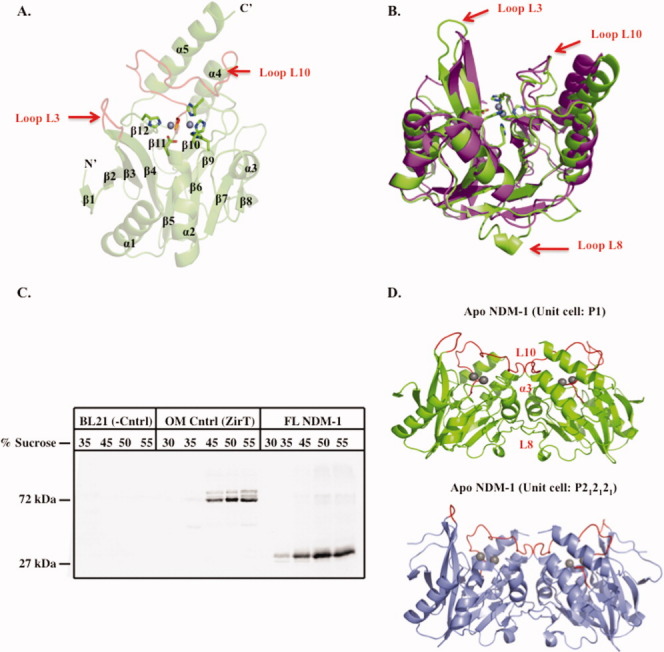
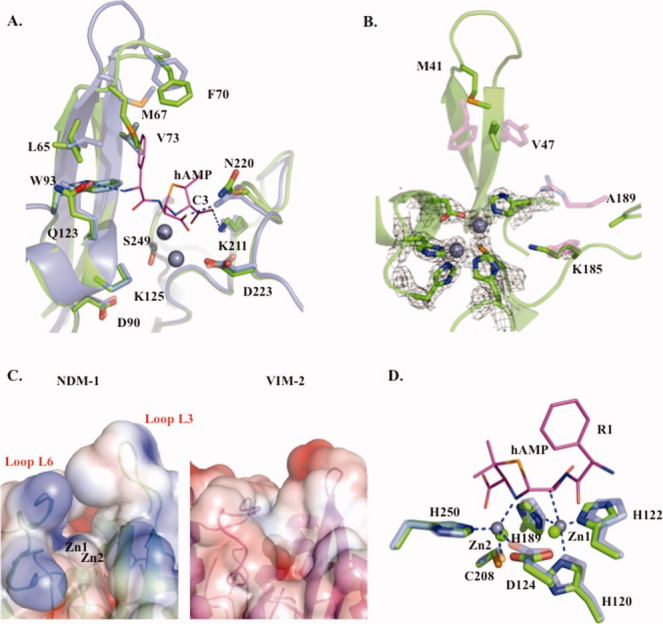
β-Lactams are the most commonly prescribed class of antibiotics and have had an enormous impact on human health. Thus, it is disquieting that an enzyme called New Delhi metallo-β-lactamase-1 (NDM-1) can confer Enterobacteriaceae with nearly complete resistance to all β-lactam antibiotics including the carbapenams. We have determined the crystal structure of Klebsiella pneumoniae apo-NDM-1 to 2.1-Å resolution. From the structure, we see that NDM-1 has an expansive active site with a unique electrostatic profile, which we propose leads to a broader substrate specificity. In addition, NDM-1 undergoes important conformational changes upon substrate binding. These changes have not been previously observed in metallo-β-lactamase enzymes and may have a direct influence on substrate recognition and catalysis.
Copyright © 2011 The Protein Society.
Figures
References
-
- Dalhoff A, Thomson CJ. The art of fusion: from penams and cephems to penems. Chemotherapy. 2003;49:105–120. - PubMed
-
- Guignard B, Entenza JM, Moreillon P. Beta-lactams against methicillin-resistant Staphylococcus aureus. Curr Opin Pharmacol. 2005;5:479–489. - PubMed
-
- Livermore D. The zeitgeist of resistance. Antimicrob Agents Chemother. 2007;60(Supp.1):i59–i61. - PubMed
-
- Pitout JD, Laupland KB. Extended-spectrum beta-lactamase-producing Enterobacteriaceae: an emerging public-health concern. Lancet Infect Dis. 2008;8:159–166. - PubMed
Publication types
MeSH terms
Substances
Grants and funding
LinkOut - more resources
Full Text Sources
Other Literature Sources
