


Influence of atorvastatin on coronary calcifications and myocardial perfusion defects in systemic lupus erythematosus patients: a prospective, randomized, double-masked, placebo-controlled study
- PMID: 21774822
- PMCID: PMC3239355
- DOI: 10.1186/ar3402
Influence of atorvastatin on coronary calcifications and myocardial perfusion defects in systemic lupus erythematosus patients: a prospective, randomized, double-masked, placebo-controlled study
Abstract
Introduction: Mortality in systemic lupus erythematosus (SLE) patients is influenced by an increased occurrence of severe cardiovascular complications. Statins have been proven to protect a wide spectrum of SLE patients from these complications. This study was conducted to determine the possible efficacy of atorvastatin in SLE patients as assessed by multi-detector computed tomography (MDCT)-based coronary calcium scoring and single photon emission computed tomography (SPECT) of the myocardium.
Methods: Sixty SLE patients in stable clinical conditions were randomized to receive either atorvastatin (40 mg daily; n = 28) or placebo (n = 32). Clinical and biochemical evaluation together with MDCT-based coronary calcium scoring and SPECT studies (Tc-99 m sestamibi) were performed at the time of randomization and after 1 year of treatment.
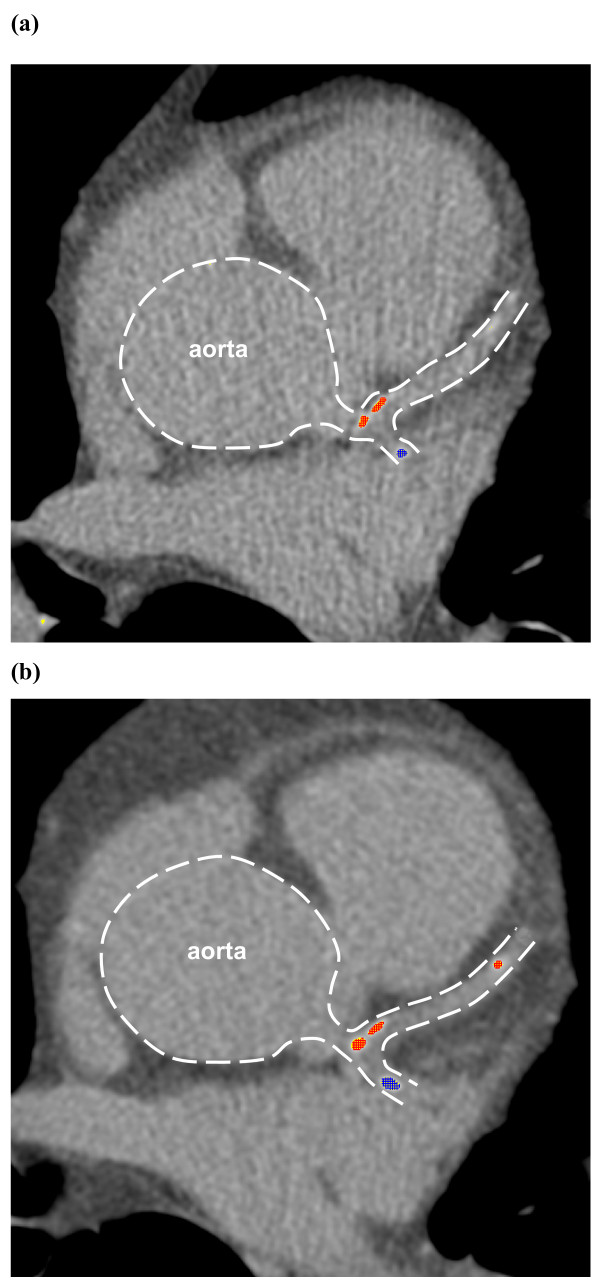
Results: At randomization, SPECT revealed perfusion defects at rest in 22 (36.7%) patients and exercise-induced defects in 8 (13.3%), whereas MDCT revealed coronary calcifications in 15 subjects (25%). Coronary calcium deposits increased after 1 year in the placebo group (plaque volume change from 35.2 ± 44.9 to 62.9 ± 72.4, P < 0.05; calcium score from 32.1 ± 39.1 to 59.5 ± 64.4; P < 0.05), but not in the atorvastatin group (plaque volume 54.5 ± 62.4 vs. 51.0 ± 47.6, P not significant; calcium score 44.8 ± 50.6 vs. 54.9 ± 62.5, P not significant). The atorvastatin group showed a decrease in total serum cholesterol (from 5.1 ± 1.2 to 4.4 ± 0.7 mmol/L, P < 0.05), LDL cholesterol (2.9 ± 1.0 to 2.3 ± 0.6 mmol/L, P < 0.05), triglycerides (1.6 ± 0.6 to 1.2 ± 0.5 mmol/L, P < 0.05), and C-reactive protein (CRP) (4.4 ± 4.1 to 2.7 ± 1.7 mg/L, P < 0.05). There was no change in the mean Systemic Lupus Erythematosus Disease Activity Index (SLEDAI) score in patients from both groups. Perfusion defects observed at randomization showed no change after one year treatment with atorvastatin.
Conclusions: In SLE patients 40 mg of atorvastatin daily for 1 year led to a decrease in serum lipids and CRP levels. Additionally the progression of atherosclerosis, as assessed by MDCT-based coronary calcium scoring, is restrained by atorvastatin treatment. The value of statin treatment in patients with SLE free from cardiovascular disease clinical symptoms should be addressed in large, prospective clinical trials.
Figures
References
-
- Pons-Estel GJ, Gonzales LA, Zhang J, Burgos Pl, Reveille JD, Vila LM, Alarcon GS. Predictors of cardiovascular damage in patients with systemic lupus erythematosus: data from LUMINA (LXVIII), a multicenter US cohort. Rheumatology. 2009;48:817–822. doi: 10.1093/rheumatology/kep102. - DOI - PMC - PubMed
-
- ALLHAT-LLT Officers and Coordinators. Major outcomes in moderately-hypercholesterolemic, hypertensive patients randomized to pravastatin vs. usual care: the antihypertensive and lipid-lowering treatment to prevent heart attack trial (ALLHAT-LLT) JAMA. 2002;288:2998–3007. doi: 10.1001/jama.288.23.2998. - DOI - PubMed
-
- Shepherd J, Cobbe SM, Ford I, Isles CG, Lorimer AR, MacFarlane PW, McKillop JH, Packard CJ. Prevention of coronary heart disease with pravastatin in men with hypercholesterolemia. West of Scotland Coronary Prevention Study Group. N Engl J Med. 1995;333:1301–1307. doi: 10.1056/NEJM199511163332001. - DOI - PubMed
Publication types
MeSH terms
Substances
LinkOut - more resources
Full Text Sources
Medical
Research Materials
Miscellaneous
