


Trends of human papillomavirus testing in cervical cancer screening at a large academic cytology laboratory
- PMID: 21775844
- PMCID: PMC4763923
- DOI: 10.1097/AOG.0b013e3182253c33
Trends of human papillomavirus testing in cervical cancer screening at a large academic cytology laboratory
Abstract
Objective: To estimate time trends of actual provider use of human papillomavirus (HPV) testing in cervical cancer screening by using laboratory and administrative data from the Johns Hopkins Hospital Division of Cytopathology in Baltimore, Maryland.
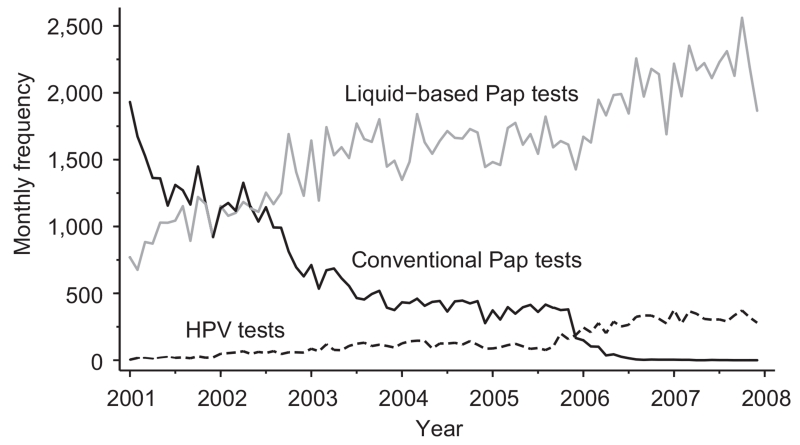
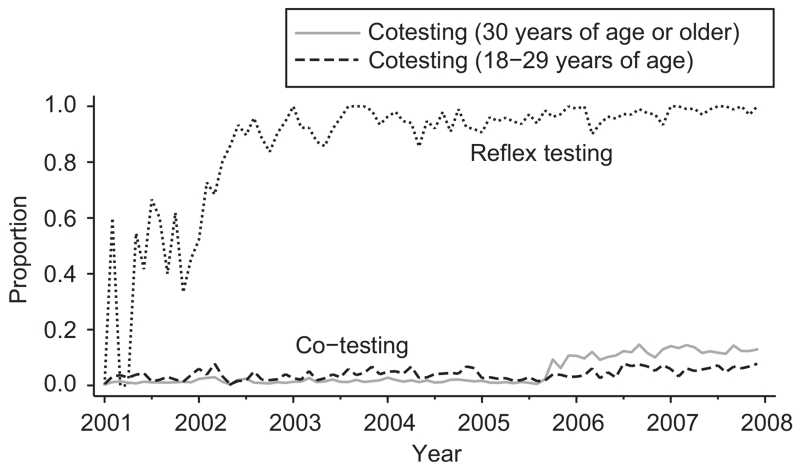
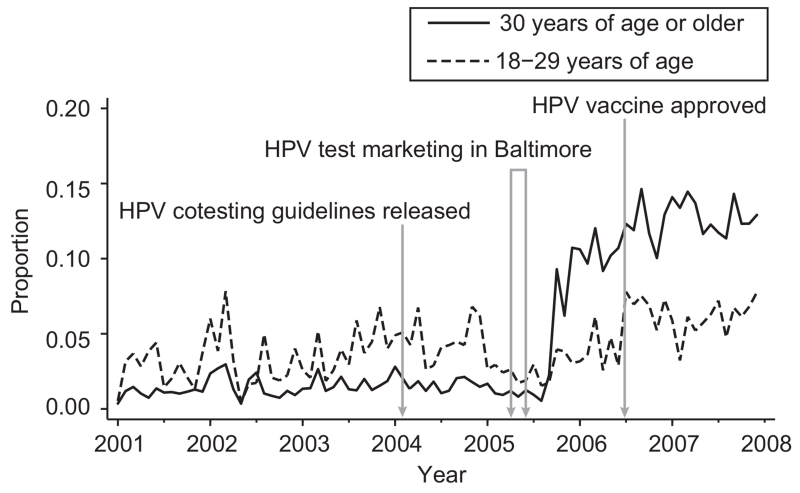
Methods: In this ecologic trend study, we analyzed 178,510 Pap specimen records and 12,221 HPV tests among 85,048 patients from 2001 to 2007. Monthly frequencies and proportions of HPV reflex testing and HPV cotesting with Pap (stratified by patient ages 30 and older and 18-29 years) were calculated. Time trends of monthly HPV testing proportions were analyzed using joinpoint regression methods.
Results: From April 2002, when the American Society for Colposcopy and Cervical Pathology added HPV reflex testing to its guidelines, to December 2007, the monthly the proportion of reflex testing was 95.8%. From February 2004, when the society added HPV cotesting with Pap among women aged 30 years or older to its guidelines, to December 2007, the overall proportion HPV cotesting with Pap among patients aged 30 years or older was 7.8% (compared with 4.9% among patients 18-29 years [P<.01]). The highest proportion of HPV cotesting among women aged 30 years or older, 15%, was observed in September 2006, and the trend later plateaued around 13%. The monthly proportions of HPV reflex testing and cotesting with Pap changed significantly over time.
Conclusion: These data reveal that a small percentage of women aged 30 years or older received HPV cotesting with Pap, thus identifying a significant opportunity for providers to improve patient care in cervical cancer prevention.
Level of evidence: III.
Figures
References
-
- U.S. Food and Drug Administration FDA approves expanded use of HPV test. 2003 Mar 31; Available at: http://www.fda.gov/ohrms/dockets/dockets/07p0210/07p-0210-ccp0001-01-FDA.... Retrieved February 9, 2011.
-
- Wright TC, Jr, Massad LS, Dunton CJ, Spitzer M, Wilkinson EJ, Solomon D. 2006 American Society for Colposcopy and Cervical Pathology-sponsored Consensus Conference. 2006 consensus guidelines for the management of women with abnormal cervical cancer screening tests. Am J Obstet Gynecol. 2007;197:346–55. - PubMed
-
- Wright TC, Jr, Schiffman M, Solomon D, Cox JT, Garcia F, Goldie S, et al. Interim guidance for the use of human papillomavirus DNA testing as an adjunct to cervical cytology for screening. Obstet Gynecol. 2004;103:304–9. - PubMed
-
- Human papillomavirus. American College of Obstetricians and Gynecologists Obstet Gynecol. 2005;105:905–18. ACOG Practice Bulletin No. 61. - PubMed
-
- Saslow D, Runowicz CD, Solomon D, Moscicki AB, Smith RA, Eyre HJ, et al. American Cancer Society guideline for the early detection of cervical neoplasia and cancer. J Low Genit Tract Dis. 2003;7:67–86. - PubMed
Publication types
MeSH terms
Grants and funding
LinkOut - more resources
Full Text Sources
Medical
Research Materials
Miscellaneous
