


Mechanisms of phosphine toxicity
- PMID: 21776261
- PMCID: PMC3135219
- DOI: 10.1155/2011/494168
Mechanisms of phosphine toxicity
Abstract
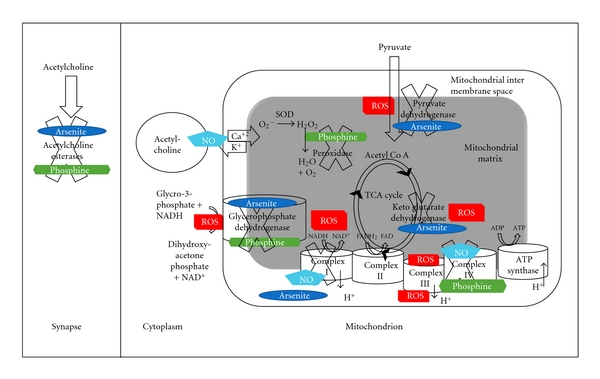
Fumigation with phosphine gas is by far the most widely used treatment for the protection of stored grain against insect pests. The development of high-level resistance in insects now threatens its continued use. As there is no suitable chemical to replace phosphine, it is essential to understand the mechanisms of phosphine toxicity to increase the effectiveness of resistance management. Because phosphine is such a simple molecule (PH(3)), the chemistry of phosphorus is central to its toxicity. The elements above and below phosphorus in the periodic table are nitrogen (N) and arsenic (As), which also produce toxic hydrides, namely, NH(3) and AsH(3). The three hydrides cause related symptoms and similar changes to cellular and organismal physiology, including disruption of the sympathetic nervous system, suppressed energy metabolism and toxic changes to the redox state of the cell. We propose that these three effects are interdependent contributors to phosphine toxicity.
Figures
References
-
- Fluck E. The chemistry of phosphine. Fortschritte der Chemischen Forschung. 1973;35:1–64.
-
- Chaudhry MQ. A review of the mechanisms involved in the action of phosphine as an insecticide and phosphine resistance in stored-product insects. Pesticide Science. 1997;49(3):213–228.
-
- Berners-Price S, Sadler P. Phosphines and metal phosphine complexes: relationship of chemistry to anticancer and other biological activity. Bioinorganic Chemistry. 1988;70:27–102.
-
- Wright PA. Nitrogen excretion: three end products, many physiological roles. Journal of Experimental Biology. 1995;198(2):273–281. - PubMed
-
- Uthus E. Arsenic essentiality: a role affecting methionine metabolism. The Journal of Trace Elements in Experimental Medicine. 2003;16(4):345–355.
LinkOut - more resources
Full Text Sources
Research Materials
Miscellaneous
