


ATR autophosphorylation as a molecular switch for checkpoint activation
- PMID: 21777809
- PMCID: PMC3155885
- DOI: 10.1016/j.molcel.2011.06.019
ATR autophosphorylation as a molecular switch for checkpoint activation
Abstract
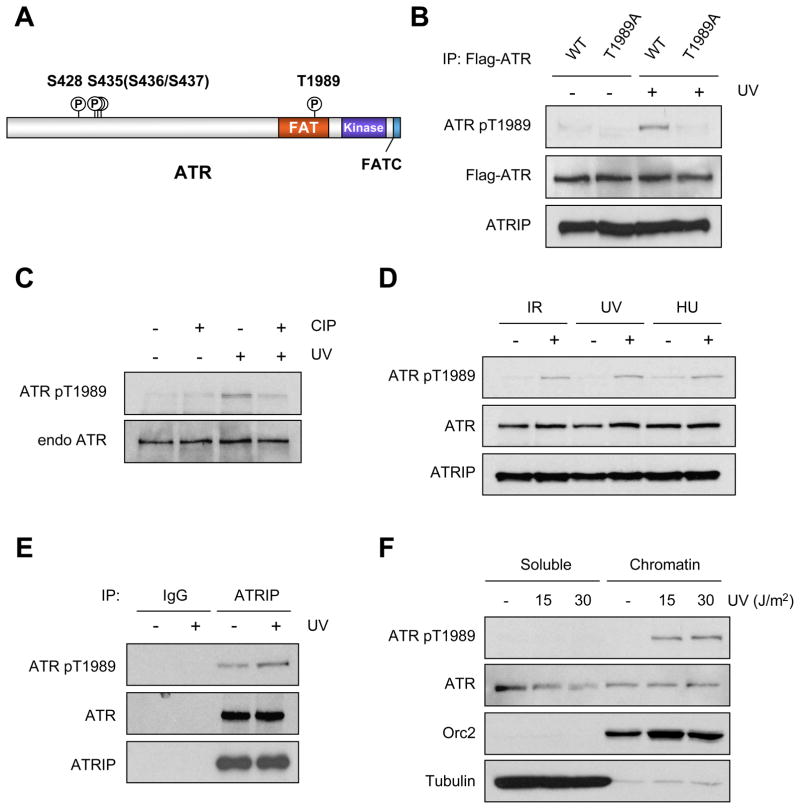
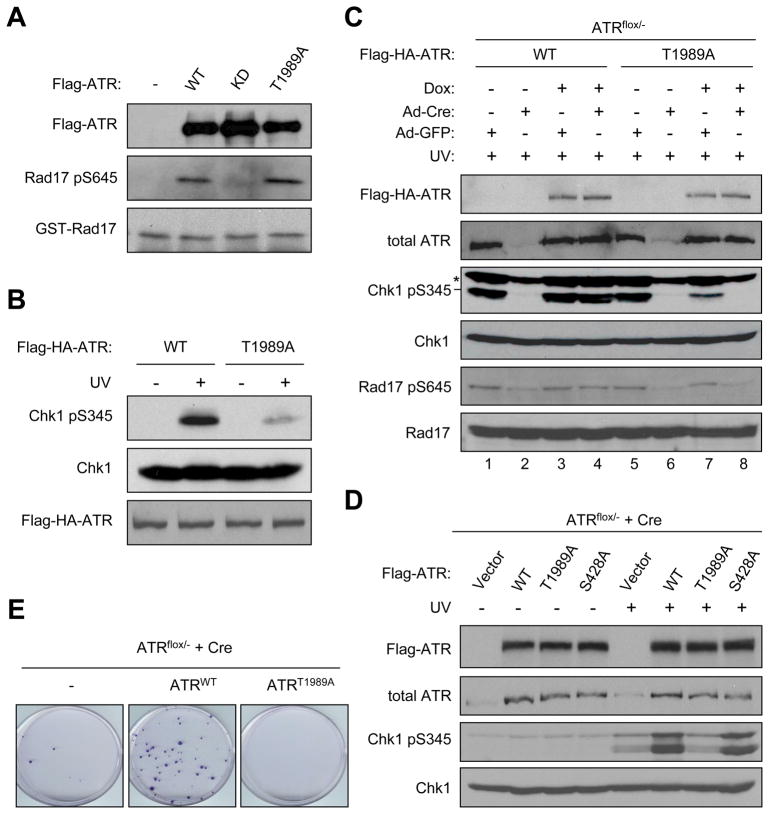
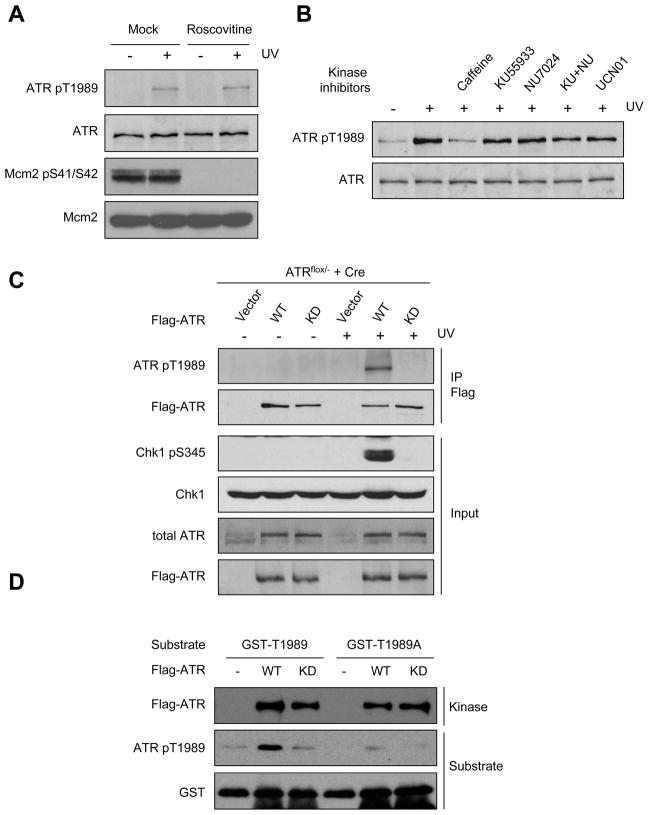
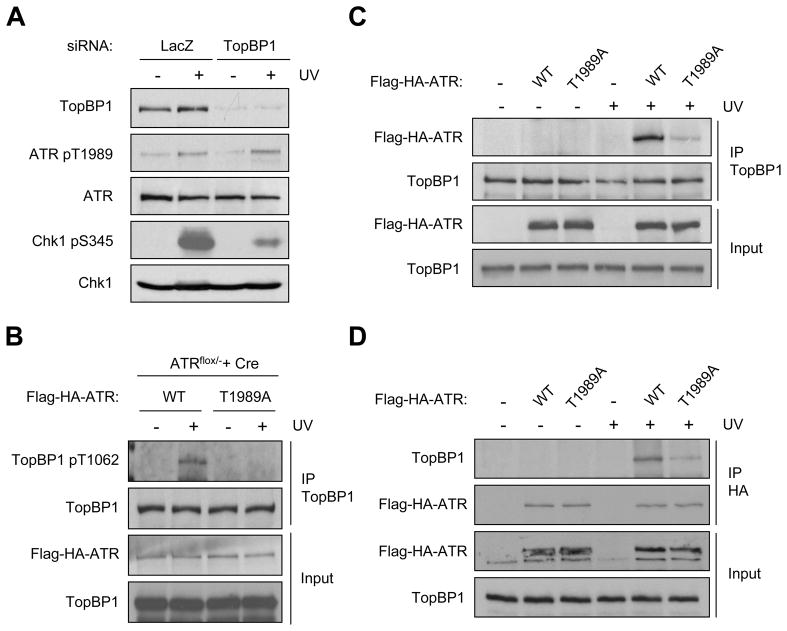
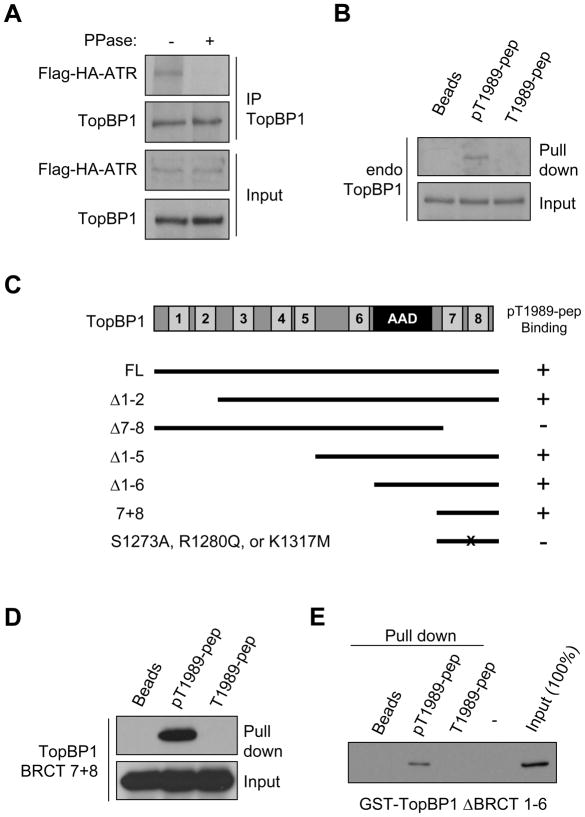
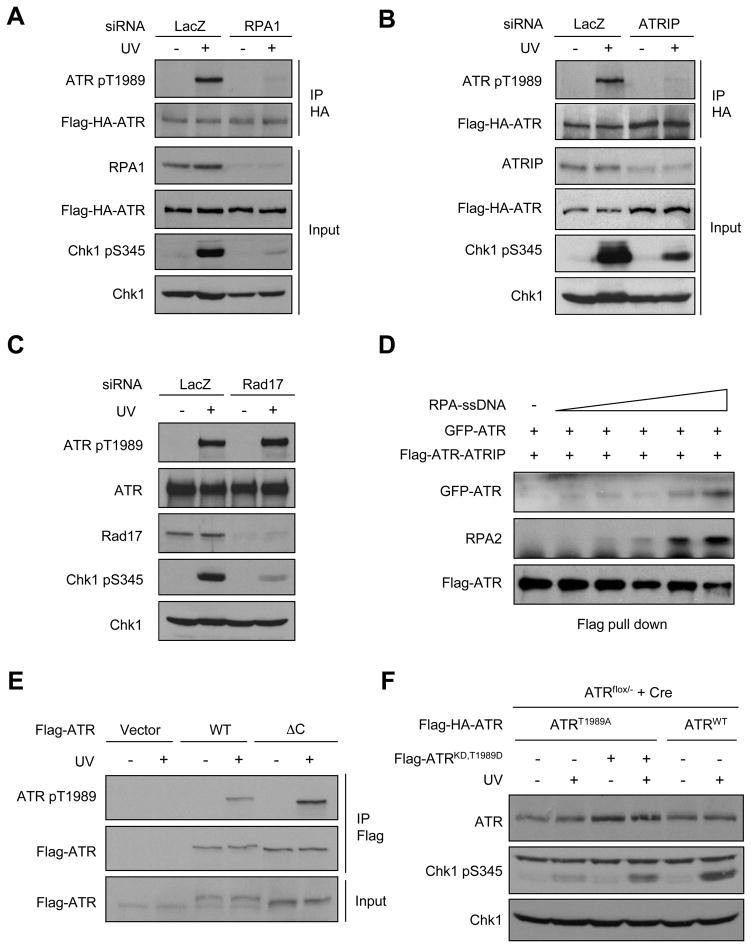
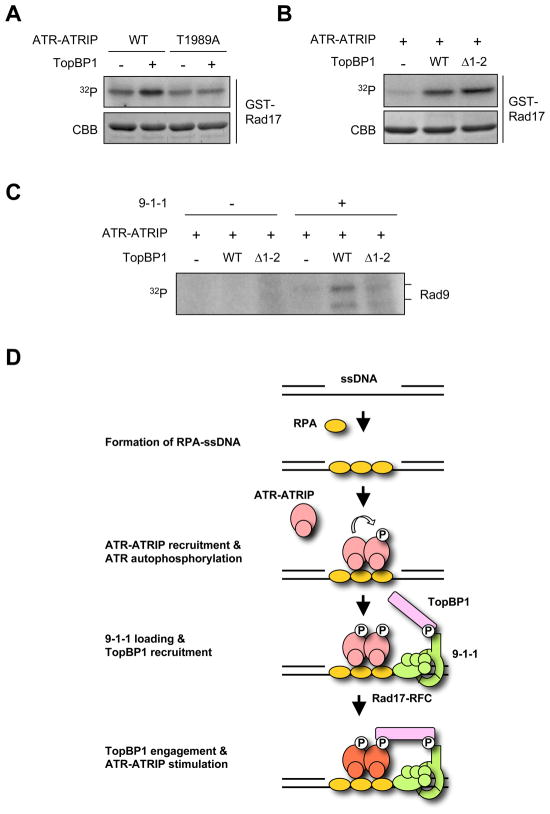
The ataxia telangiectasia-mutated and Rad3-related (ATR) kinase is a master checkpoint regulator safeguarding the genome. Upon DNA damage, the ATR-ATRIP complex is recruited to sites of DNA damage by RPA-coated single-stranded DNA and activated by an elusive process. Here, we show that ATR is transformed into a hyperphosphorylated state after DNA damage, and that a single autophosphorylation event at Thr 1989 is crucial for ATR activation. Phosphorylation of Thr 1989 relies on RPA, ATRIP, and ATR kinase activity, but unexpectedly not on the ATR stimulator TopBP1. Recruitment of ATR-ATRIP to RPA-ssDNA leads to congregation of ATR-ATRIP complexes and promotes Thr 1989 phosphorylation in trans. Phosphorylated Thr 1989 is directly recognized by TopBP1 via the BRCT domains 7 and 8, enabling TopBP1 to engage ATR-ATRIP, to stimulate the ATR kinase, and to facilitate ATR substrate recognition. Thus, ATR autophosphorylation on RPA-ssDNA is a molecular switch to launch robust checkpoint response.
Copyright © 2011 Elsevier Inc. All rights reserved.
Figures
References
-
- Bakkenist CJ, Kastan MB. DNA damage activates ATM through intermolecular autophosphorylation and dimer dissociation. Nature. 2003;421:499–506. - PubMed
-
- Berkovich E, Monnat RJ, Jr, Kastan MB. Roles of ATM and NBS1 in chromatin structure modulation and DNA double-strand break repair. Nat Cell Biol. 2007;9:683–690. - PubMed
Publication types
MeSH terms
Substances
Grants and funding
LinkOut - more resources
Full Text Sources
Other Literature Sources
Molecular Biology Databases
Research Materials
Miscellaneous
