. 2011 Jul;7(7):e1002126.
doi: 10.1371/journal.ppat.1002126. Epub 2011 Jul 14.

A genome-wide approach to discovery of small RNAs involved in regulation of virulence in Vibrio cholerae

Affiliations

A genome-wide approach to discovery of small RNAs involved in regulation of virulence in Vibrio cholerae

Evan S Bradley et al. PLoS Pathog. 2011 Jul.

Abstract

Small RNAs (sRNAs) are becoming increasingly recognized as important regulators in bacteria. To investigate the contribution of sRNA mediated regulation to virulence in Vibrio cholerae, we performed high throughput sequencing of cDNA generated from sRNA transcripts isolated from a strain ectopically expressing ToxT, the major transcriptional regulator within the virulence gene regulon. We compared this data set with ToxT binding sites determined by pulldown and deep sequencing to identify sRNA promoters directly controlled by ToxT. Analysis of the resulting transcripts with ToxT binding sites in cis revealed two sRNAs within the Vibrio Pathogenicity Island. When deletions of these sRNAs were made and the resulting strains were competed against the parental strain in the infant mouse model of V. cholerae colonization, one, TarB, displayed a variable colonization phenotype dependent on its physiological state at the time of inoculation. We identified a target of TarB as the mRNA for the secreted colonization factor, TcpF. We verified negative regulation of TcpF expression by TarB and, using point mutations that disrupted interaction between TarB and tpcF mRNA, showed that loss of this negative regulation was primarily responsible for the colonization phenotype observed in the TarB deletion mutant.


Conflict of interest statement

The authors have declared that no competing interests exist.

Figures
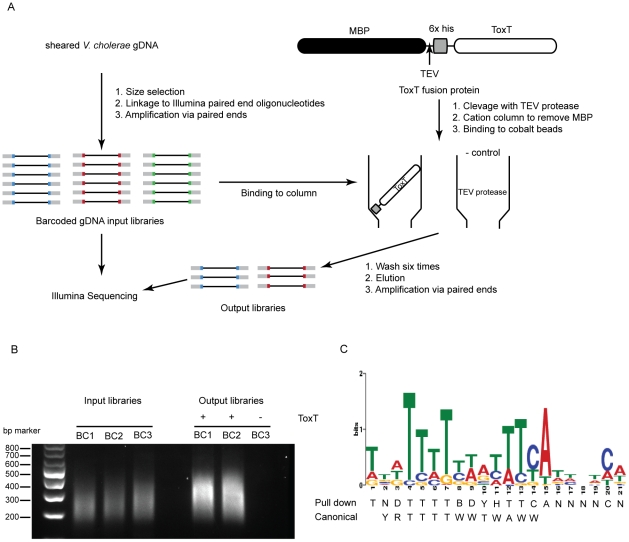
Figure 1
Figure 1. Affinity purification of ToxT binding sequences.
A) Experimental outline of the ToxT in vitro DNA pulldown. Because the purification procedure left a residual amount of TEV protease in the His-ToxT prep, a negative control pulldown was performed with 6His-TEV protease. B) Amplification of resulting libraries after pulldowns shows that in the presence of ToxT (libraries BC1 and BC2), DNA was eluted from the column, whereas with TEV bound to the column instead, no DNA is detected after 10 cycles of amplification (BC3). C) The resulting binding motif predicted for ToxT present in 66 out of 67 pulldown sites with an E-value of 2.3e14 as analyzed by MEME software according to parameters detailed in Methods. The ToxT binding motif predicted by pulldown is shown with the previously reported canonical toxbox. Single letter codes are as follows; B = C/G/T, D = A/G/T, H = A/C/T, N = A/C/G/T, R = A/G, W = A/T, Y = C/T.
Figure 2
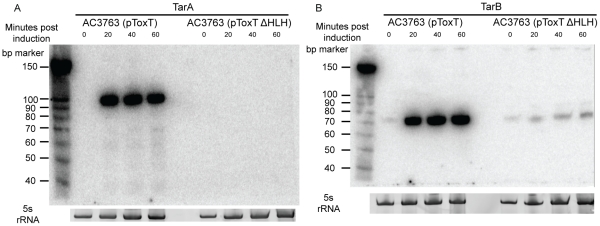
Figure 2. Northern blots of TarA and TarB.
32P-UTP labeled riboprobes complementary to sRNAs were used to blot for the presence of the expected sRNAs in total RNA isolated from cultures expressing ToxT or ToxTΔHLH from plasmids. A) TarA is detected at the predicted molecular weight and is present at high abundance within 20 minutes after induction by addition of arabinose, which is absent in the transcriptionally inactive ΔHLH form of ToxT. B) TarB is also present at the predicted size based on sequencing data and also shows dramatic upregulation in the ToxT expressing strain but not the strain expressing inactive ΔHLH ToxT.
Figure 3
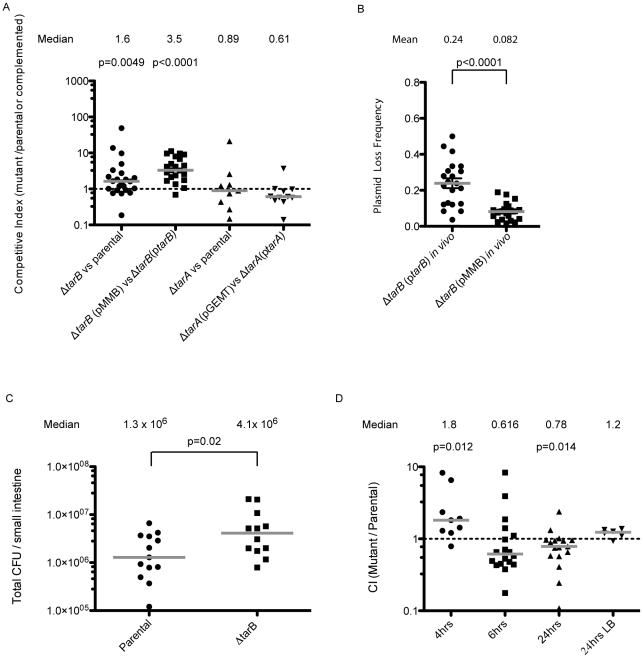
Figure 3. Mouse infections performed with ΔsRNA and complemented strains.
A) Competitions performed with unmarked deletions of tarA and tarB against the parental strain carrying a lacZ deletion. Competitive indices are reported as the ratio of CFUs in the output adjusted for the input ratio. The ΔtarB strain shows enhancement of colonization over the parental strain, but the ΔtarA strain shows no significant trend. When tarA and tarB (promoters included) were cloned into complementation vectors and the complemented strains were competed against deletion strains carrying vector alone, the ΔtarB strain shows a more dramatic enhancement of colonization over the complemented strain (median CI = 3.5), while the ΔtarA complemented strain shows a slight but not significant advantage over the deletion strain (median CI = 0.61; Wilcoxon signed rank test on log transformed data). B) Output plates from the competitions in panel A were replica plated onto plates containing ampicillin to assay for presence of the plasmid. Replica plating shows that ptarB is lost 2.9× more frequently then the vector alone (p<0.01, two sample T-test with Welch's correction for unequal variance). C) Single strain infections were performed with wildtype and ΔtarB mutants, results are reported as the total CFUs estimated in small intestine homogenates, in single strain infections the ΔtarB mutant also shows a hypercolonization phenotype relative to wildtype (p = 0.02 two sample t-test on log transformed data). D) Competitions were carried out in mice after preincubation of the ΔtarB and parental strains in pond water for 4, 6 and 24 h. The ΔtarB mutant preincubated for 4 h in pond water has a fitness advantage over the parental strain, similar to competitions performed without pond water preincubation. Competitions performed after 6 h of preincubation show no significant trend. However, after 24 h of preincubation there is a reversal of the above phenotype with the parental strain having a significant advantage over the ΔtarB mutant (p<0.05, Wilcoxon signed rank test on log transformed data). Importantly, these strains do not show any difference in fitness during growth in LB after 24 h pond incubation.
Figure 4
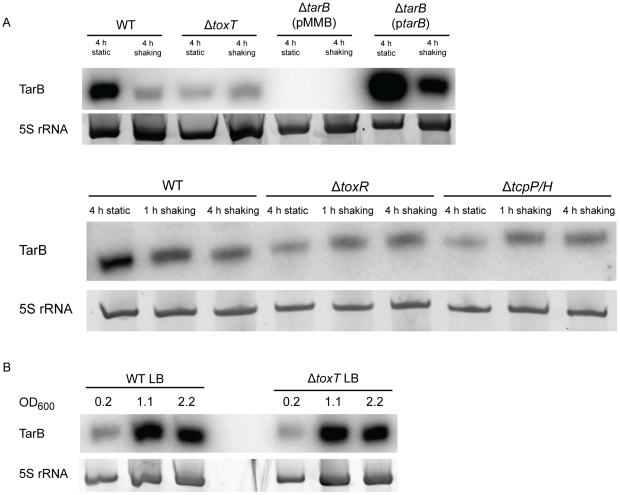
Figure 4. Northern blots of TarB during AKI induction and growth in LB.
A) To determine the pattern of TarB expression during virulence factor inducing culture conditions (AKI induction), RNA samples taken after 4 h of static growth, 1 h of shaking growth and 4 h of shaking growth were blotted for the presence of TarB. TarB is upregulated during the static growth phase of AKI inductio. Upregulation of TarB was also dependent on toxT, toxR and tcpP/H. Expression from the complementation plasmid ptarB reveals that TarB is overexpressed from this plasmid 7–10 fold when adjusting for 5S rRNA loading, though the overall expression pattern of TarB remains the same. B) During growth in LB, tarB is upregulated upon entry into stationary phase, however, this upregulation is independent of ToxT.
Figure 5
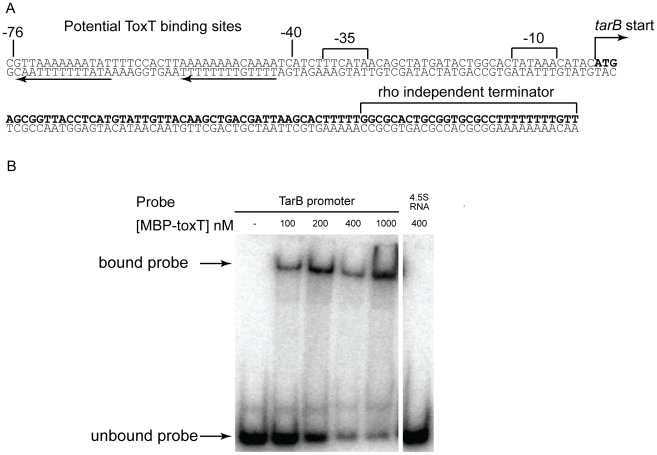
Figure 5. Sequence of tarB and ToxT binding sites within promoter region.
A) Sequence of tarB as determined by the sRNA deep sequencing experiment. Direct repeats of the putative ToxT binding sequence are highlighted by the black arrows. B) Electrophoretic mobility shift assays using uncleaved MBP-ToxT fusion protein and the sequence 100 bp upstream of the tarB transcriptional start site as a probe. A PCR product of the same size consisting of the sequence of ffh, the gene encoding the 4.5S RNA, was used as a negative control probe.
Figure 6
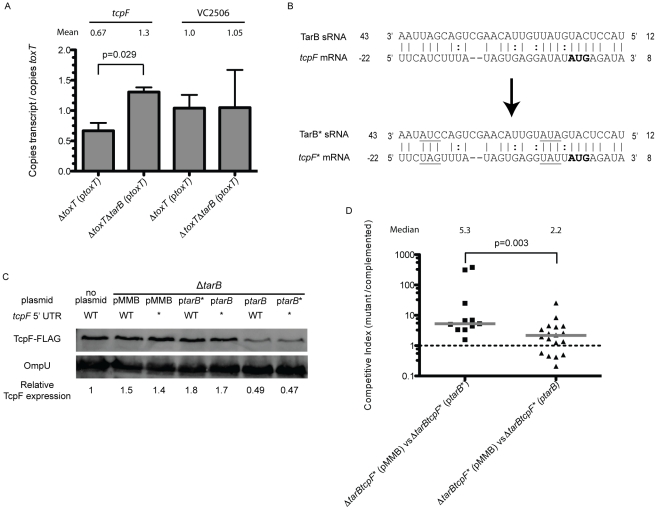
Figure 6. TarB interaction with the 5′ UTR of tcpF.
A) Quantitative reverse transcription PCR was carried out on RNA extracted from strains expressing ToxT from an arabinose inducible promoter. Because the extent of toxT induction varied between experiments, transcript levels were normalized to toxT transcript. The ΔtarB mutant showed a significant enhancement of 2-fold in tcpF transcript relative to wild type over the course of 4 independent experiments (Mann-Whitney U test), the level of the other predicted target (VC2506) did not change. B) Predicted base pairing interaction between TarB and the 5′ UTR of tcpF. The start codon of TcpF is highlighted in bold, the numbering of the tcpF transcript is relative to the start of translation, numbering of the TarB transcript is relative to the start of transcription. The mutations made to generate tcpF* and tarB* are underlined. C) A fusion of the FLAG peptide to the C-terminus of TcpF was generated to follow TcpF expression by western blot. At the 4 h static time point of AKI induction a band corresponding to the molecular weight of TcpF-FLAG was detected with the anti-FLAG antibody. Blots were then stripped and re-blotted with anti-OmpU antibodies to serve as a loading control. Fluorescence measurements of TcpF-FLAG bands were divided by measurements of OmpU bands. Results are shown for the wild type strain without plasmid (first column) and for the ΔtarB strains containing the wild type or mutated TarB cloned on the pMMB plasmid and either the wild type or mutated tcpF 5′ UTR (tcpF*) chromosomal allele (columns 2–7). Expression values are standardized to TcpF-FLAG measurements adjusted for loading in the wildtype strain. D) Competitions in infant mice between ΔtarB strains carrying the tcpF* allele complemented with ptarB or ptarB* against the same strains carrying pMMB67EH alone. The strain complemented with ptarB* shows decreased colonization relative to the empty vector strain. When complemented with ptarB the competitive index is closer to 1 (Mann-Whitney U test).

References

    1. Koch R. An address on cholera and its bacillus. BMJ. 1883;2:403–407. - PMC - PubMed
    1. Kaper JB, Morris JG, Jr, Levine MM. Cholera. Clin Microbiol Rev. 1995;8:48–86. - PMC - PubMed
    1. Childers BM, Klose KE. Regulation of virulence in Vibrio cholerae: the ToxR regulon. Future Microbiol. 2007;2:335–344. - PubMed
    1. Higgins DE, DiRita VJ. Transcriptional control of toxT, a regulatory gene in the ToxR regulon of Vibrio cholerae. Mol Microbiol. 1994;14:17–29. - PubMed
    1. Lowden MJ, Skorupski K, Pellegrini M, Chiorazzo MG, Taylor RK, et al. Structure of Vibrio cholerae ToxT reveals a mechanism for fatty acid regulation of virulence genes. Proc Natl Acad Sci U S A. 2009;107:2860–2865. - PMC - PubMed

Publication types

MeSH terms

LinkOut - more resources