. 2011;6(7):e21662.
doi: 10.1371/journal.pone.0021662. Epub 2011 Jul 11.

Offspring of mothers fed a high fat diet display hepatic cell cycle inhibition and associated changes in gene expression and DNA methylation

Affiliations

Offspring of mothers fed a high fat diet display hepatic cell cycle inhibition and associated changes in gene expression and DNA methylation

Kevin J Dudley et al. PLoS One. 2011.

Abstract

The association between an adverse early life environment and increased susceptibility to later-life metabolic disorders such as obesity, type 2 diabetes and cardiovascular disease is described by the developmental origins of health and disease hypothesis. Employing a rat model of maternal high fat (MHF) nutrition, we recently reported that offspring born to MHF mothers are small at birth and develop a postnatal phenotype that closely resembles that of the human metabolic syndrome. Livers of offspring born to MHF mothers also display a fatty phenotype reflecting hepatic steatosis and characteristics of non-alcoholic fatty liver disease. In the present study we hypothesised that a MHF diet leads to altered regulation of liver development in offspring; a derangement that may be detectable during early postnatal life. Livers were collected at postnatal days 2 (P2) and 27 (P27) from male offspring of control and MHF mothers (n = 8 per group). Cell cycle dynamics, measured by flow cytometry, revealed significant G0/G1 arrest in the livers of P2 offspring born to MHF mothers, associated with an increased expression of the hepatic cell cycle inhibitor Cdkn1a. In P2 livers, Cdkn1a was hypomethylated at specific CpG dinucleotides and first exon in offspring of MHF mothers and was shown to correlate with a demonstrable increase in mRNA expression levels. These modifications at P2 preceded observable reductions in liver weight and liver∶brain weight ratio at P27, but there were no persistent changes in cell cycle dynamics or DNA methylation in MHF offspring at this time. Since Cdkn1a up-regulation has been associated with hepatocyte growth in pathologic states, our data may be suggestive of early hepatic dysfunction in neonates born to high fat fed mothers. It is likely that these offspring are predisposed to long-term hepatic dysfunction.


Conflict of interest statement

Competing Interests: The authors have declared that no competing interests exist.

Figures

Figure 1
Figure 1. Cell cycle dynamics are altered in postnatal day 2 livers as a consequence of maternal high fat diet.
(A) Graph representing the proportion of cells present in G0/G1, S and G2/M stages of the cell cycle in postnatal day 2 livers of CTRL and MHF offspring. (B) Same data representation in postnatal day 27 livers. (C) Ratio of cells in a proliferative (S) phase relative to a resting (G0/G1) phase at postnatal day 2 and postnatal day 27 in CTRL and MHF offspring. CTRL, control offspring; MHF, maternal high fat offspring; P2, postnatal day 2; P27, postnatal day 27.
Figure 2
Figure 2. Liver weights are reduced in maternal high fat diet offspring at postnatal day 27.
Liver and brain weights in CTRL and MHF offspring at postnatal day 27. CTRL, control offspring; MHF, maternal high fat offspring.
Figure 3
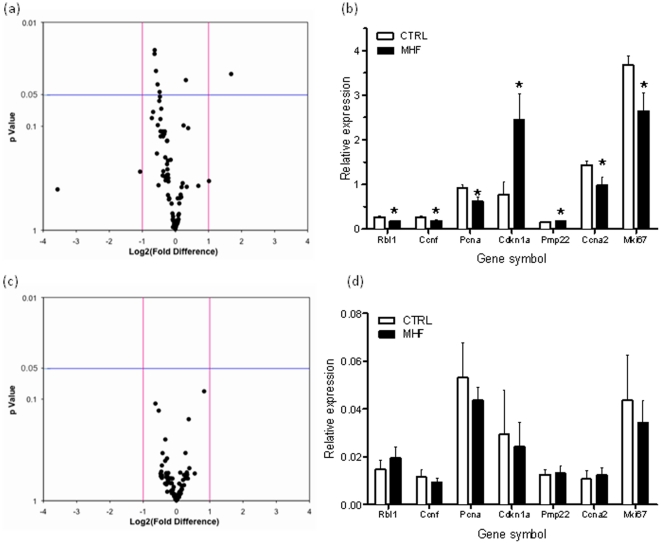
Figure 3. Cell cycle associated genes are differentially regulated as a consequence of maternal high fat diet.
(A) Volcano plot of relative gene expression (maternal high fat offspring relative to control) for 88 cell cycle associated genes in postnatal day 2 livers. Pink vertical lines indicate +/− two fold expression threshold. Blue horizontal bar represents statistical significance (P<0.05) threshold. (B) Significantly differentially expressed genes in P2 livers (C) Volcano plot for postnatal day 27 livers (D) Relative expression profiles at postnatal day 27 for the same genes shown to be significantly differentially expressed at postnatal day 2. CTRL, control offspring; MHF, maternal high fat offspring.
Figure 4
Figure 4. Cdkn1a DNA methylation levels are dynamically regulated in early postnatal livers.
(A) UCSC browser schematic of the Cdkn1a region analysed using SEQUENOM. Amplicons (1 and 2), individual CpG dinucleotides (CpG sites) as well as the 19 analysable T-cleavage-derived CpG units (SEQUENOM fragments) are represented as custom tracks. (B) Relative difference in DNA methylation (MHF compared to control) in liver at 19 CpG units across the Cdkn1a CpG Island (UCSC position chr20:7384350–7384590) at postnatal day 2 and at postnatal day 27. (C) Average absolute DNA methylation levels in liver across the entire CpG Island in CTRL and MHF offspring at postnatal day 2 and postnatal day 27. (D) Absolute DNA methylation at specific CpG units shown to be significantly differentially methylated (positions 7384957 and 7384643) in CTRL and MHF postnatal day 2 livers. P2, postnatal day 2; P27, postnatal day 27; CTRL, control offspring; MHF, maternal high fat offspring.
Figure 5
Figure 5. Cdkn1a DNA methylation is correlated with gene expression in postnatal day 2 livers.
(A) Pearson correlation for average DNA methylation across the entire Cdkn1a CpG Island and relative gene expression in postnatal day 2 livers. (B) Correlation for DNA methylation at CpG unit 7384597 and Cdkn1a relative gene expression. (C) Correlation for DNA methylation at CpG unit 7384643 and Cdkn1a relative gene expression.

References

    1. Gluckman PD, Hanson MA, Cooper C, Thornburg KL. Effect of in utero and early-life conditions on adult health and disease. N Engl J Med. 2008;359:61–73. - PMC - PubMed
    1. Vickers MH, Breier BH, Cutfield WS, Hofman PL, Gluckman PD. Fetal origins of hyperphagia, obesity, and hypertension and postnatal amplification by hypercaloric nutrition. Am J Physiol Endocrinol Metab. 2000;279:E83–87. - PubMed
    1. Howie GJ, Sloboda DM, Kamal T, Vickers MH. Maternal nutritional history predicts obesity in adult offspring independent of postnatal diet. J Physiol. 2009;587:905–915. - PMC - PubMed
    1. Kirk SL, Samuelsson AM, Argenton M, Dhonye H, Kalamatianos T, et al. Maternal obesity induced by diet in rats permanently influences central processes regulating food intake in offspring. PLoS ONE. 2009;4:e5870. - PMC - PubMed
    1. Bruce KD, Cagampang FR, Argenton M, Zhang J, Ethirajan PL, et al. Maternal high-fat feeding primes steatohepatitis in adult mice offspring, involving mitochondrial dysfunction and altered lipogenesis gene expression. Hepatology. 2009;50:1796–1808. - PubMed

Publication types