


Neurophysiologic effects of spinal manipulation in patients with chronic low back pain
- PMID: 21781310
- PMCID: PMC3149032
- DOI: 10.1186/1471-2474-12-170
Neurophysiologic effects of spinal manipulation in patients with chronic low back pain
Abstract
Background: While there is growing evidence for the efficacy of SM to treat LBP, little is known on the mechanisms and physiologic effects of these treatments. Accordingly, the purpose of this study was to determine whether SM alters the amplitude of the motor evoked potential (MEP) or the short-latency stretch reflex of the erector spinae muscles, and whether these physiologic responses depend on whether SM causes an audible joint sound.
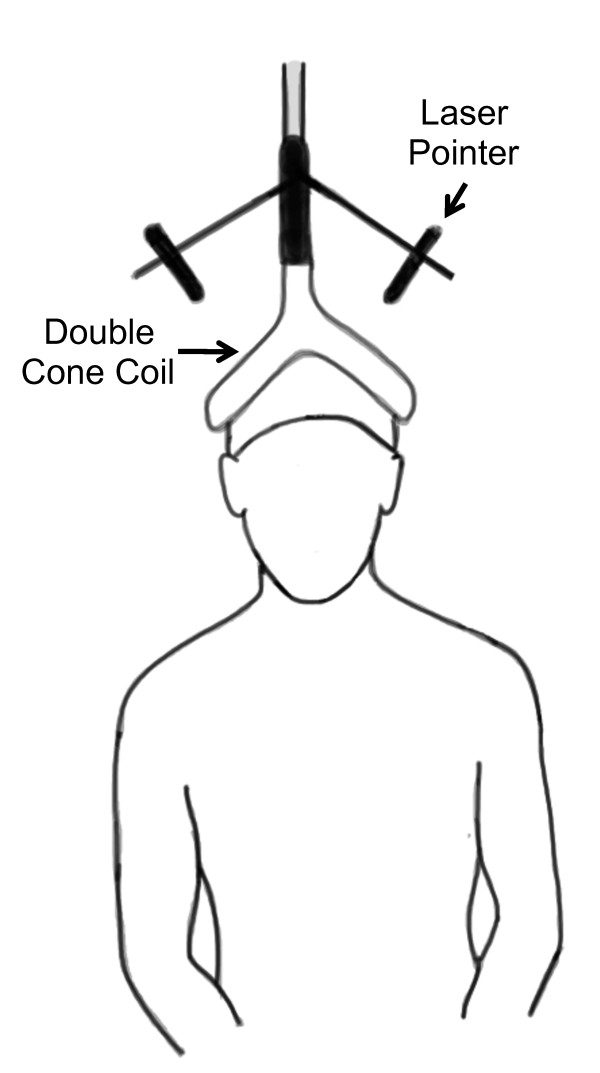
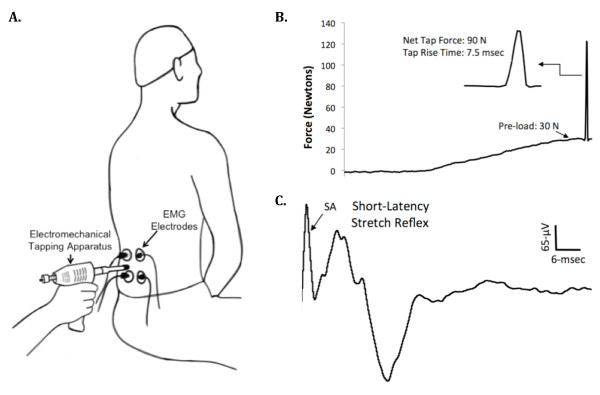
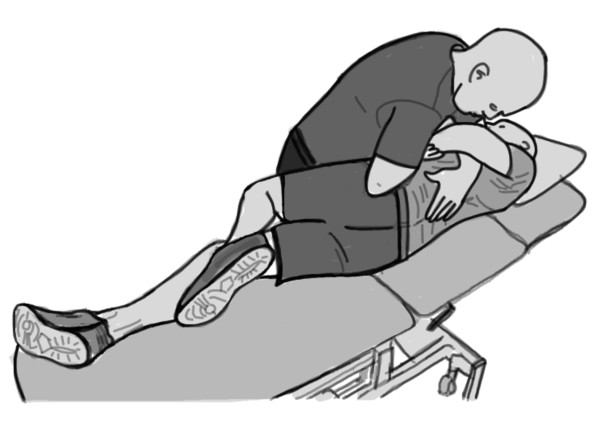
Methods: We used transcranial magnetic stimulation to elicit MEPs and electromechanical tapping to elicit short-latency stretch reflexes in 10 patients with chronic LBP and 10 asymptomatic controls. Neurophysiologic outcomes were measured before and after SM. Changes in MEP and stretch reflex amplitude were examined based on patient grouping (LBP vs. controls), and whether SM caused an audible joint sound.
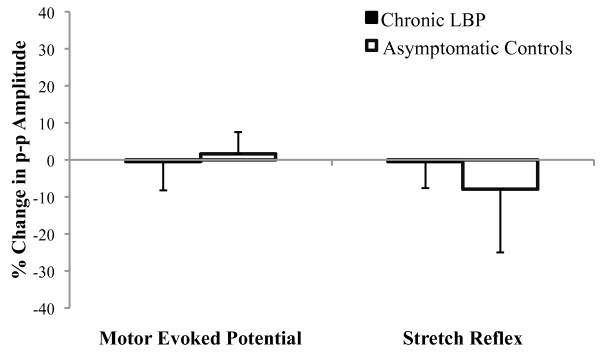
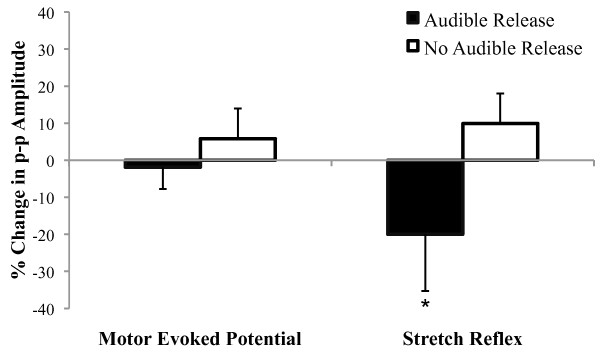
Results: SM did not alter the erector spinae MEP amplitude in patients with LBP (0.80±0.33 vs. 0.80±0.30 μV) or in asymptomatic controls (0.56±0.09 vs. 0.57±0.06 μV). Similarly, SM did not alter the erector spinae stretch reflex amplitude in patients with LBP (0.66±0.12 vs. 0.66±0.15 μV) or in asymptomatic controls (0.60±0.09 vs. 0.55±0.08 μV). Interestingly, study participants exhibiting an audible response exhibited a 20% decrease in the stretch reflex (p<0.05).
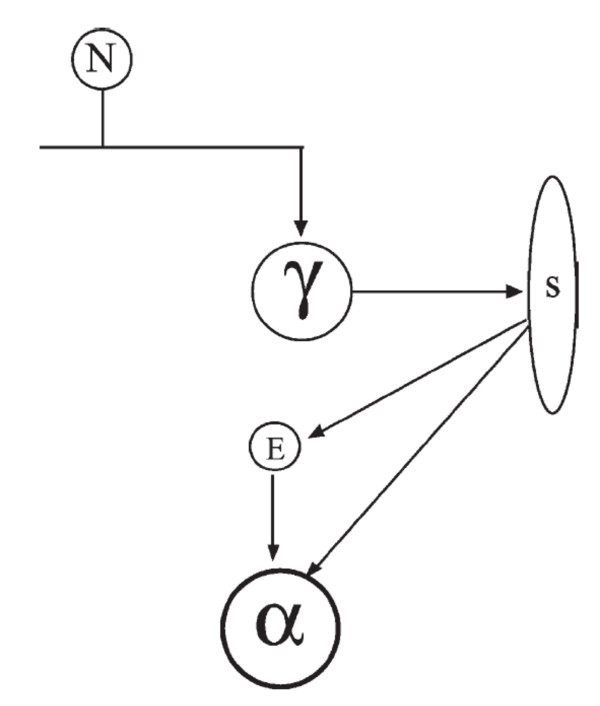
Conclusions: These findings suggest that a single SM treatment does not systematically alter corticospinal or stretch reflex excitability of the erector spinae muscles (when assessed~10-minutes following SM); however, they do indicate that the stretch reflex is attenuated when SM causes an audible response. This finding provides insight into the mechanisms of SM, and suggests that SM that produces an audible response may mechanistically act to decrease the sensitivity of the muscle spindles and/or the various segmental sites of the Ia reflex pathway.
Figures
References
-
- Klenerman L, Slade PD, Stanley IM, Pennie B, Reilly JP, Atchison LE, Troup JD, Rose MJ. The prediction of chronicity in patients with an acute attack of low back pain in a general practice setting. Spine (Phila Pa 1976) 1995;20(4):478–484. - PubMed
-
- Von Korff M. Studying the natural history of back pain. Spine (Phila Pa 1976) 1994;19(18 Suppl):2041S–2046S. - PubMed
-
- Nahin RL, Barnes PM, Stussman BJ, Bloom B. Costs of complementary and alternative medicine (CAM) and frequency of visits to CAM practitioners: United States, 2007. Natl Health Stat Report. 2009. pp. 1–14. - PubMed
Publication types
MeSH terms
LinkOut - more resources
Full Text Sources
Miscellaneous
