


Controlling multipotent stromal cell migration by integrating "course-graining" materials and "fine-tuning" small molecules via decision tree signal-response modeling
- PMID: 21782235
- PMCID: PMC3156355
- DOI: 10.1016/j.biomaterials.2011.06.050
Controlling multipotent stromal cell migration by integrating "course-graining" materials and "fine-tuning" small molecules via decision tree signal-response modeling
Abstract
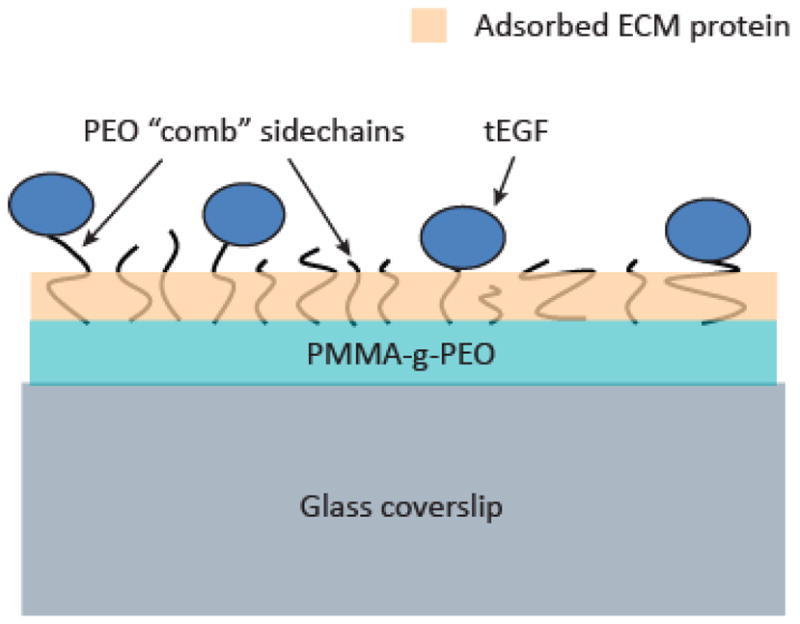
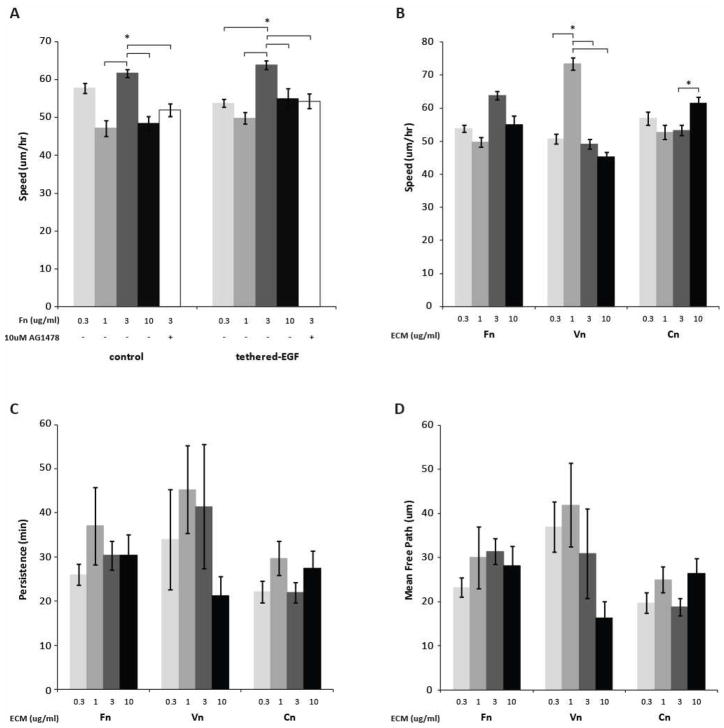
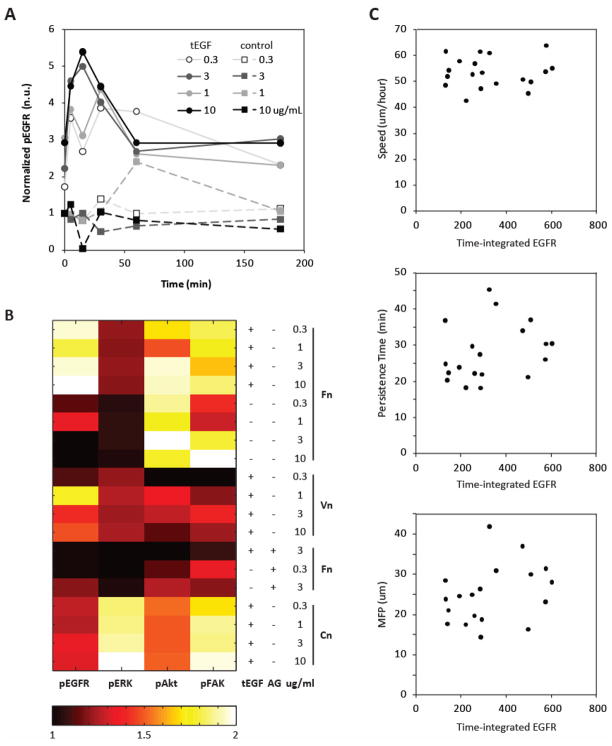
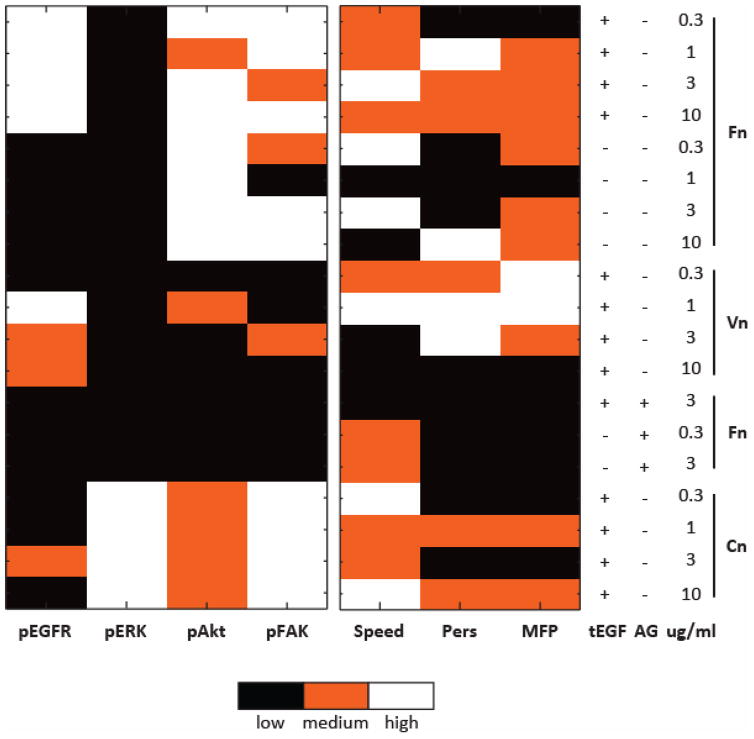
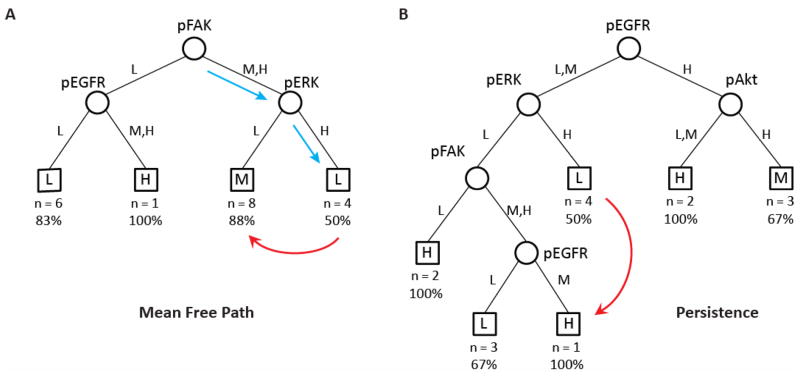
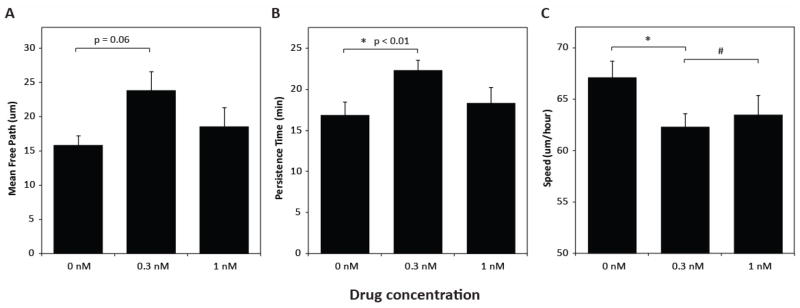
Biomimetic scaffolds have been proposed as a means to facilitate tissue regeneration by multi-potent stromal cells (MSCs). Effective scaffold colonization requires a control of multiple MSC responses including survival, proliferation, differentiation, and migration. As MSC migration is relatively unstudied in this context, we present here a multi-level approach to its understanding and control, integratively tuning cell speed and directional persistence to achieve maximal mean free path (MFP) of migration. This approach employs data-driven computational modeling to ascertain small molecule drug treatments that can enhance MFP on a given materials substratum. Using poly(methyl methacrylate)-graft-poly(ethylene oxide) polymer surfaces tethered with epidermal growth factor (tEGF) and systematically adsorbed with fibronectin, vitronectin, or collagen-I to present hTERT-immortalized human MSCs with growth factor and extracellular matrix cues, we measured cell motility properties along with signaling activities of EGFR, ERK, Akt, and FAK on 19 different substrate conditions. Speed was consistent on collagen/tEGF substrates, but low associated directional persistence limited MFP. Decision tree modeling successfully predicted that ERK inhibition should enhance MFP on collagen/tEGF substrates by increasing persistence. Thus, we demonstrated a two-tiered approach to control MSC migration: materials-based "coarse-graining" complemented by small molecule "fine-tuning".
Copyright © 2011 Elsevier Ltd. All rights reserved.
Figures
References
-
- Phinney DG, Prockop DJ. Mesenchymal stem/multipotent stromal cells: the state of transdifferentiation and modes of tissue repair-- current views. Stem Cells. 2007;25:2896–902. - PubMed
-
- Pittenger MF, Mackay AM, Beck SC, Jaiswal RK, Douglas R, Mosca JD, et al. Multilineage potential of adult human mesenchymal stem cells. Science. 1999;284:143–7. - PubMed
Publication types
MeSH terms
Substances
Grants and funding
LinkOut - more resources
Full Text Sources
Research Materials
Miscellaneous
