


Fetal antiepileptic drug exposure: motor, adaptive, and emotional/behavioral functioning at age 3 years
- PMID: 21783425
- PMCID: PMC3185140
- DOI: 10.1016/j.yebeh.2011.06.014
Fetal antiepileptic drug exposure: motor, adaptive, and emotional/behavioral functioning at age 3 years
Abstract
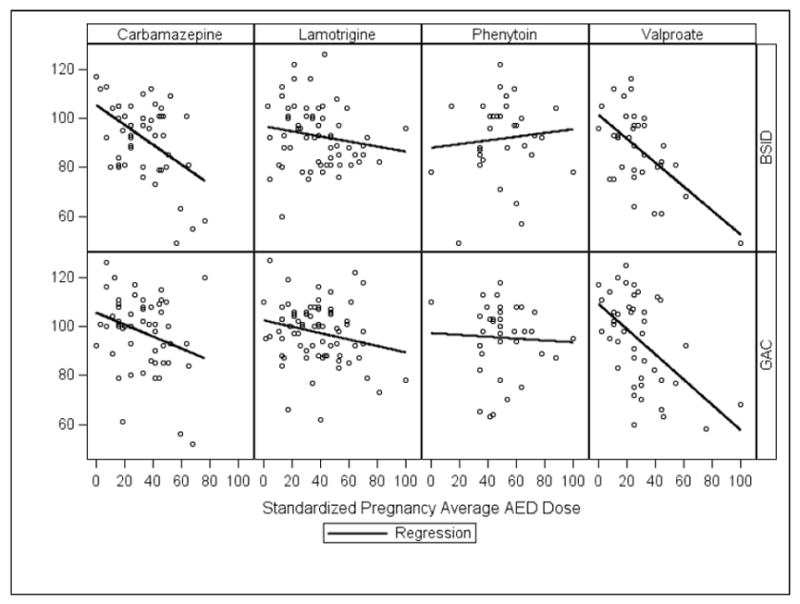
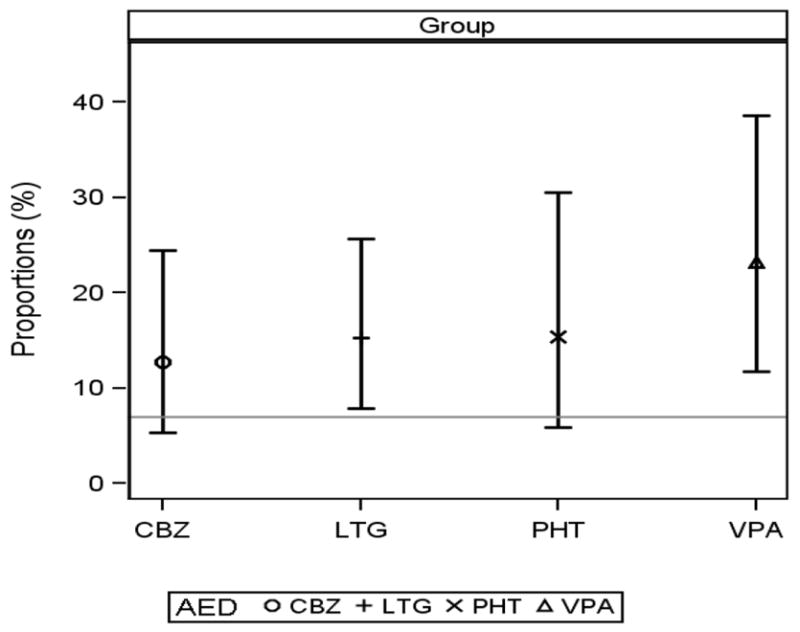
The Neurodevelopmental Effects of Antiepileptic Drugs (NEAD) Study is an ongoing prospective observational multicenter study in the United States and United Kingdom that enrolled pregnant women with epilepsy on antiepileptic drug (AED) monotherapy from 1999 to 2004. The study seeks to determine if differential long-term neurodevelopmental effects exist across four commonly used AEDs (carbamazepine, lamotrigine, phenytoin, valproate). In this article, we examine fetal AED exposure effects on motor, adaptive, and emotional/behavioral functioning in 229 children who completed at least one of these tests at 3 years of age. Adjusted mean scores for the four AED groups were in the low average to average range for motor functioning, parental ratings of adaptive functioning, and parental ratings of emotional/behavioral functioning. A significant dose-related performance decline in motor functioning was seen for both valproate and carbamazepine. A significant dose-related performance decline in parental ratings of adaptive functioning was also seen for valproate, with a marginal performance decline evident for carbamazepine. Further, parents endorsed a significant decline in social skills for valproate that was dose related. Finally, on the basis of parent ratings of attention span and hyperactivity, children of mothers who took valproate during their pregnancy appear to be at a significantly greater risk for a future diagnosis of attention-deficit/hyperactivity disorder. Additional research is needed to confirm these findings, examine risks of other AEDs, define the risks in the neonate associated with AEDs for treatment of seizures, and determine the underlying mechanisms of adverse AED effects on the immature brain.
Copyright © 2011 Elsevier Inc. All rights reserved.
Figures
References
-
- Fisher JE, Vorhees CV. Developmental toxicity of antiepileptic drugs: relationship to postnatal dysfunction. Pharmacol Res. 1992;26(3):207–21. - PubMed
-
- Gaily E, Meador KJ. Neurodevelopmental effects. In: Engel J, Pedley TA, editors. Epilepsy: a comprehensive textbook. 2. Philadelphia: Lippincott Williams & Wilkins; 2007. pp. 1225–33.
-
- Bittigau P, Sifringer M, Ikonomidou C. Antiepileptic drugs and apoptosis in the developing brain. Ann N Y Acad Sci. 2003;993:103–14. discussion 23-4. - PubMed
-
- Glier C, Dzietko M, Bittigau P, Jarosz B, Korobowicz E, Ikonomidou C. Therapeutic doses of topiramate are not toxic to the developing rat brain. Exp Neurol. 2004;187(2):403–9. - PubMed
Publication types
MeSH terms
Substances
Grants and funding
LinkOut - more resources
Full Text Sources
Medical
