


Schistosoma mansoni population structure and persistence after praziquantel treatment in two villages of Bahia, Brazil
- PMID: 21784077
- PMCID: PMC3155667
- DOI: 10.1016/j.ijpara.2011.06.002
Schistosoma mansoni population structure and persistence after praziquantel treatment in two villages of Bahia, Brazil
Abstract
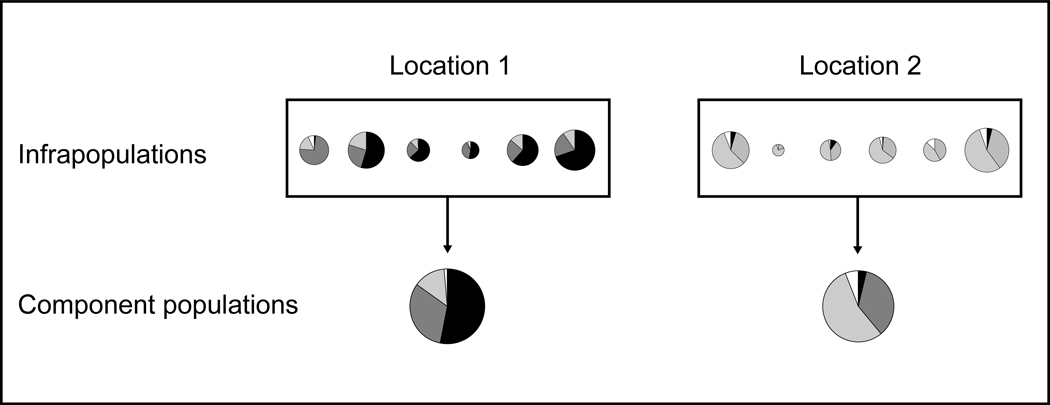
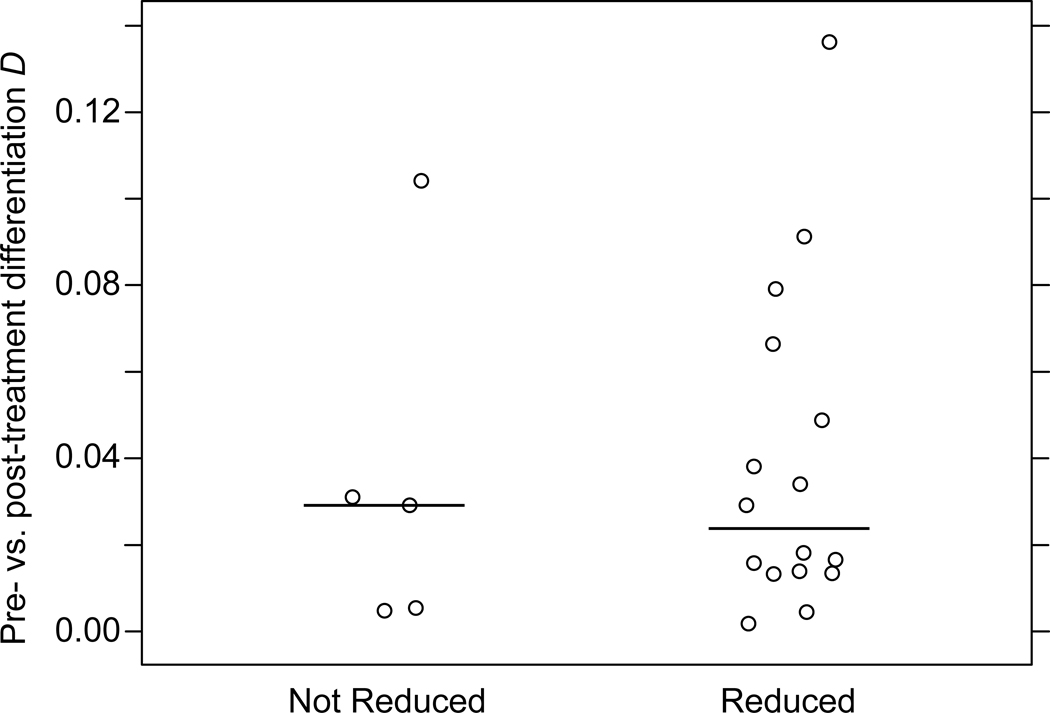
Praziquantel has been used to treat schistosome infections since 1979 and currently is the only chemotherapeutic agent in production for this purpose, raising concerns about the potential for the emergence of drug resistance. In practice, 10-20% of infected patients will continue to excrete eggs after treatment. It is not understood to what degree this represents selection of a resistant population or incomplete elimination due to the presence of immature worms at the time of treatment. We used a population genetics approach to test whether or not persistent Schistosomamansoni parasites were drawn from the same population as susceptible parasites. In this study, stool samples were collected from 96% of individuals in two small Brazilian communities (populations 482 and 367) and examined for S.mansoni eggs. The combined prevalence of S.mansoni infections in the villages was 41%. Total egg DNA was extracted from each sample and was genotyped at 15 microsatellite markers. Day-to-day variation of the infrapopulation from an individual human host was low (median differentiation using Jost's D=0.010), so that a single stool was representative of the genotypes present in stool eggs, at least in the short term. Average pairwise analysis of D among all pre-treatment infrapopulations suggested moderate differentiation (mean D=0.082 and 0.122 for the two villages), whereas the pre-treatment component population differentiation between the two communities was 0.047. The differentiation of the component population remaining after treatment from the fully susceptible component population was low (mean D=0.007 and 0.020 for the two villages), suggesting that the persistent parasites were not selected by praziquantel treatment. We will continue to follow these communities for evidence of selection or changes in population structure.
Published by Elsevier Ltd.
Figures
References
-
- Ausubel FM, Brent R, Kingston RE, Moore DD, Seidman JG, Smith JA, Struhl K. Current Protocols in Molecular Biology. New York: Green Publishing Associates and Wiley Inter-science; 1987.
-
- Babiker HA, Hastings IM, Swedberg G. Impaired fitness of drug-resistant malaria parasites: evidence and implication on drug-deployment policies. Expert Rev. Anti. Infect. Ther. 2009;7:581–593. - PubMed
Publication types
MeSH terms
Substances
Grants and funding
LinkOut - more resources
Full Text Sources
