


Early primary tumor size reduction is an independent predictor of improved overall survival in metastatic renal cell carcinoma patients treated with sunitinib
- PMID: 21784574
- PMCID: PMC4378714
- DOI: 10.1016/j.eururo.2011.07.008
Early primary tumor size reduction is an independent predictor of improved overall survival in metastatic renal cell carcinoma patients treated with sunitinib
Abstract
Background: In metastatic renal cell carcinoma (mRCC) patients treated with targeted agents and their primary tumor (PT) in situ, early PT decrease in size correlates with improved overall PT response, but the effect on overall survival (OS) is unknown.
Objective: To evaluate whether early PT size reduction is associated with improved OS in patients with mRCC undergoing treatment with sunitinib.
Design, setting, and participants: We reviewed the clinical and radiographic data of all mRCC patients seen at our institution between January 2004 and December 2009 without prior systemic treatment who received sunitinib with their PT in situ.
Measurements: Two independent reviewers measured the diameter of the PT and metastatic disease at baseline and subsequent scans to assess response. Early minor response was defined as ≥10% decrease within 60 d of treatment initiation. Univariate and multivariate analyses were used to calculate a hazard ratio (HR) corresponding to the risk of death based on clinical and pathologic factors as well as PT response.
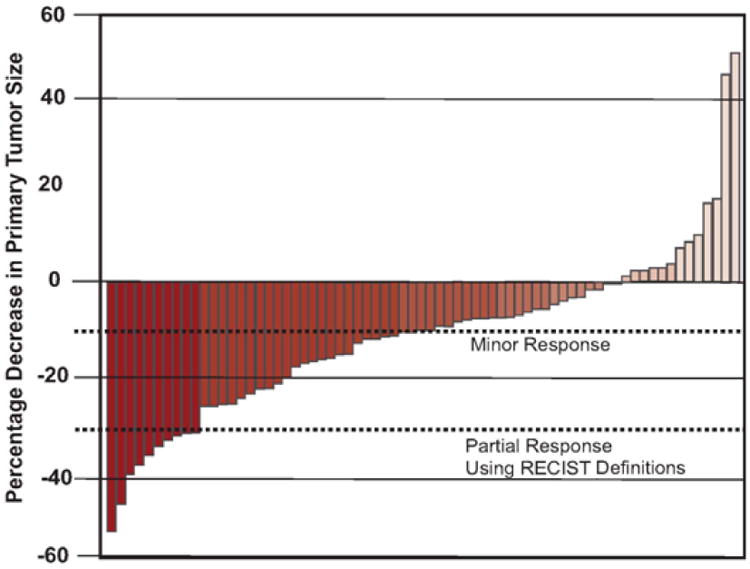
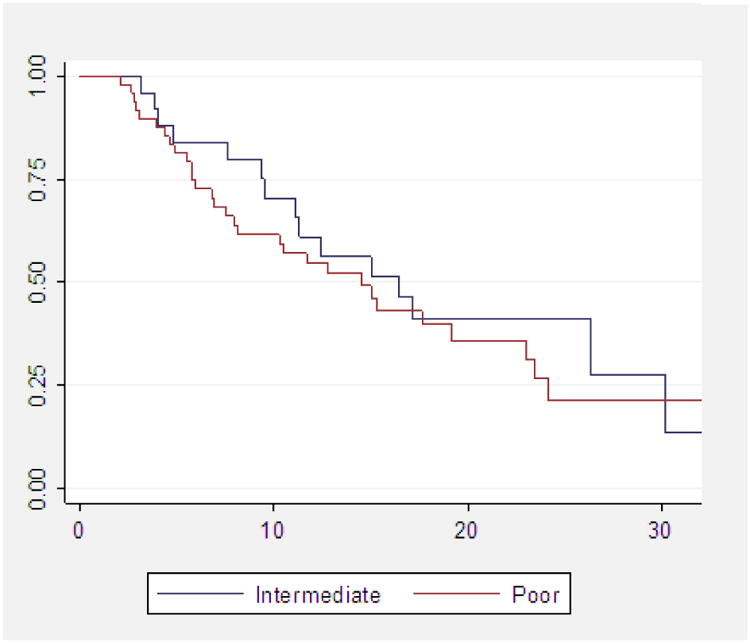
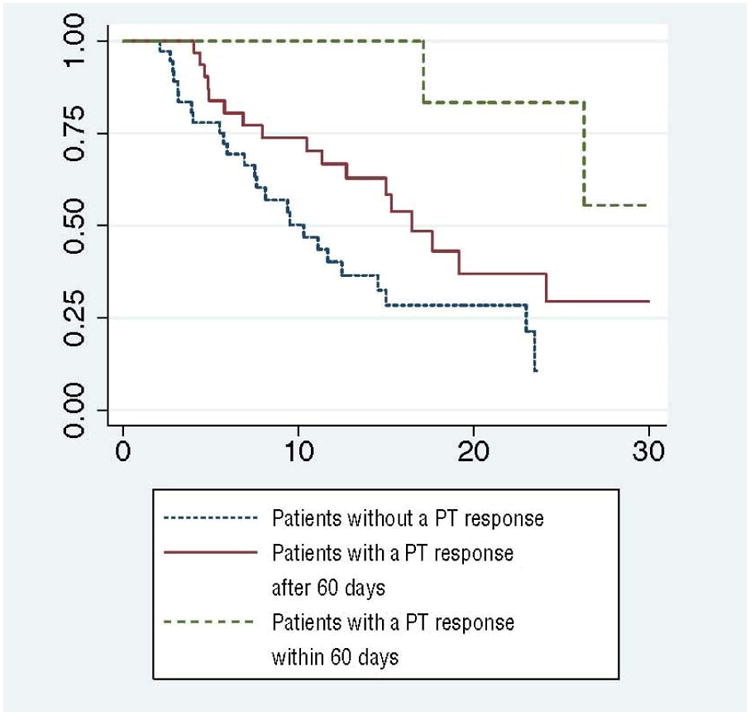
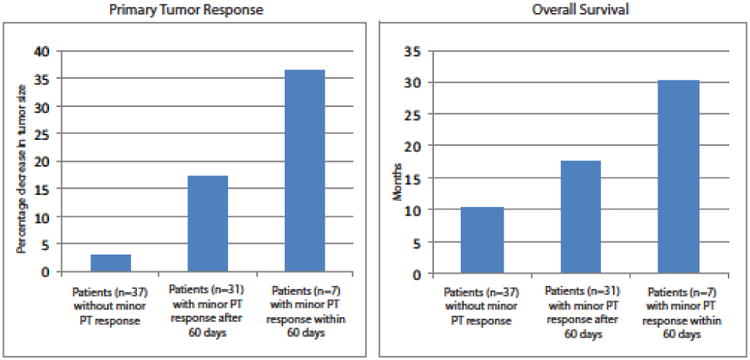
Results and limitations: We identified 75 consecutive patients with a median follow-up of 15 mo. All patients were intermediate or poor risk by common risk stratification systems. Median initial PT diameter was 9.7cm. Median maximum PT size reduction was -10.2% overall and -36.4% in patients who had early minor PT response. Median OS for patients without minor PT response, with minor PT response after 60 d, and with early minor PT response was 10.3, 16.5, and 30.2 mo, respectively. On multivariate analysis, early minor response was an independent predictor of improved OS (HR: 0.26; p=0.031). Other significant predictors included venous thrombus, multiple bone metastases, lactate dehydrogenase above the upper limit of normal, symptoms at presentation, and more than two metastatic sites.
Conclusions: Early minor PT response is associated with improved OS. Future studies should evaluate this prognostic factor to identify patients with prolonged OS.
Copyright © 2011 European Association of Urology. Published by Elsevier B.V. All rights reserved.
Figures
References
-
- Motzer RJ, Bacik J, Murphy BA, Russo P, Mazumdar M. Interferon-alfa as a comparative treatment for clinical trials of new therapies against advanced renal cell carcinoma. J Clin Oncol. 2002;20:289–96. - PubMed
-
- Heng DY, Xie W, Regan MM, et al. Prognostic factors for overall survival in patients with metastatic renal cell carcinoma treated with vascular endothelial growth factor-targeted agents: results from a large, multicenter study. J Clin Oncol. 2009;27:5794–9. - PubMed
-
- Culp SH, Tannir NM, Abel EJ, et al. Can we better select patients with metastatic renal cell carcinoma for cytoreductive nephrectomy? Cancer. 2010;116:3378–88. - PubMed
-
- Saylor PJ, Michaelson MD. New treatments for renal cell carcinoma: targeted therapies. J Natl Compr Canc Netw. 2009;7:645–56. - PubMed
-
- Clinical Trial to Assess the Importance of Nephrectomy (CARMENA) ClinicalTrials.gov Web site. http://www.clinicaltrials.gov/ct2/show/NCT00930033.
Publication types
MeSH terms
Substances
Grants and funding
LinkOut - more resources
Full Text Sources
Medical
Molecular Biology Databases
