


Plithotaxis and emergent dynamics in collective cellular migration
- PMID: 21784638
- PMCID: PMC3202659
- DOI: 10.1016/j.tcb.2011.06.006
Plithotaxis and emergent dynamics in collective cellular migration
Abstract
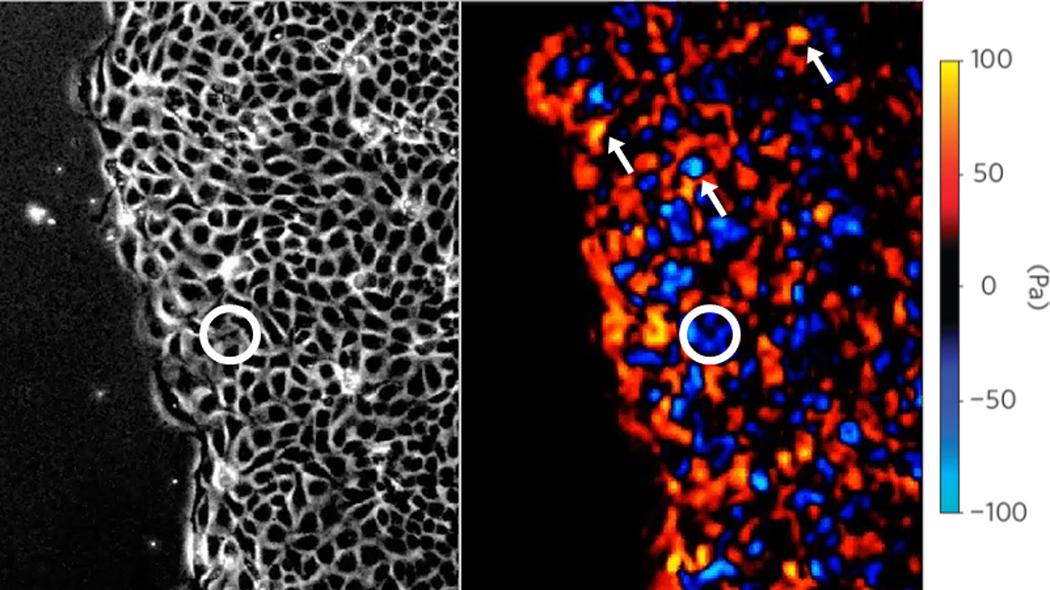
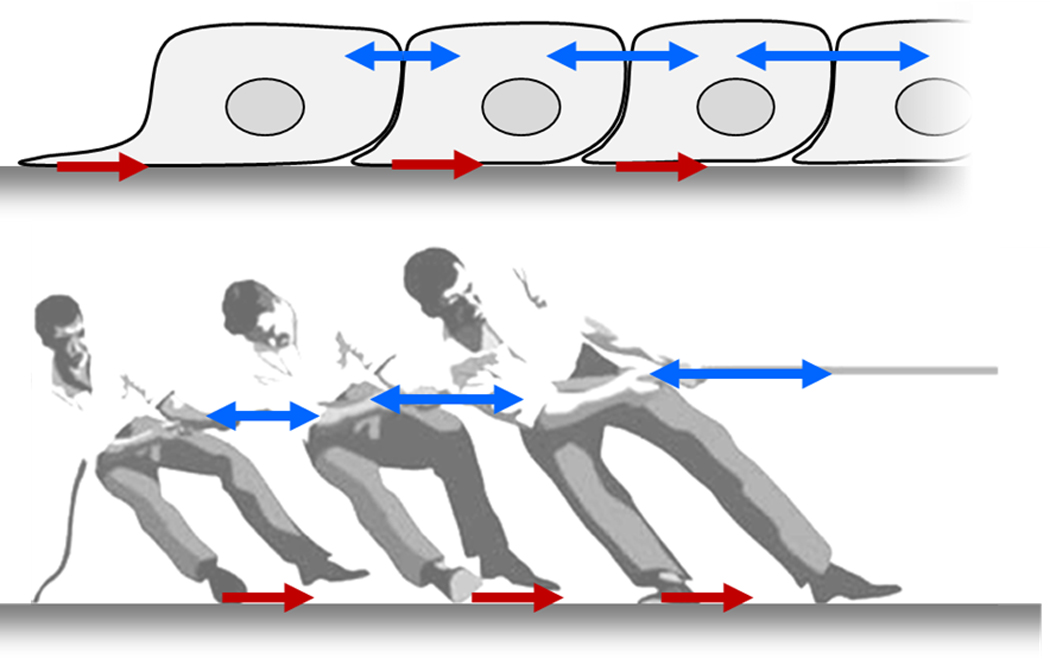
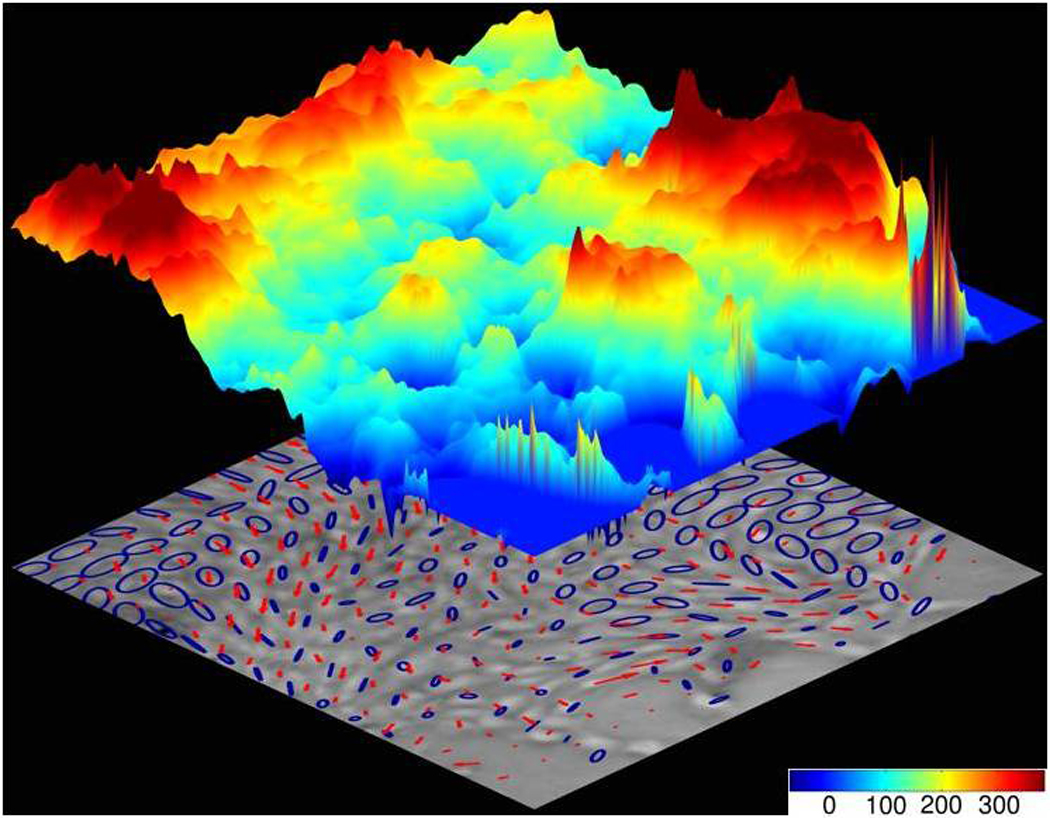
For a monolayer sheet to migrate cohesively, it has long been suspected that each constituent cell must exert physical forces not only upon its extracellular matrix but also upon neighboring cells. The first comprehensive maps of these distinct force components reveal an unexpected physical picture. Rather than showing smooth and systematic variation within the monolayer, the distribution of physical forces is dominated by heterogeneity, both in space and in time, which emerges spontaneously, propagates over great distances, and cooperates over the span of many cell bodies. To explain the severe ruggedness of this force landscape and its role in collective cell guidance, the well known mechanisms of chemotaxis, durotaxis, haptotaxis are clearly insufficient. In a broad range of epithelial and endothelial cell sheets, collective cell migration is governed instead by a newly discovered emergent mechanism of innately collective cell guidance - plithotaxis.
Copyright © 2011 Elsevier Ltd. All rights reserved.
Figures
References
-
- Friedl P, Gilmour D. Collective cell migration in morphogenesis, regeneration and cancer. Nat Rev Mol Cell Biol. 2009;10:445–457. - PubMed
-
- Aman A, Piotrowski T. Cell migration during morphogenesis. Dev Biol. 2010;341:20–33. - PubMed
-
- Weijer CJ. Collective cell migration in development. J Cell Sci. 2009;122:3215–3223. - PubMed
-
- Bianco A, Poukkula M, Cliffe A, Mathieu J, Luque CM, Fulga TA, Rorth P. Two distinct modes of guidance signalling during collective migration of border cells. Nature. 2007;448:362–365. - PubMed
-
- Valentin G, Haas P, Gilmour D. The chemokine SDF1a coordinates tissue migration through the spatially restricted activation of Cxcr7 and Cxcr4b. Curr Biol. 2007;17:1026–1031. - PubMed
Publication types
MeSH terms
Grants and funding
LinkOut - more resources
Full Text Sources
