


Molecular mechanism of Aspergillus fumigatus adherence to host constituents
- PMID: 21784698
- PMCID: PMC3370656
- DOI: 10.1016/j.mib.2011.07.006
Molecular mechanism of Aspergillus fumigatus adherence to host constituents
Abstract
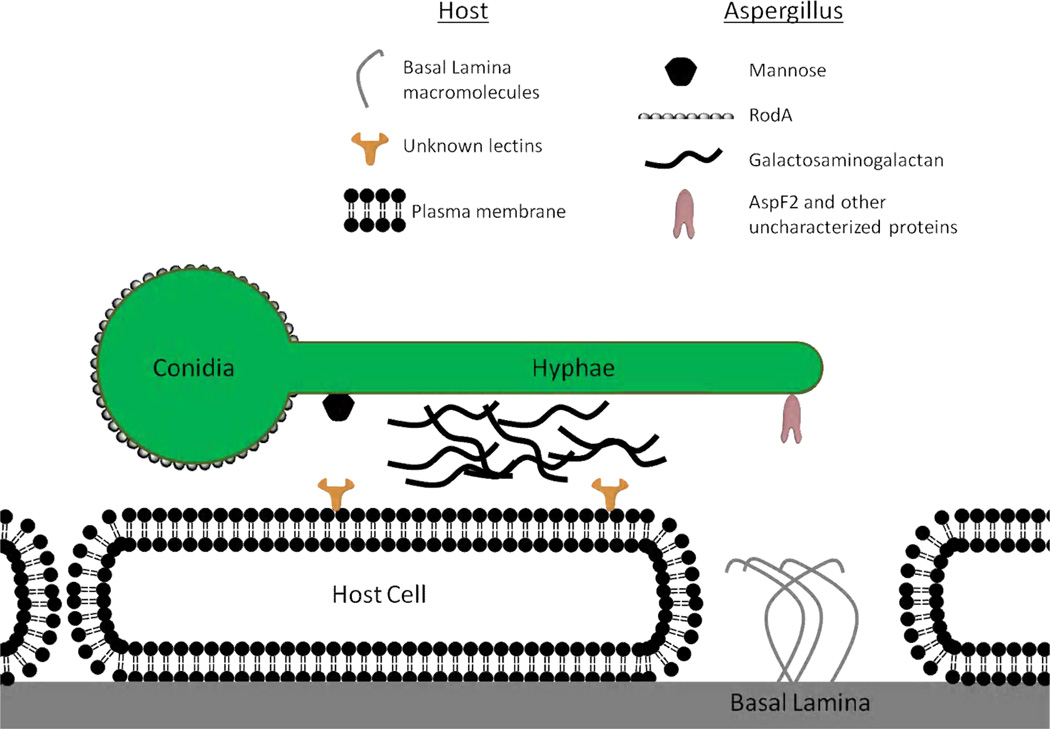
Inhaled conidia of Aspergillus fumigatus rapidly adhere to pulmonary epithelial cells and other host constituents. Identifying molecular mechanisms underlying A. fumigatus adherence has therefore been the focus of a number of studies aimed at identifying novel therapeutic targets. Early studies of A. fumigatus adherence to host constituents focused on fungal proteins, including RodA and AspF2. None of these proteins however has been found to play a role in virulence in experimental animal models. Recent advances have suggested an important role for fungal carbohydrate components of the cell wall and extracellular matrix in adherence, including sialic acid and mannose residues, and the newly described polysaccharide galactosaminogalactan. Despite these advances, the host cell receptors that are bound by these ligands remain unknown.
Copyright © 2011 Elsevier Ltd. All rights reserved.
Figures
References
-
- Wasylnka JA, Moore MM. Aspergillus fumigatus conidia survive and germinate in acidic organelles of A549 epithelial cells. J Cell Sci. 2003;116:1579–1587. - PubMed
-
- Lopes Bezerra LM, Filler SG. Interactions of Aspergillus fumigatus with endothelial cells: internalization, injury, and stimulation of tissue factor activity. Blood. 2004;103:2143–2149. - PubMed
Publication types
MeSH terms
Substances
Grants and funding
LinkOut - more resources
Full Text Sources
Other Literature Sources
