Relapse dynamics during smoking cessation: recurrent abstinence violation effects and lapse-relapse progression
- PMID: 21787035
- PMCID: PMC3296289
- DOI: 10.1037/a0024451
Relapse dynamics during smoking cessation: recurrent abstinence violation effects and lapse-relapse progression
Abstract
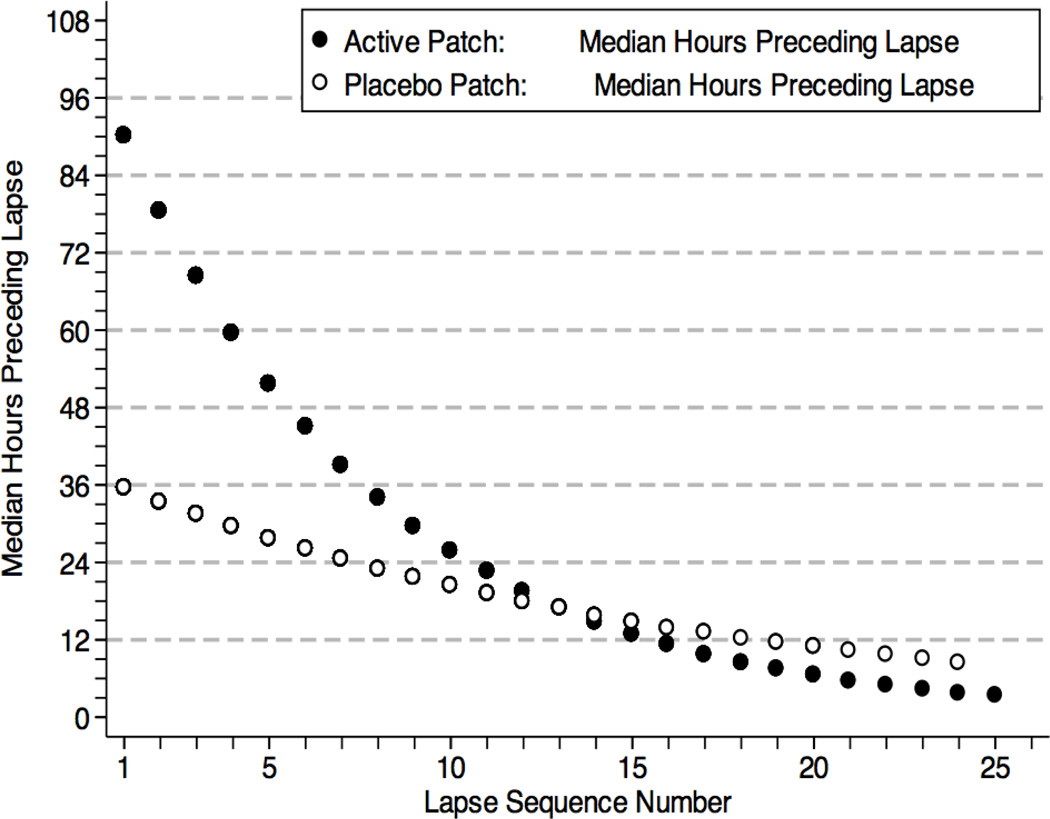
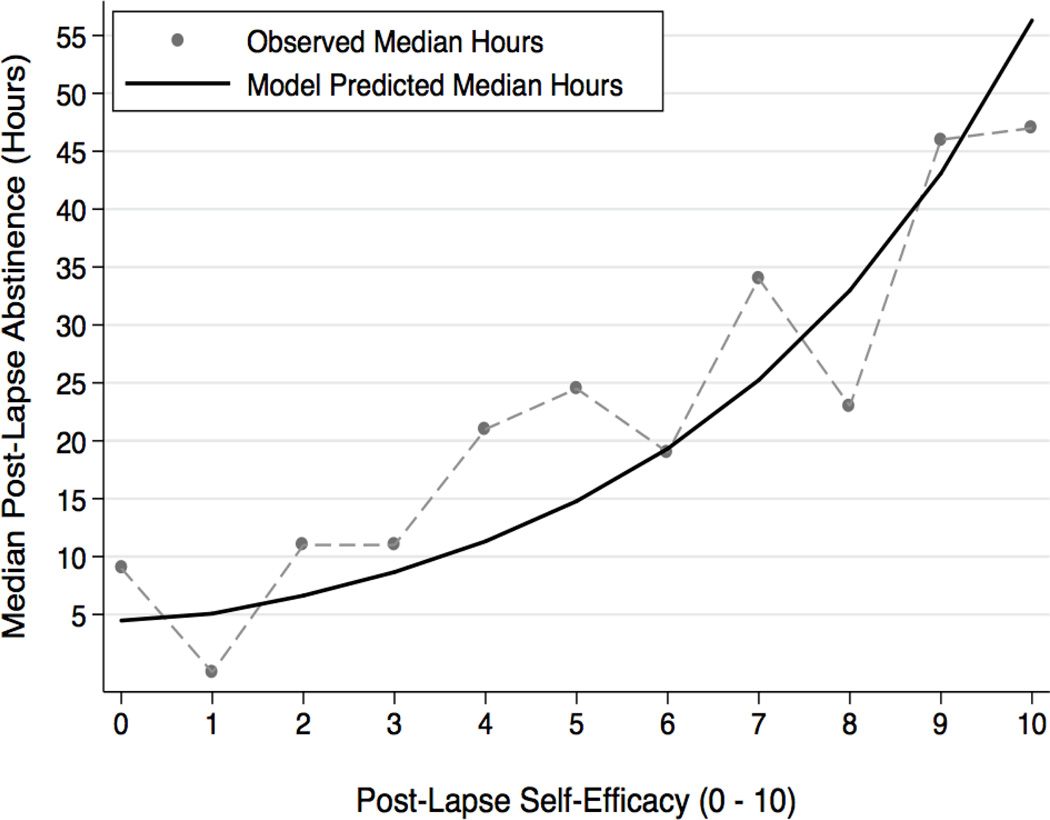
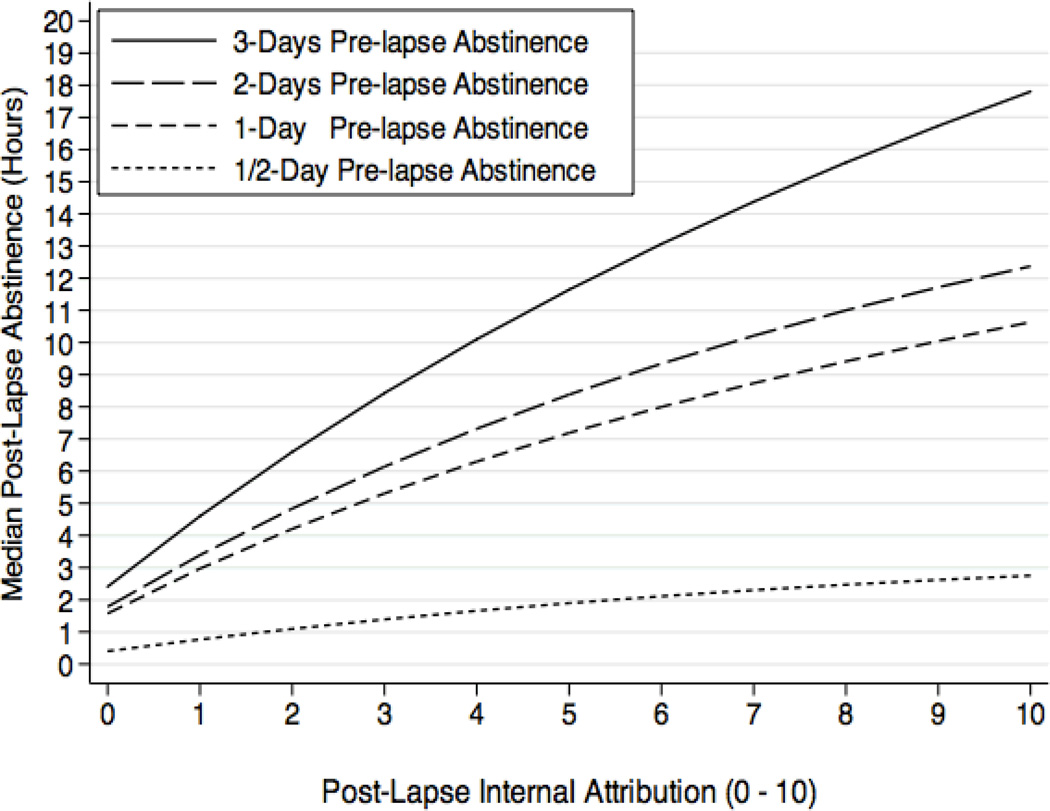
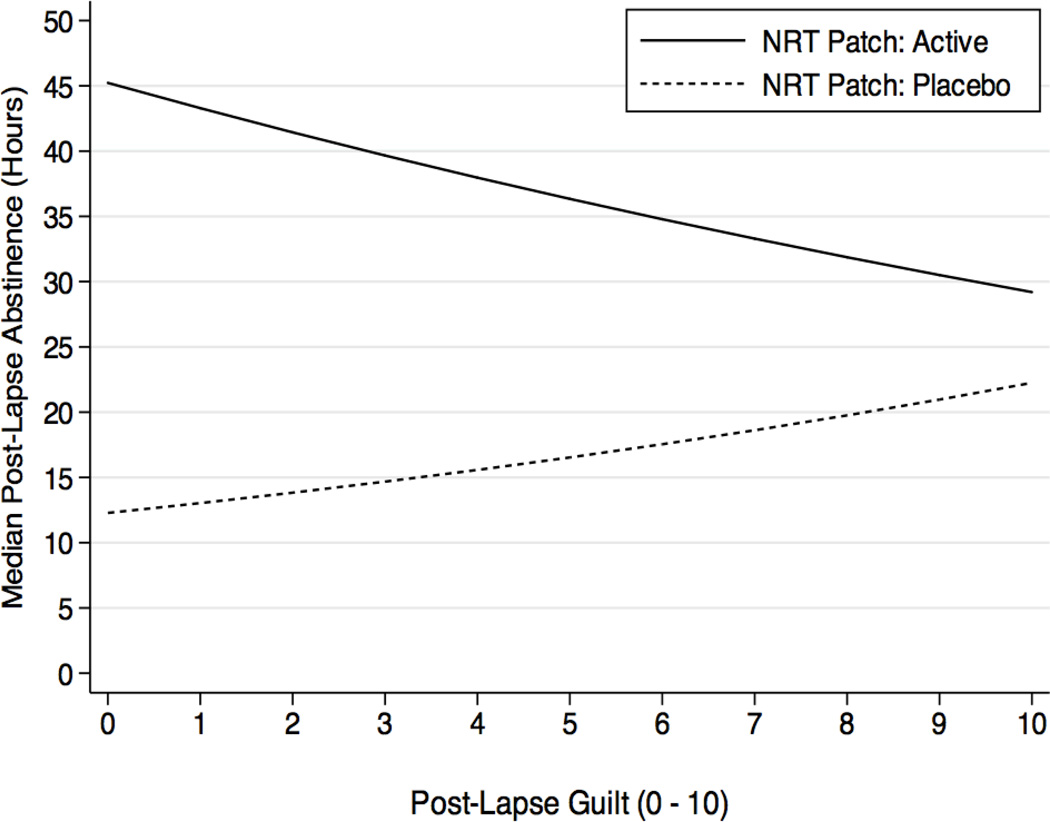
Smoking cessation is a process that unfolds over time and is characterized by intermittent lapses. We used parametric recurrent event survival analyses to better understand the dynamic relationship between a set of Abstinence Violation Effect (AVE, Marlatt & Gordon, 1985) responses to lapsing and subsequent lapse-relapse progression. Participants were 203 smokers who achieved abstinence and responded to items assessing three core components of the AVE (internal attribution, abstinence self-efficacy and guilt) following a total of 1,001 lapse episodes in near real time. Neither self-blame, self-efficacy, nor guilt following participants' first lapse predicted relapse. Controlling for responses to their first lapse, responses to each additional lapse did prospectively predict lapse progression, such that drops in self-efficacy were associated with accelerated progression to a subsequent lapse (HR = 1.09, CI = 1.02-1.15), while increases in internal attributions of blame actually protected against lapsing (HR = 0.98, CI = 0.97-0.99). Treatment with nicotine patches slowed recurrent lapse progression (HR = 0.58, CI = 0.48-0.70), but this effect dissipated over multiple lapses, and was moderated by elevated ratings of postlapse guilt (HR = 1.08, CI = 1.01-1.18), which predicted accelerated progression within the active patch group, while protecting against lapse in the placebo group. Results highlight the dynamic nature of lapse responses during smoking cessation, indicating that self-efficacy predicts progression from one lapse to the next, while attributions of self-blame and guilt influenced progression in unexpected ways.
PsycINFO Database Record (c) 2012 APA, all rights reserved.
Figures
References
-
- Abrams DB, Niaura R, Brown RA, Emmons KM, Goldstein MG, Monti PM. The tobacco dependence treatment handbook: A guide to best practices. New York: Guilford Press; 2003.
-
- Baer JS, Kamarck R, Lichtenstein E, Ransom CC. Prediction of smoking relapse: Analysis of temptation and transgression after initial cessation. Journal of Consulting and Clinical Psychology. 1989;57:623–627. - PubMed
-
- Baker TB, Morse E, Sherman JE. The motivation to use drugs: a psychobiological analysis of urges. Nebr. Symp. Motiv. 1986;34:257–323. - PubMed
-
- Baker TB, Piper ME, McCarthy DE, Majeskie MR, Fiore MC. Addiction motivation reformulated: An affective processing model of negative reinforcement. Psychological Review. 2004;111:33–51. - PubMed
Publication types
MeSH terms
Substances
Grants and funding
LinkOut - more resources
Full Text Sources
Medical
Research Materials