


Changing patterns of malaria during 1996-2010 in an area of moderate transmission in southern Senegal
- PMID: 21787420
- PMCID: PMC3160430
- DOI: 10.1186/1475-2875-10-203
Changing patterns of malaria during 1996-2010 in an area of moderate transmission in southern Senegal
Abstract
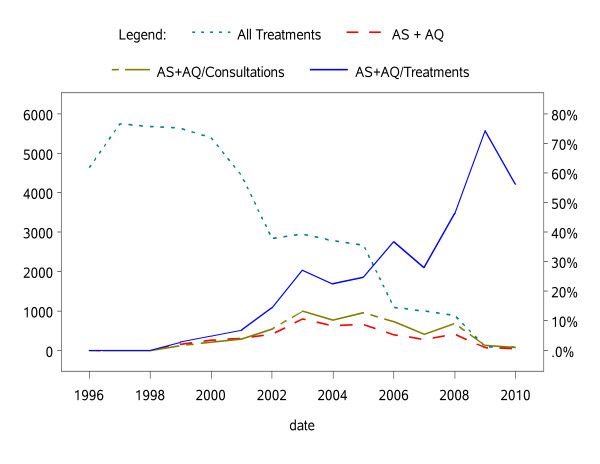
Background: Malaria is reportedly receding in different epidemiological settings, but local long-term surveys are limited. At Mlomp dispensary in south-western Senegal, an area of moderate malaria transmission, year-round, clinically-suspected malaria was treated with monotherapy as per WHO and national policy in the 1990s. Since 2000, there has been a staggered deployment of artesunate-amodiaquine after parasitological confirmation; this was adopted nationally in 2006.
Methods: Data were extracted from clinic registers for the period between January 1996 and December 2010, analysed and modelled.
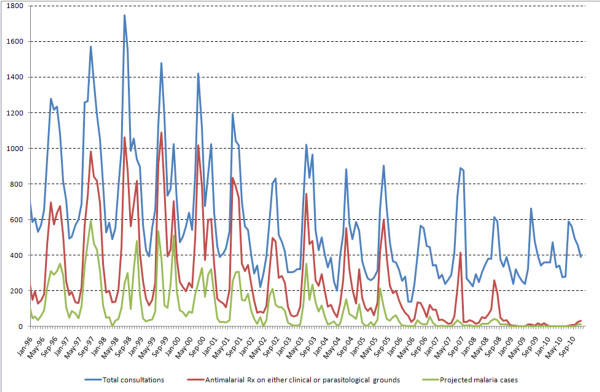
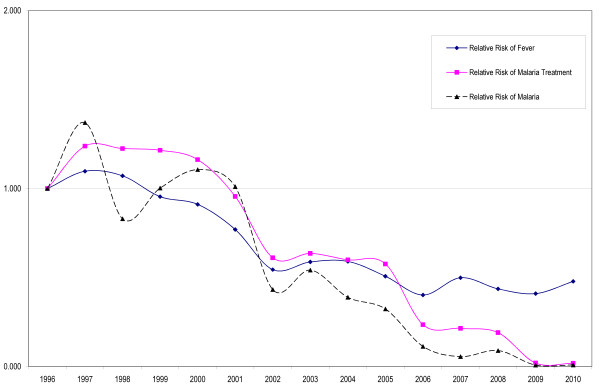
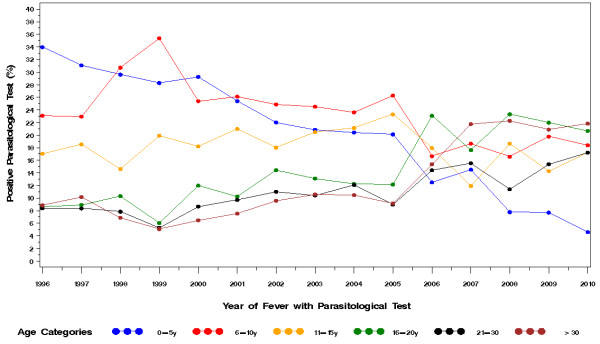
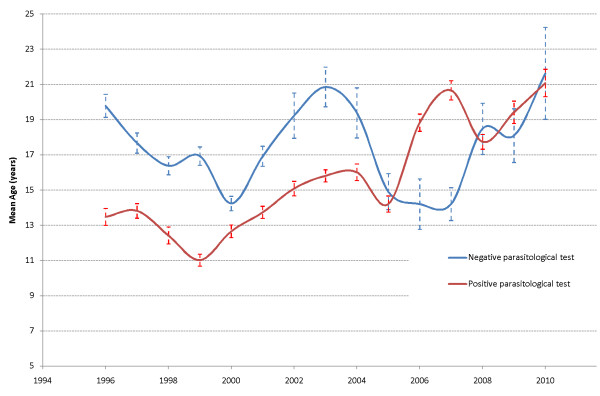
Results: Over the 15-year study period, the risk of malaria decreased about 32-times (from 0.4 to 0.012 episodes person-year), while anti-malarial treatments decreased 13-times (from 0.9 to 0.07 treatments person-year) and consultations for fever decreased 3-times (from 1.8 to 0.6 visits person-year). This was paralleled by changes in the age profile of malaria patients so that the risk of malaria is now almost uniformly distributed throughout life, while in the past malaria used to concern more children below 16 years of age.
Conclusions: This study provides direct evidence of malaria risk receding between 1996-2010 and becoming equal throughout life where transmission used to be moderate. Infection rates are no longer enough to sustain immunity. Temporally, this coincides with deploying artemisinin combinations on parasitological confirmation, but other contributing causes are unclear.
© 2011 Brasseur et al; licensee BioMed Central Ltd.
Figures

References
-
- Roll Back Malaria. The Global Malaria Action Plan. Organization WH. Geneva: World Health Organization; 2008.
-
- World Health Organization. World Malaria Report PRESS W. Geneva: World Health Organization; 2009.
Publication types
MeSH terms
Substances
LinkOut - more resources
Full Text Sources
Medical
Miscellaneous
