


Reproductive and developmental toxicity of formaldehyde: a systematic review
- PMID: 21787879
- PMCID: PMC3203331
- DOI: 10.1016/j.mrrev.2011.07.003
Reproductive and developmental toxicity of formaldehyde: a systematic review
Abstract
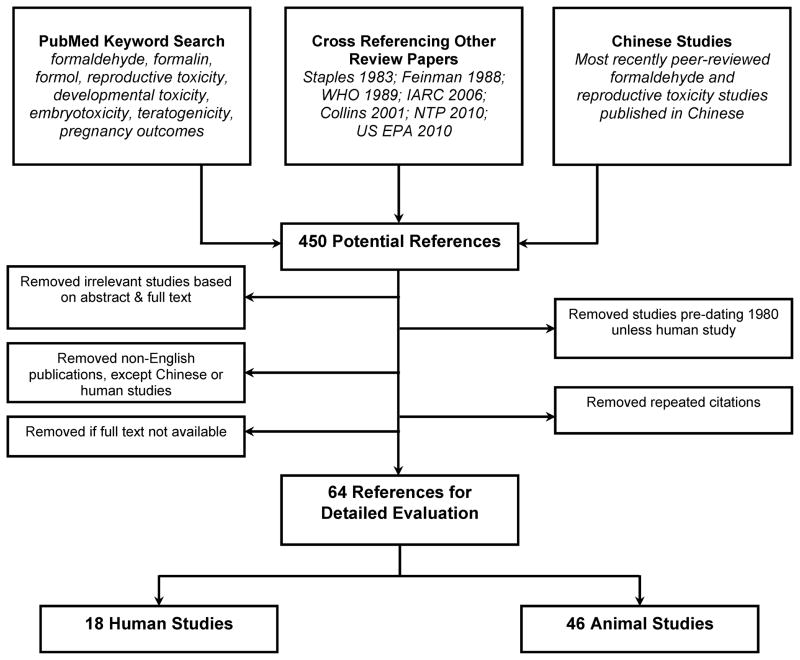
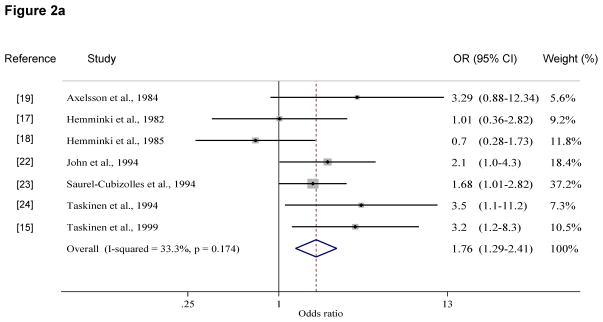
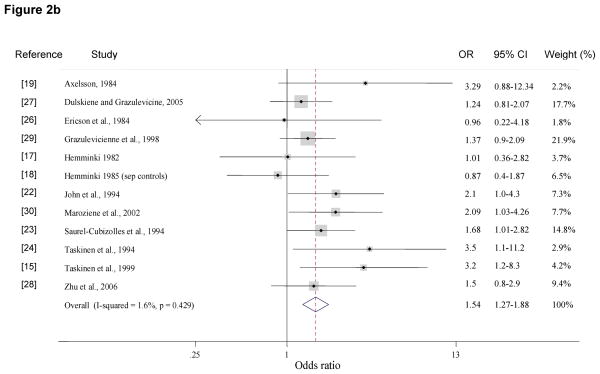
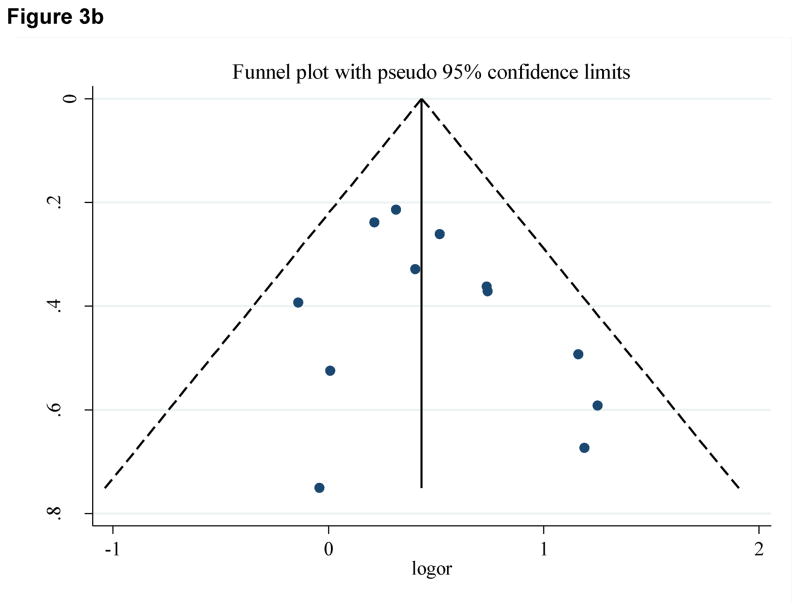
Formaldehyde, the recently classified carcinogen and ubiquitous environmental contaminant, has long been suspected of causing adverse reproductive and developmental effects, but previous reviews were inconclusive, due in part, to limitations in the design of many of the human population studies. In the current review, we systematically evaluated evidence of an association between formaldehyde exposure and adverse reproductive and developmental effects, in human populations and in vivo animal studies, in the peer-reviewed literature. The mostly retrospective human studies provided evidence of an association of maternal exposure with adverse reproductive and developmental effects. Further assessment of this association by meta-analysis revealed an increased risk of spontaneous abortion (1.76, 95% CI 1.20-2.59, p=0.002) and of all adverse pregnancy outcomes combined (1.54, 95% CI 1.27-1.88, p<0.001), in formaldehyde-exposed women, although differential recall, selection bias, or confounding cannot be ruled out. Evaluation of the animal studies including all routes of exposure, doses and dosing regimens studied, suggested positive associations between formaldehyde exposure and reproductive toxicity, mostly in males. Potential mechanisms underlying formaldehyde-induced reproductive and developmental toxicities, including chromosome and DNA damage (genotoxicity), oxidative stress, altered level and/or function of enzymes, hormones and proteins, apoptosis, toxicogenomic and epigenomic effects (such as DNA methylation), were identified. To clarify these associations, well-designed molecular epidemiologic studies, that include quantitative exposure assessment and diminish confounding factors, should examine both reproductive and developmental outcomes associated with exposure in males and females. Together with mechanistic and animal studies, this will allow us to better understand the systemic effect of formaldehyde exposure.
Copyright © 2011 Elsevier B.V. All rights reserved.
Conflict of interest statement
The authors declare that there are no conflicts of interest.
Figures
References
-
- Tang X, Bai Y, Duong A, Smith MT, Li L, Zhang L. Formaldehyde in China: production, consumption, exposure levels, and health effects. Environ Int. 2009;35:1210–1224. - PubMed
-
- Baan R, Grosse Y, Straif K, Secretan B, El Ghissassi F, Bouvard V, Benbrahim-Tallaa L, Guha N, Freeman C, Galichet L, Cogliano V. A review of human carcinogens--Part F: chemical agents and related occupations. Lancet Oncol. 2009;10:1143–1144. - PubMed
-
- NTP. Report on Carcinogens. 12. 2011.
-
- EPA. Toxicological Review of Formaldehyde Inhalation Toxicity. 2010. EPA/635/R-10/002C.
Publication types
MeSH terms
Substances
Grants and funding
LinkOut - more resources
Full Text Sources
