


Predicting the probability of 90-day survival of elderly patients with bladder cancer treated with radical cystectomy
- PMID: 21788035
- PMCID: PMC6472701
- DOI: 10.1016/j.juro.2011.04.089
Predicting the probability of 90-day survival of elderly patients with bladder cancer treated with radical cystectomy
Abstract
Purpose: Despite the increased morbidity and mortality of radical cystectomy in elderly individuals with bladder cancer numerous studies show that surgery can provide a survival benefit. We sought to better identify patients at substantial risk for postoperative mortality.
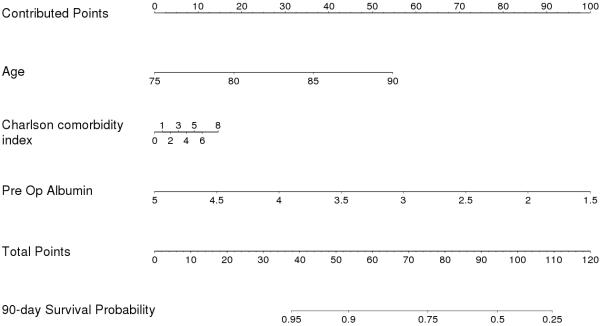
Materials and methods: We evaluated 220 consecutive patients 75 years old or older treated with radical cystectomy for bladder cancer at a single institution from 2000 to 2008. The analytical cohort comprised 169 patients with complete preoperative data available. A Cox proportional hazards model was used to determine the value of precystectomy clinical information to predict 90-day survival after radical cystectomy. Results were used to create a nomogram predicting the probability of 90-day survival after radical cystectomy. The model was then subjected to 200 bootstrap resamples for internal validation.
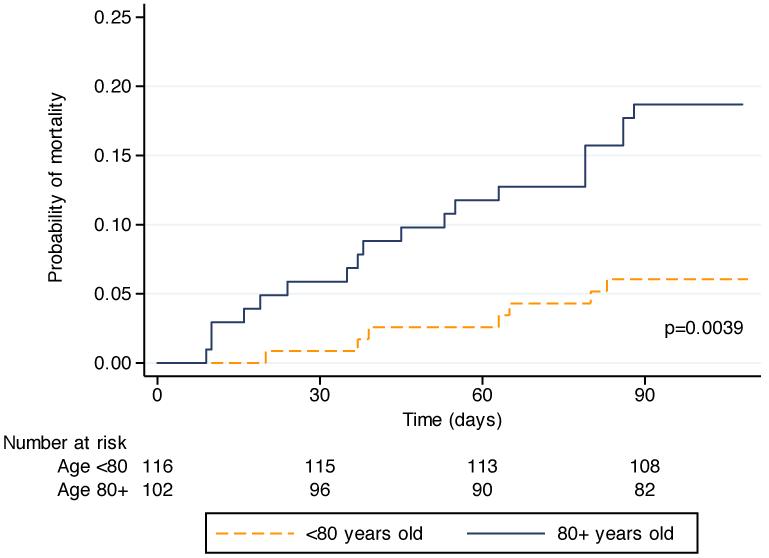
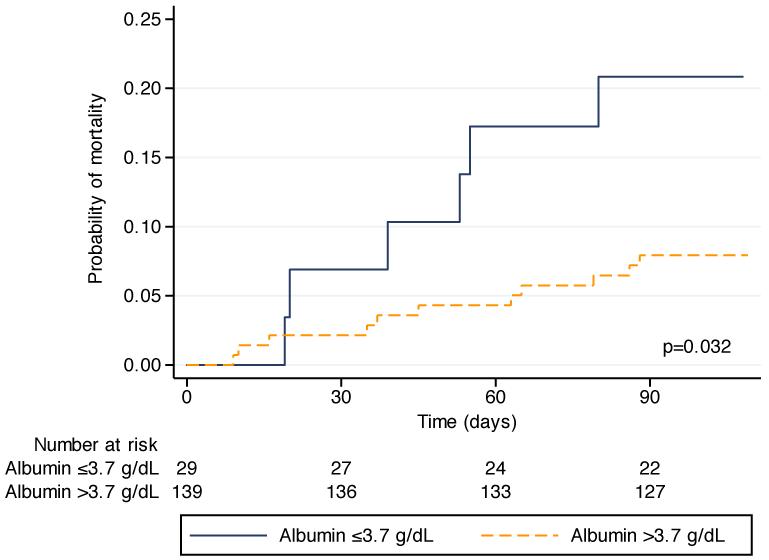
Results: Of the 220 patients 28 (12.7%) died within 90 days of surgery. Older age (HR 2.30, 95% CI 1.22-4.32) and lower preoperative albumin (HR 2.50, 95% CI 1.40-4.45) were significant predictors of 90-day mortality. We developed a nomogram based on patient age, clinical stage, Charlson comorbidity index and albumin to predict the likelihood of 90-day mortality with 75% accuracy. Internal validation showed a bootstrap adjusted concordance index of 71%.
Conclusions: We developed a nomogram that provides individualized risk estimations to predict the probability of 90-day mortality, potentially enhancing preoperative counseling and providing clinicians with an added tool to individualize treatment decisions in this challenging patient population. These data suggest that albumin is a strong predictor of postoperative mortality and show the importance of assessing this variable before surgery.
Copyright © 2011 American Urological Association Education and Research, Inc. Published by Elsevier Inc. All rights reserved.
Figures
References
-
- Vincent GK, Velkoff VA, U.S. Census Bureau The Older Population in the United States: 2010 to 2050. 2010 http://www.census.gov/prod/2010pubs/p25-1138.pdf.
-
- Edwards BK, Howe HL, Ries LA, et al. Annual report to the nation on the status of cancer, 1973-1999, featuring implications of age and aging on U.S. cancer burden. Cancer. 2002;94:2766. - PubMed
-
- Hollenbeck BK, Miller DC, Taub D, et al. Aggressive treatment for bladder cancer is associated with improved overall survival among patients 80 years old or older. Urology. 2004;64:292. - PubMed
-
- Lughezzani G, Sun M, Shariat SF, et al. A population-based competing-risks analysis of the survival of patients treated with radical cystectomy for bladder cancer. Cancer. 2011;117:103. - PubMed
-
- Stroumbakis N, Herr HW, Cookson MS, et al. Radical cystectomy in the octogenarian. J Urol. 1997;158:2113. - PubMed
