


Expression of key regulators of mitochondrial biogenesis in growth hormone receptor knockout (GHRKO) mice is enhanced but is not further improved by other potential life-extending interventions
- PMID: 21788651
- PMCID: PMC3172561
- DOI: 10.1093/gerona/glr080
Expression of key regulators of mitochondrial biogenesis in growth hormone receptor knockout (GHRKO) mice is enhanced but is not further improved by other potential life-extending interventions
Abstract
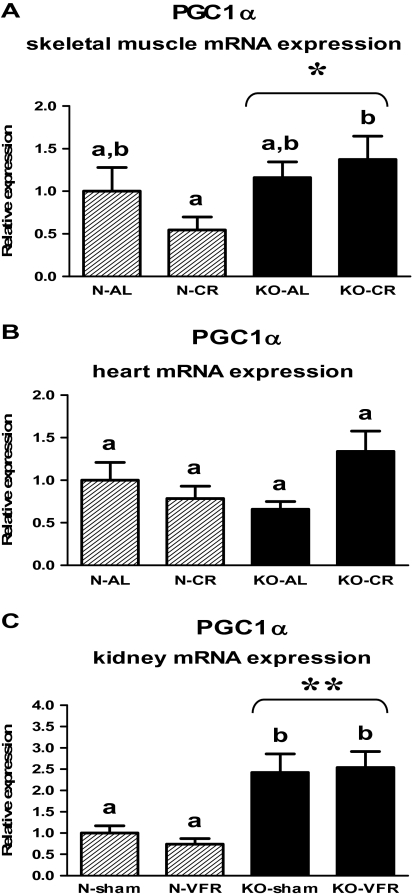
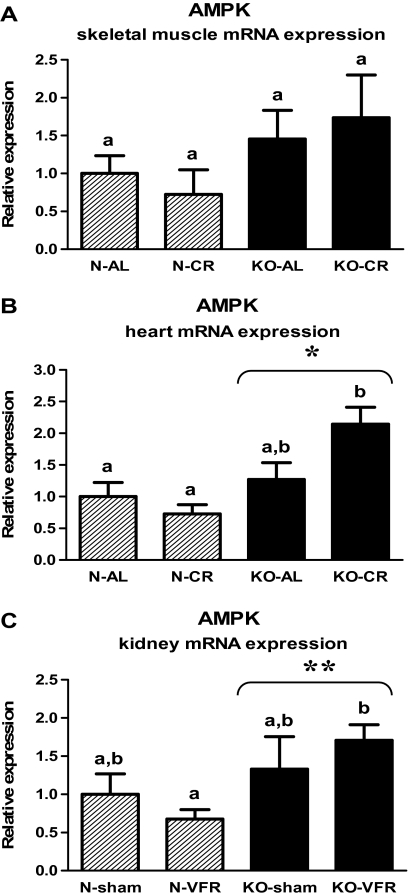
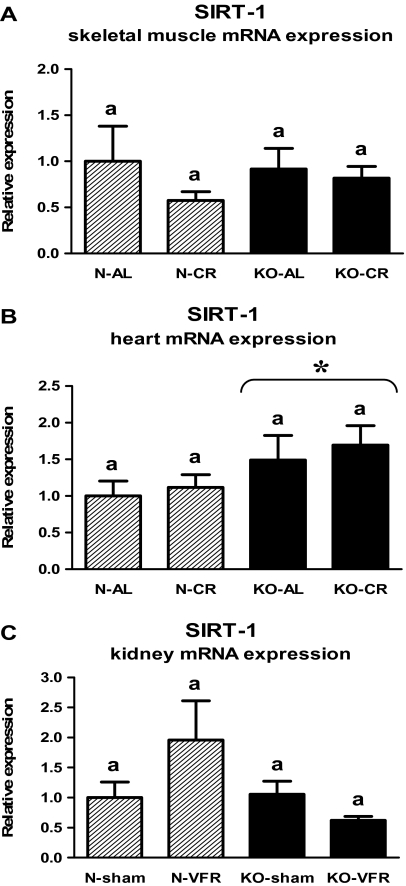
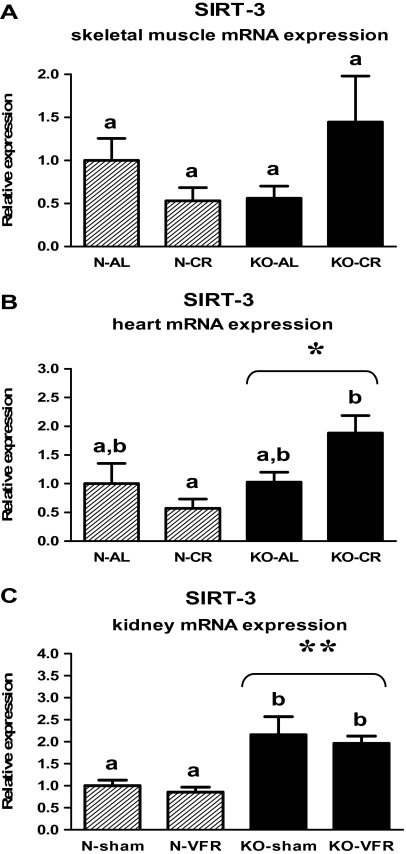
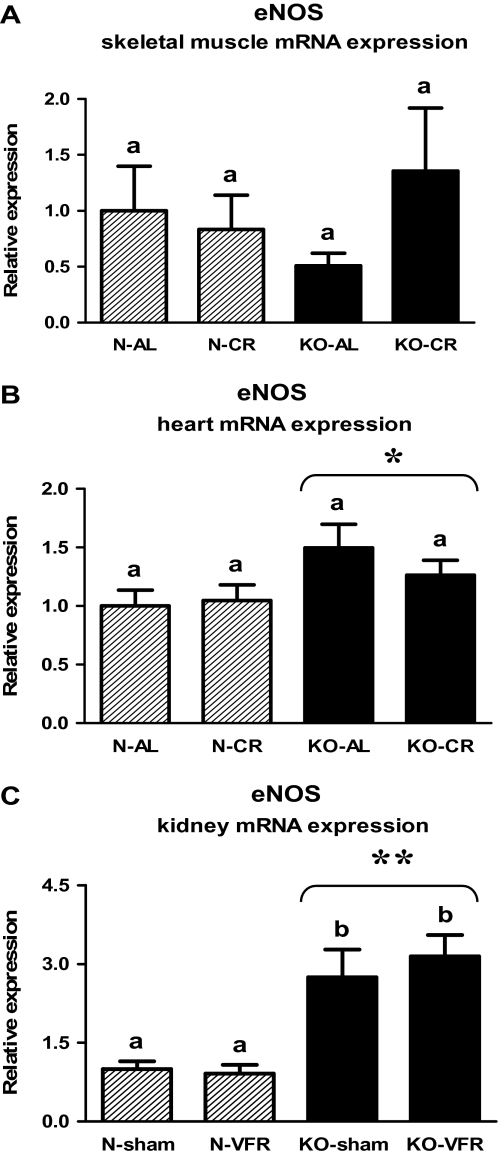
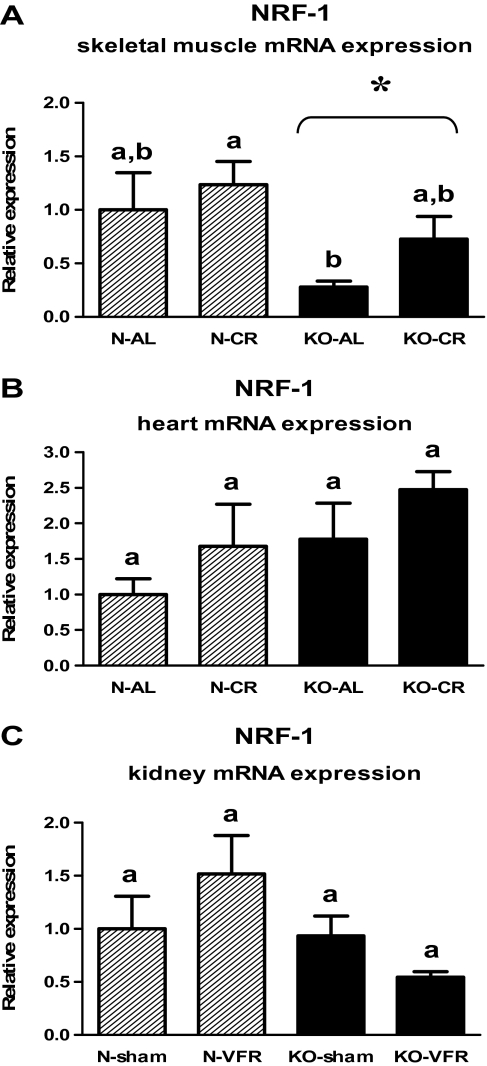
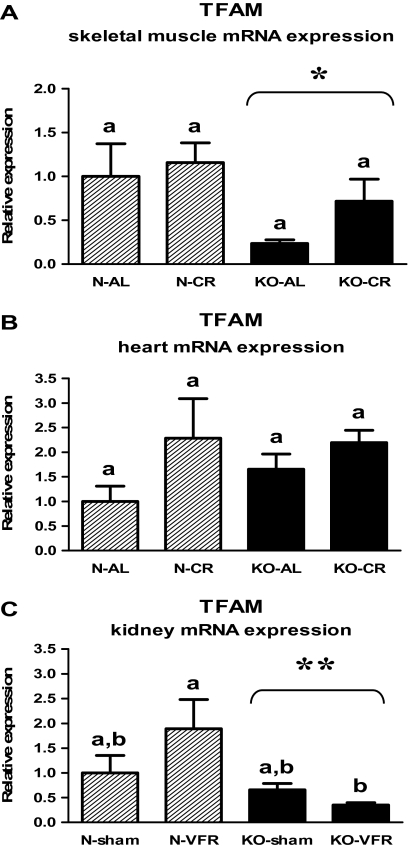
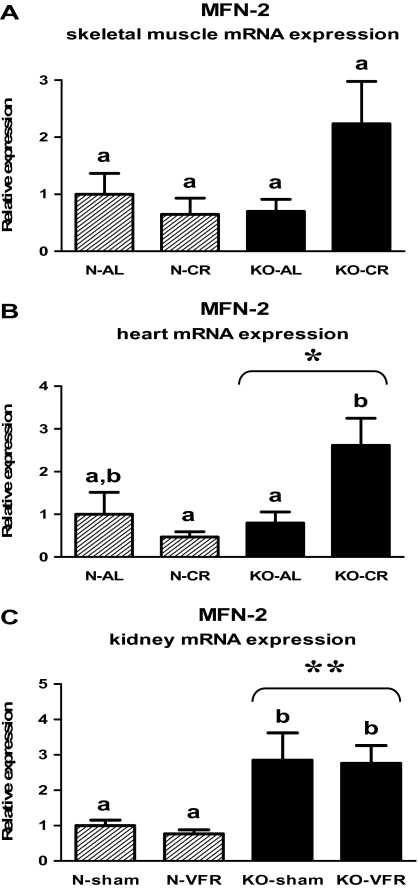
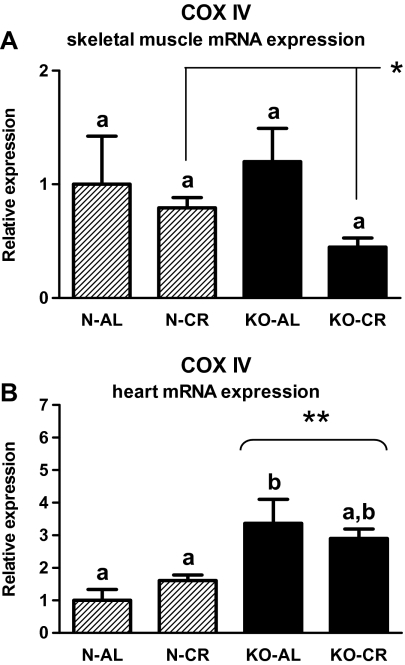
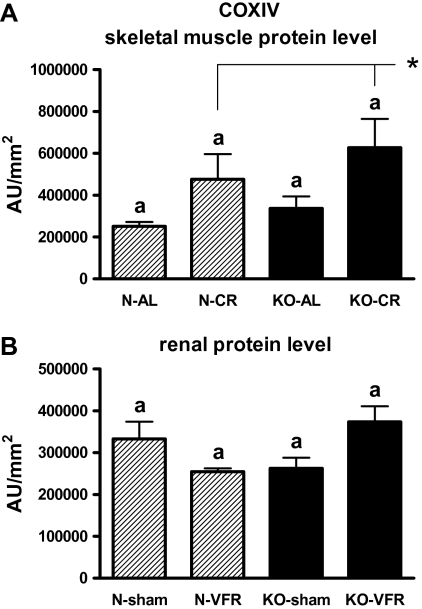
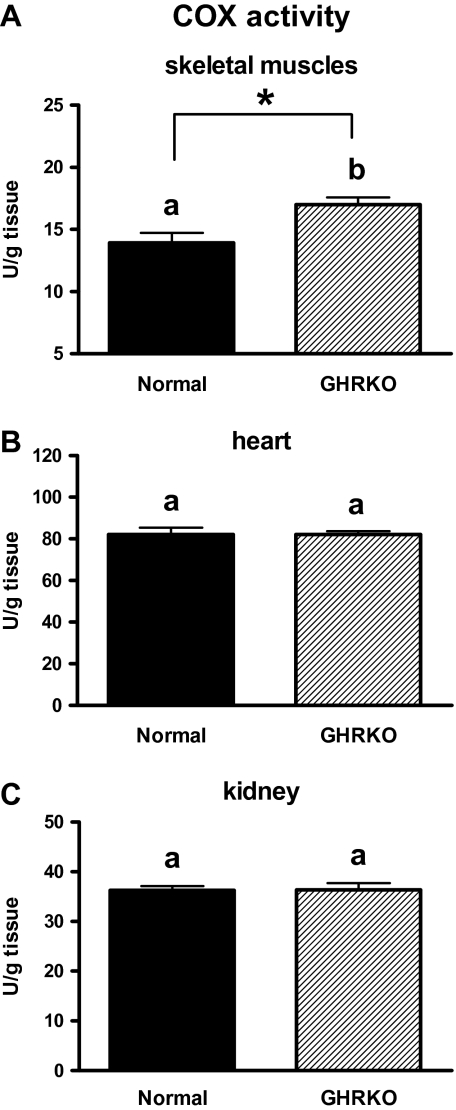
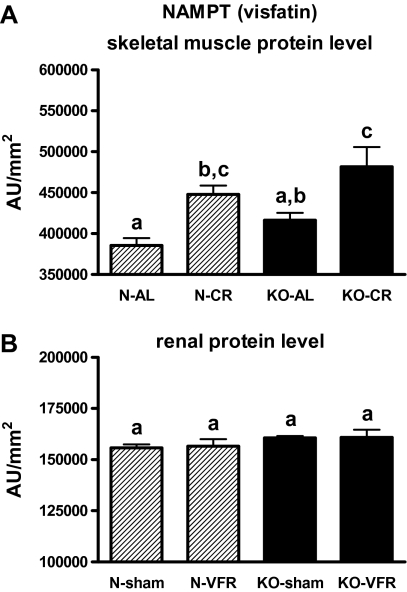
Mitochondrial biogenesis is essential for cell viability. Growth hormone receptor knockout (GHRKO), calorie restriction, and surgical visceral fat removal constitute experimental interventions to delay aging and increase life span. We examined the expression of known regulators of mitochondriogenesis: peroxisome proliferator-activated receptor γ co-activator 1α (PGC-1α), adenosine monophosphate (AMP)-activated protein kinase (AMPK), sirtuin-1 (SIRT-1) and sirtuin-3 (SIRT-3), endothelial nitric oxide synthase (eNOS), nuclear respiratory factor-1, mitochondrial transcription factor A (TFAM), and mitofusin-2 (MFN-2) in the skeletal muscles and hearts of control and calorie-restricted female GHRKO mice and in the kidneys of male GHRKOs after visceral fat removal or sham surgery. Expression of PGC-1α in skeletal muscles, AMPK, SIRT-1, SIRT-3, eNOS, and MFN-2 in the heart and PGC-1α, AMPK, SIRT-3, eNOS, and MFN-2 in kidneys was increased in GHRKO mice but was not affected by calorie restriction or visceral fat removal. GHRKO mice have increased expression of key regulators of mitochondriogenesis, which is not improved further by calorie restriction or visceral fat removal.
Figures
References
-
- Kopchick JJ, Laron Z. Is the Laron mouse an accurate model of Laron syndrome? Mol Genet Metab. 1999;68:232–236. - PubMed
-
- Coschigano KT, Clemmons D, Bellush LL, Kopchick JJ. Assessment of growth parameters and life span of GHR/BP gene disrupted mice. Endocrinology. 2000;141:2608–2613. - PubMed
-
- Bartke A, Chandrashekar V, Bailey B, Zaczek D, Turyn D. Consequences of growth hormone (GH) overexpression and GH resistance. Neuropeptides. 2002;36:201–208. - PubMed
-
- Coschigano KT, Holland AN, Riders ME, List EO, Flyvbjerg A, Kopchick JJ. Deletion, but not antagonism, of the mouse growth hormone receptor results in severely decreased body weights, insulin, and insulin-like growth factor I levels and increased lifespan. Endocrinology. 2003;144:3799–3810. - PubMed
