


Simultaneous measurement of glucose transport and utilization in the human brain
- PMID: 21791622
- PMCID: PMC3213999
- DOI: 10.1152/ajpendo.00110.2011
Simultaneous measurement of glucose transport and utilization in the human brain
Abstract
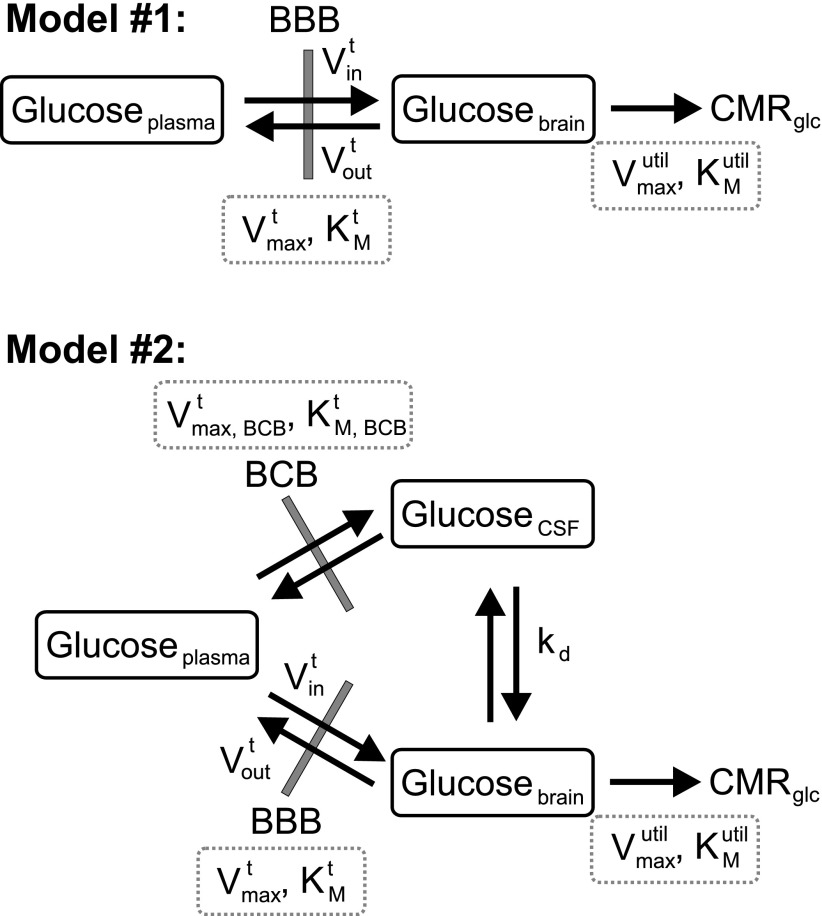
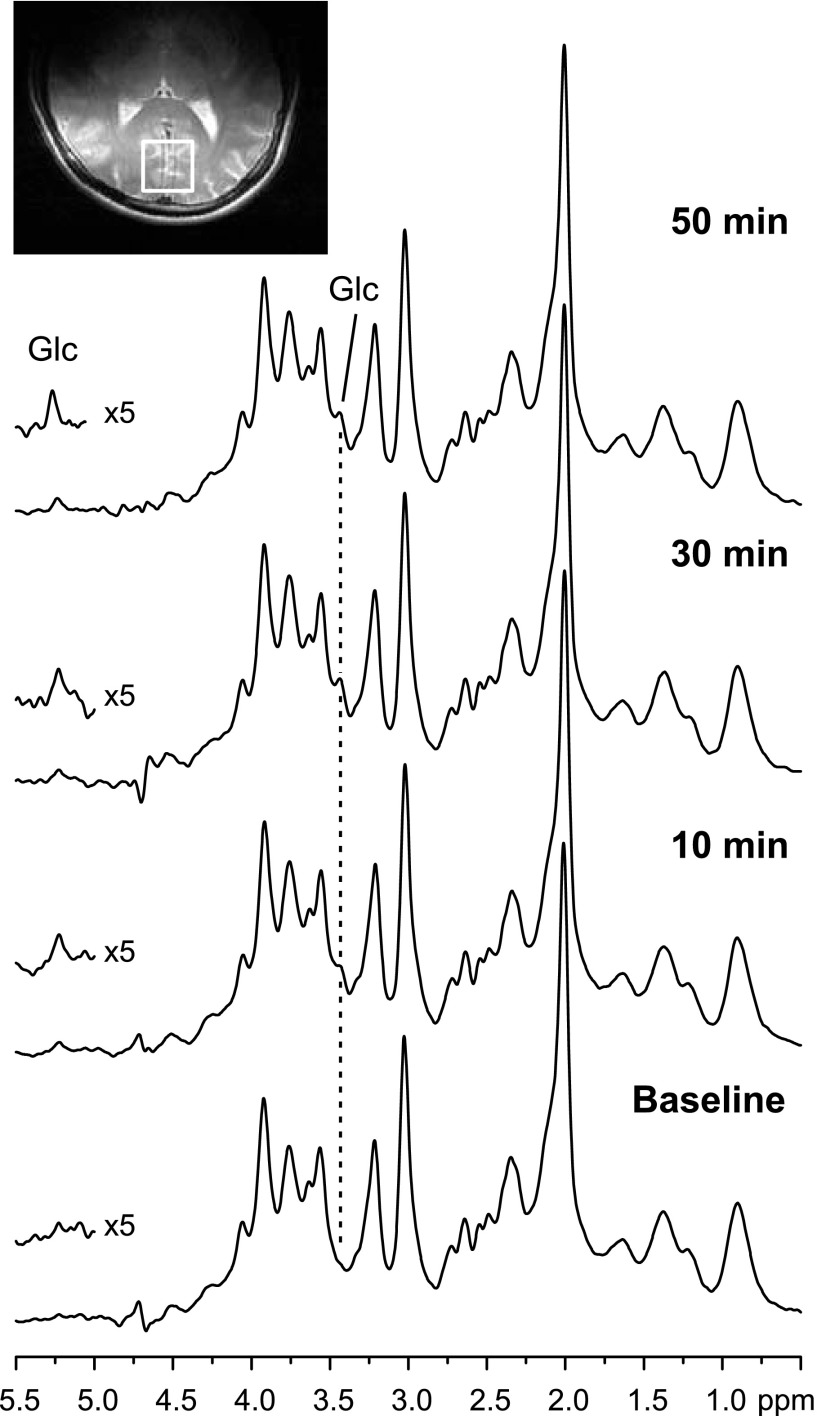
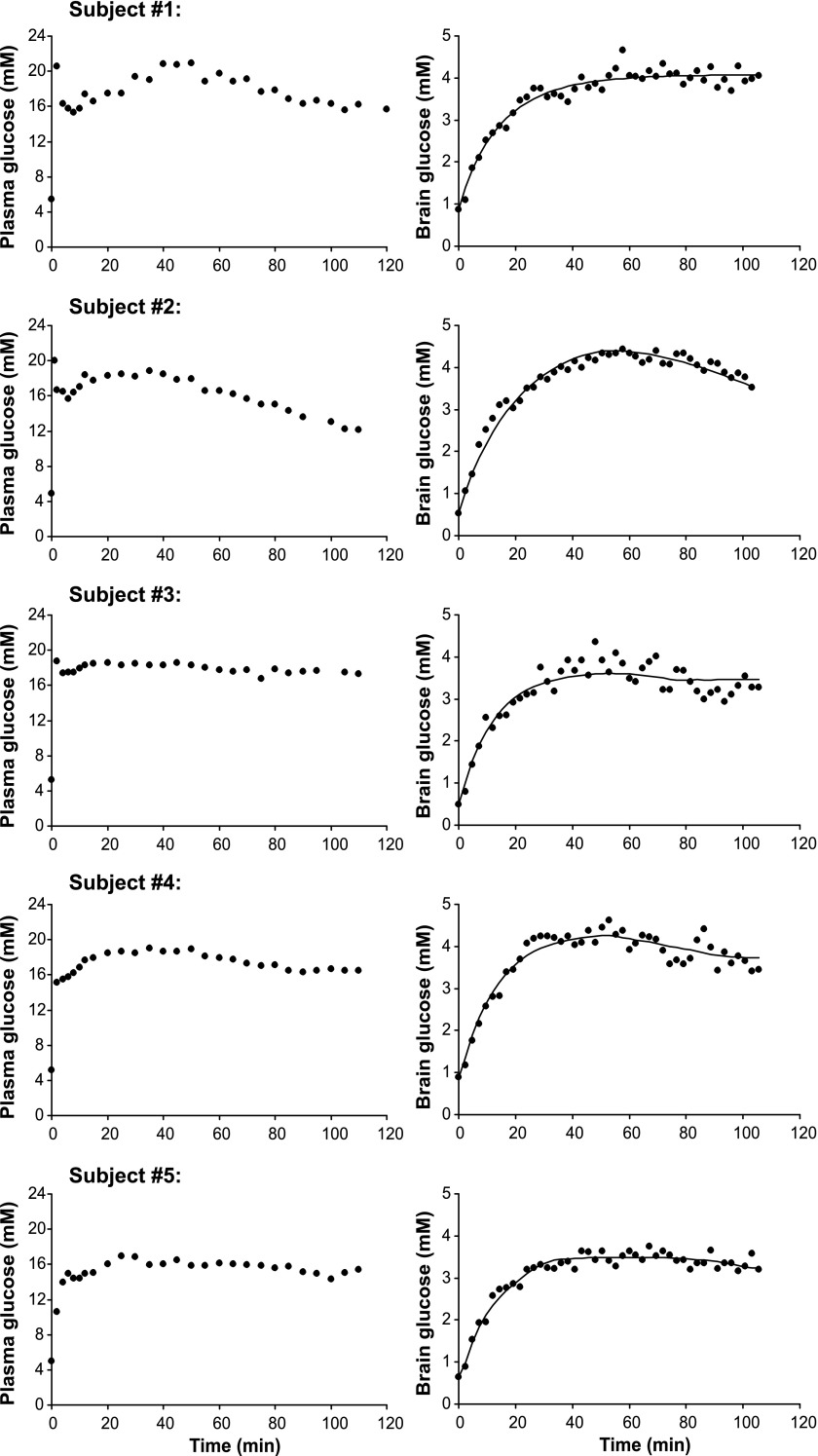
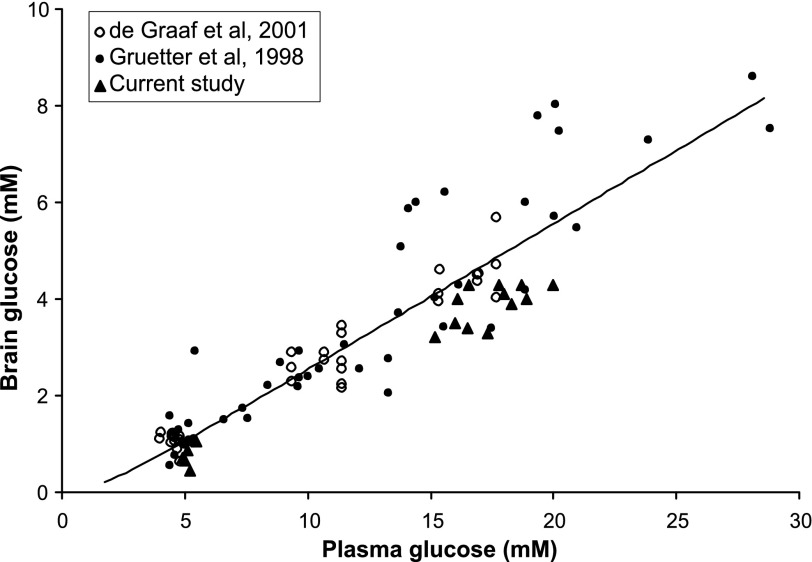
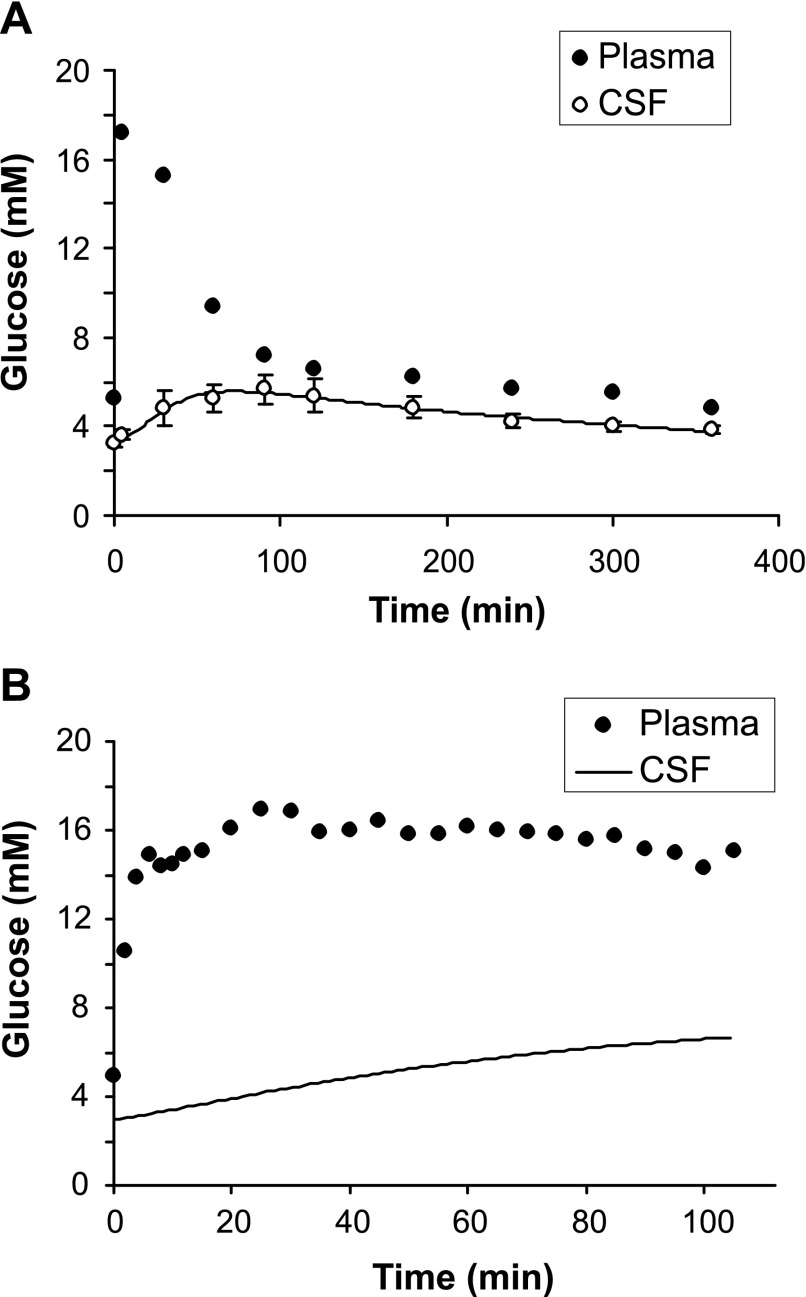
Glucose is the primary fuel for brain function, and determining the kinetics of cerebral glucose transport and utilization is critical for quantifying cerebral energy metabolism. The kinetic parameters of cerebral glucose transport, K(M)(t) and V(max)(t), in humans have so far been obtained by measuring steady-state brain glucose levels by proton ((1)H) NMR as a function of plasma glucose levels and fitting steady-state models to these data. Extraction of the kinetic parameters for cerebral glucose transport necessitated assuming a constant cerebral metabolic rate of glucose (CMR(glc)) obtained from other tracer studies, such as (13)C NMR. Here we present new methodology to simultaneously obtain kinetic parameters for glucose transport and utilization in the human brain by fitting both dynamic and steady-state (1)H NMR data with a reversible, non-steady-state Michaelis-Menten model. Dynamic data were obtained by measuring brain and plasma glucose time courses during glucose infusions to raise and maintain plasma concentration at ∼17 mmol/l for ∼2 h in five healthy volunteers. Steady-state brain vs. plasma glucose concentrations were taken from literature and the steady-state portions of data from the five volunteers. In addition to providing simultaneous measurements of glucose transport and utilization and obviating assumptions for constant CMR(glc), this methodology does not necessitate infusions of expensive or radioactive tracers. Using this new methodology, we found that the maximum transport capacity for glucose through the blood-brain barrier was nearly twofold higher than maximum cerebral glucose utilization. The glucose transport and utilization parameters were consistent with previously published values for human brain.
Figures
References
-
- Adriany G, Gruetter R. A half-volume coil for efficient proton decoupling in humans at 4 tesla. J Magn Reson 125: 178–184, 1997 - PubMed
-
- Barros LF, Bittner CX, Loaiza A, Porras OH. A quantitative overview of glucose dynamics in the gliovascular unit. Glia 55: 1222–1237, 2007 - PubMed
-
- Choi IY, Gruetter R. In vivo 13C NMR assessment of brain glycogen concentration and turnover in the awake rat. Neurochem Int 43: 317–322, 2003 - PubMed
-
- Choi IY, Lei H, Gruetter R. Effect of deep pentobarbital anesthesia on neurotransmitter metabolism in vivo: on the correlation of total glucose consumption with glutamatergic action. J Cereb Blood Flow Metab 22: 1343–1351, 2002 - PubMed
-
- Cunningham VJ, Hargreaves RJ, Pelling D, Moorhouse SR. Regional blood-brain glucose transfer in the rat: a novel double-membrane kinetic analysis. J Cereb Blood Flow Metab 6: 305–314, 1986 - PubMed
Publication types
MeSH terms
Substances
Grants and funding
LinkOut - more resources
Full Text Sources
