


Effects of a randomized contingency management intervention on opiate abstinence and retention in methadone maintenance treatment in China
- PMID: 21793958
- PMCID: PMC3174353
- DOI: 10.1111/j.1360-0443.2011.03490.x
Effects of a randomized contingency management intervention on opiate abstinence and retention in methadone maintenance treatment in China
Abstract
Aims: Methadone maintenance treatment has been made available in China in response to the rapid spread of human immunodeficiency virus (HIV), but high rates of dropout and relapse are problematic. The aim of this study was to apply and test if a contingency management (or motivational incentives) intervention can improve treatment retention and reduce drug use.
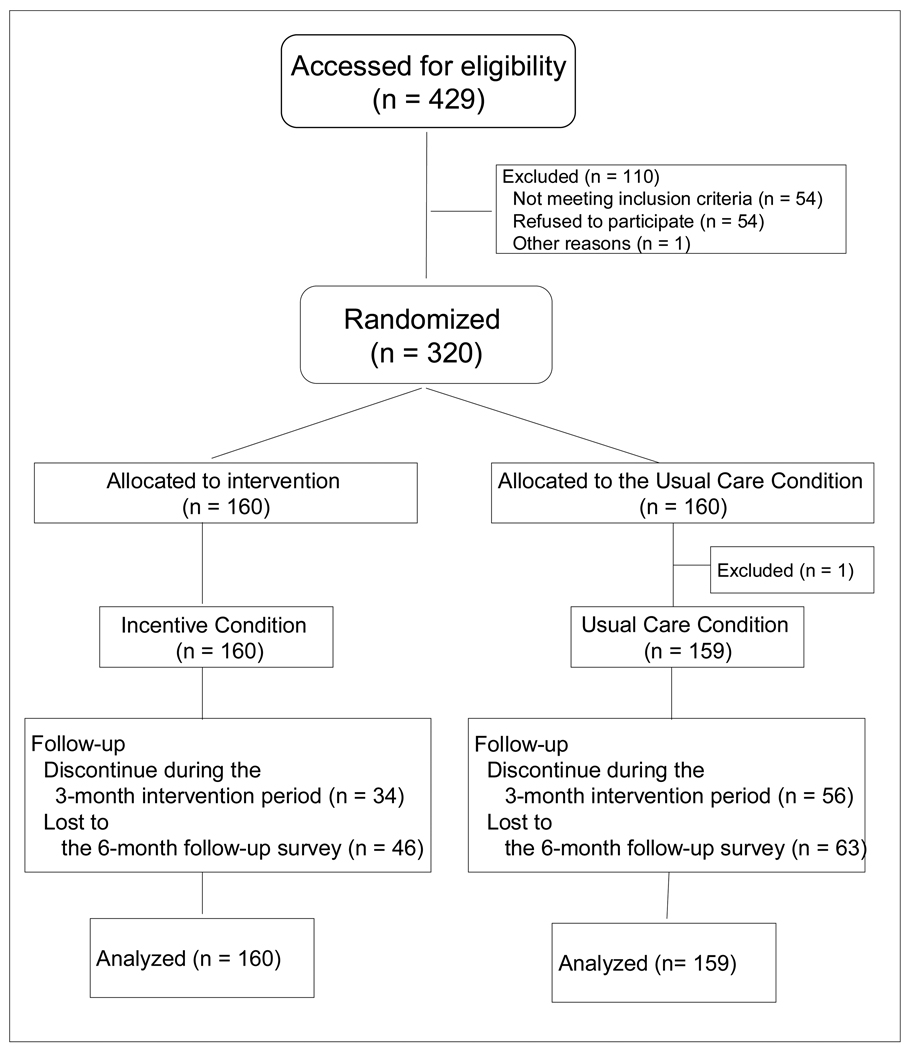
Design: Random assignment to usual care with (n = 160) or without (n = 159) incentives during a 12-week trial. Incentives participants earned draws for a chance to win prizes on two separate tracks targeting opiate-negative urine sample or consecutive attendance; the number of draws increased with continuous abstinence or attendance.
Setting: Community-based methadone maintenance clinics in Shanghai and Kunming.
Participants: The sample was 23.8% female, mean age was 38, mean years of drug use was 9.4 and 57.8% had injected drugs in the past 30 days.
Measurements: Treatment retention and negative drug urine.
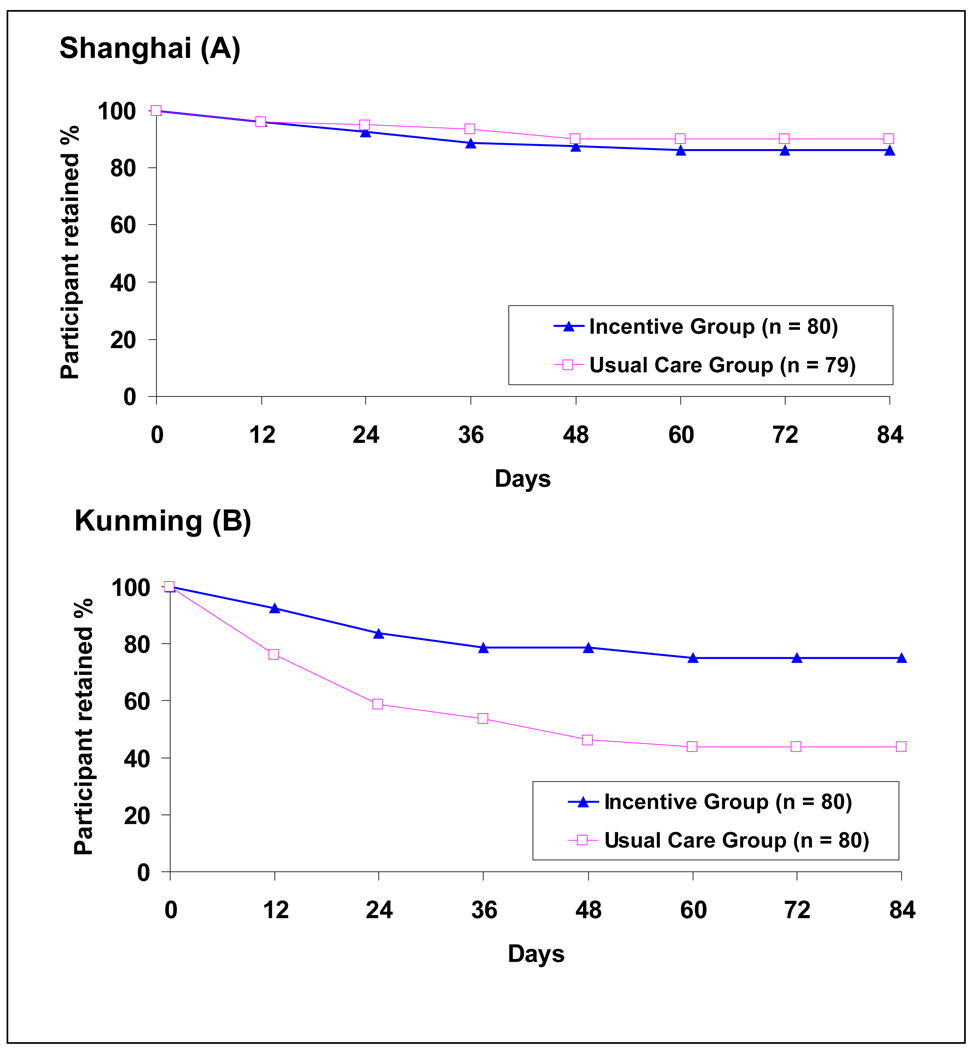
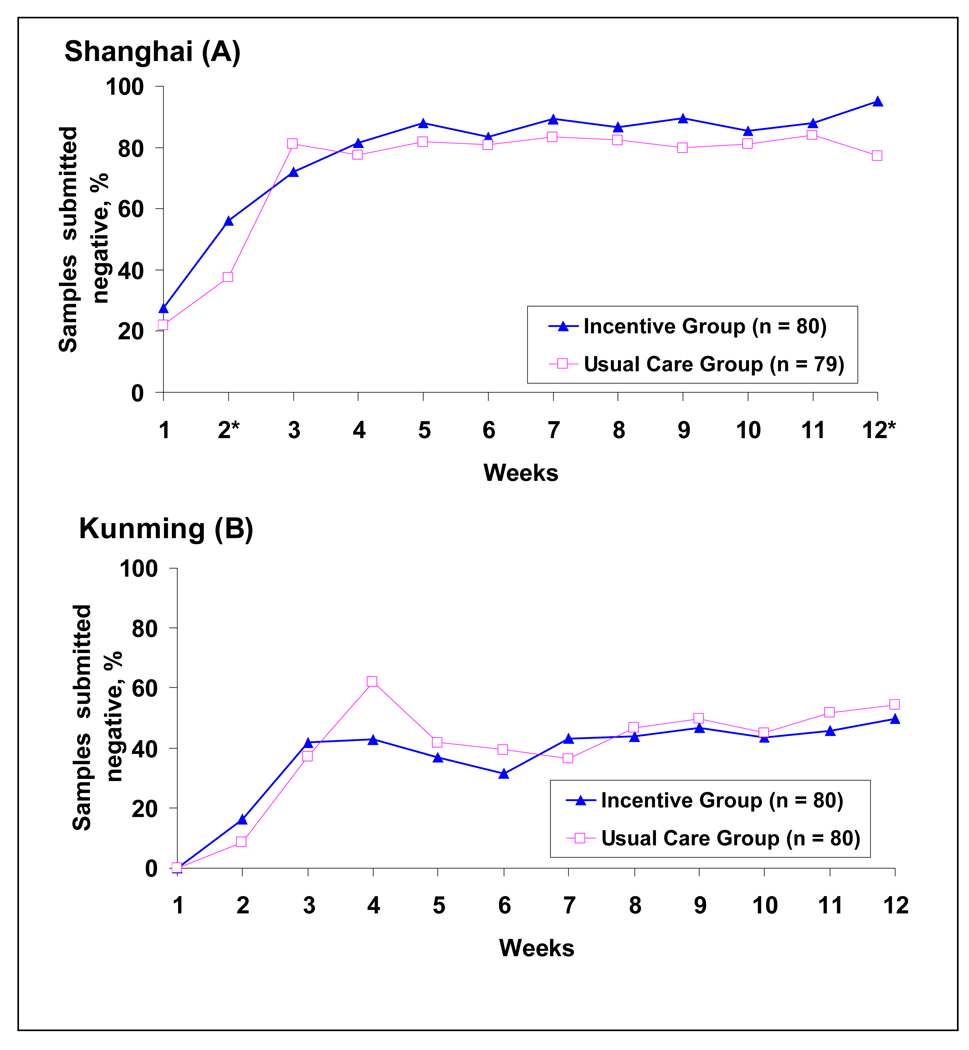
Findings: Relative to the treatment-as-usual (control) group, better retention was observed among the incentive group in Kunming (75% versus 44%), but no difference was found in Shanghai (90% versus 86%). Submission of negative urine samples was more common among the incentive group than the usual care (74% versus 68% in Shanghai, 27% versus 18% in Kunming), as was the longest duration of sustained abstinence (7.7 weeks versus 6.5 in Shanghai, 2.5 versus 1.6 in Kunming). The average total prize amount was 371 Yuan (or $55) per participant (527 for Shanghai versus 216 in Kunming).
Conclusions: Contingency management improves treatment retention and drug abstinence in methadone maintenance treatment clinics in China, although there can be considerable site differences in magnitude of effects.
Published 2011. This article is a U.S. Government work and is in the public domain in the USA.
Figures
References
-
- Sullivan SG, Wu Z. Rapid scale up of harm reduction in China. Int J Drug Policy. 2007;18:118–128. - PubMed
-
- China National Narcotics Control Commission (NNCC) Beijing, China: Office of NNCC; 2010. Annual National Narcotic Control Report 2009.
-
- UNAIDS. Geneva: Joint United Nations Programme on HIV/AIDS; 2007. Reducing HIV Stigma and Discrimination: A Critical Part of National AIDS Programmes.
-
- China National Narcotics Control Commission (NNCC) Beijing, China: Office of NNCC; 2009. Report of the International Narcotics Control Board for 2009.
Publication types
MeSH terms
Substances
Grants and funding
LinkOut - more resources
Full Text Sources
Medical
Miscellaneous
