


Temporal stability in the genetic structure of Sarcoptes scabiei under the host-taxon law: empirical evidences from wildlife-derived Sarcoptes mite in Asturias, Spain
- PMID: 21794141
- PMCID: PMC3160406
- DOI: 10.1186/1756-3305-4-151
Temporal stability in the genetic structure of Sarcoptes scabiei under the host-taxon law: empirical evidences from wildlife-derived Sarcoptes mite in Asturias, Spain
Abstract
Background: Implicitly, parasite molecular studies assume temporal genetic stability. In this study we tested, for the first time to our knowledge, the extent of changes in genetic diversity and structure of Sarcoptes mite populations from Pyrenean chamois (Rupicapra pyrenaica) in Asturias (Spain), using one multiplex of 9 microsatellite markers and Sarcoptes samples from sympatric Pyrenean chamois, red deer (Cervus elaphus), roe deer (Capreolus capreolus) and red fox (Vulpes vulpes).
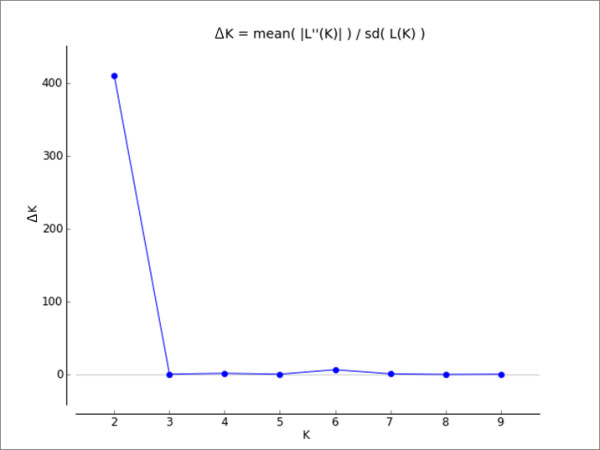
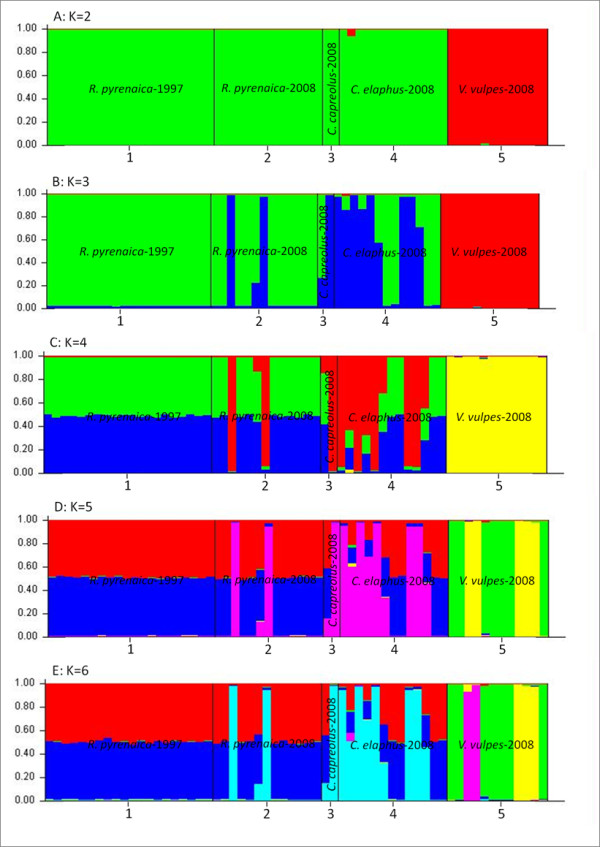
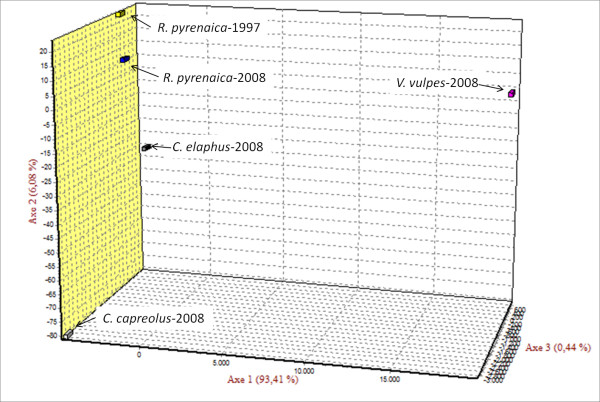
Results: The analysis of an 11-years interval period found little change in the genetic diversity (allelic diversity, and observed and expected heterozygosity). The temporal stability in the genetic diversity was confirmed by population structure analysis, which was not significantly variable over time. Population structure analysis revealed temporal stability in the genetic diversity of Sarcoptes mite under the host-taxon law (herbivore derived- and carnivore derived-Sarcoptes mite) among the sympatric wild animals from Asturias.
Conclusions: The confirmation of parasite temporal genetic stability is of vital interest to allow generalizations to be made, which have further implications regarding the genetic structure, epidemiology and monitoring protocols of the ubiquitous Sarcoptes mite. This could eventually be applied to other parasite species.
© 2011 Alasaad et al; licensee BioMed Central Ltd.
Figures
References
-
- Alasaad S, Walton S, Rossi L, Bornstein S, Abu-Madi M, Soriguer RC, Fitzgerald S, Zhu XQ, Zimmermann W, Ugbomoiko US, Pei KJC, Heukelbach J. Sarcoptes-World Molecular Network (Sarcoptes-WMN): integrating research on scabies. Int J Infect Dis. 2011;15:294–297. doi: 10.1016/j.ijid.2011.01.012. - DOI - PubMed
-
- Walton SF, Holt DC, Currie BJ, Kemp DJ. Scabies: New future for a neglected disease. Adv Parasitol. 2004;57:309–376. - PubMed
Publication types
MeSH terms
LinkOut - more resources
Full Text Sources
Medical
