


Epidemiology of restless legs syndrome: a synthesis of the literature
- PMID: 21795081
- PMCID: PMC3204316
- DOI: 10.1016/j.smrv.2011.05.002
Epidemiology of restless legs syndrome: a synthesis of the literature
Abstract
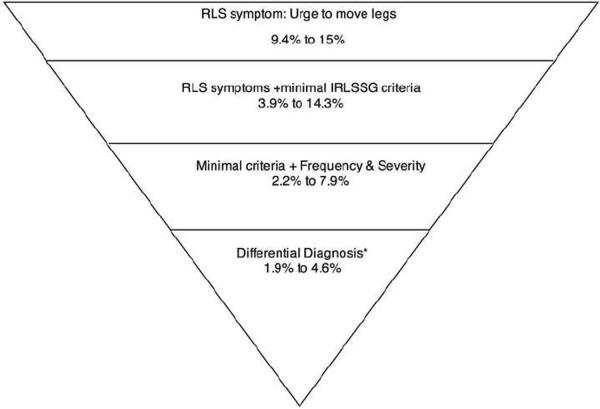
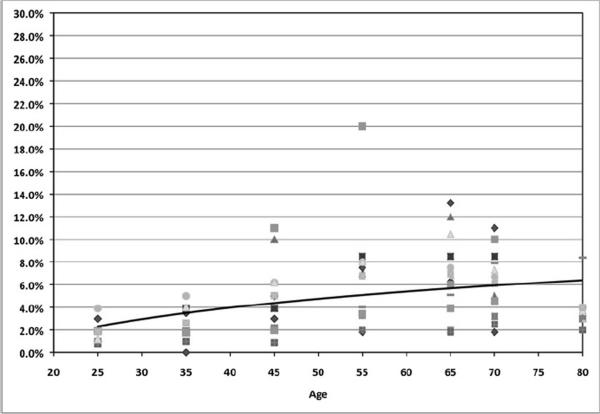
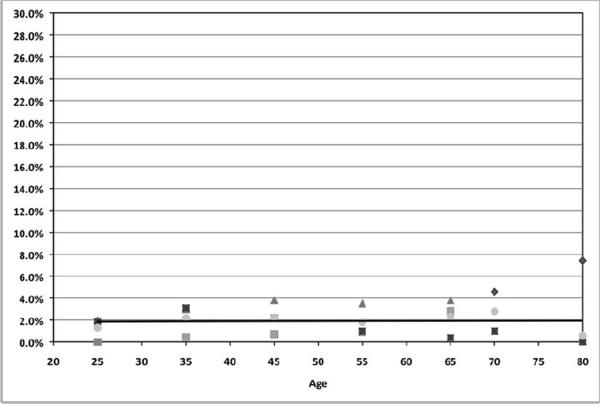
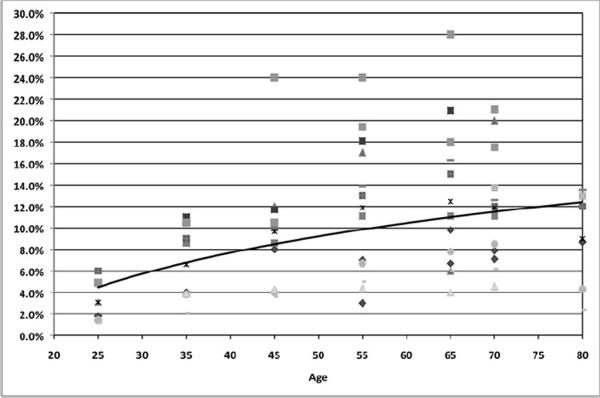
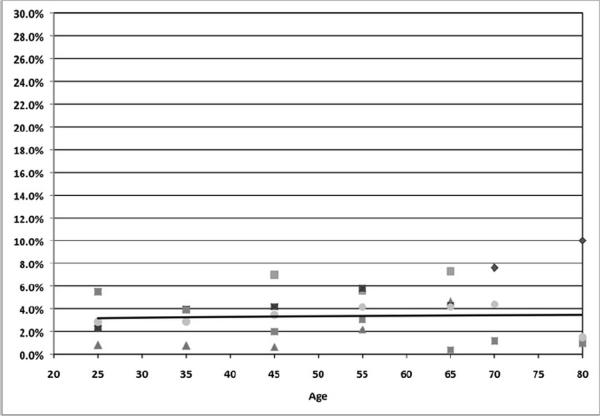
Restless legs syndrome (RLS) has gained considerable attention in the recent years: nearly 50 community-based studies have been published in the last decade around the world. The development of strict diagnostic criteria in 1995 and their revision in 2003 helped to stimulate research interest on this syndrome. In community-based surveys, RLS has been studied as: 1) a symptom only, 2) a set of symptoms meeting minimal diagnostic criteria of the international restless legs syndrome study group (IRLSSG), 3) meeting minimal criteria accompanied with a specific frequency and/or severity, and 4) a differential diagnosis. In the first case, prevalence estimates in the general adult population ranged from 9.4% to 15%. In the second case, prevalence ranged from 3.9% to 14.3%. When frequency/severity is added, prevalence ranged from 2.2% to 7.9% and when differential diagnosis is applied prevalence estimates are between 1.9% and 4.6%. In all instances, RLS prevalence is higher in women than in men. It also increases with age in European and North American countries but not in Asian countries. Symptoms of anxiety and depression have been consistently associated with RLS. Overall, individuals with RLS have a poorer health than non-RLS but evidence for specific disease associations is mixed. Future epidemiological studies should focus on systematically adding frequency and severity in the definition of the syndrome in order to minimize the inclusion of cases mimicking RLS.
Copyright © 2011 Elsevier Ltd. All rights reserved.
Figures
References
-
- Willis T. The London Practice of Physic. Bassett and Crooke; London: 1685.
-
- Wittmaack T. Lehrbuch der Nervenkrankheiten, Ted 1: Pathologie and Therapie der Sensiblen Neurosen. E. Schafer; Leipzig: 1861. Pathologic and therapie des sensibilitats-neurosen.
-
- Ekbom KA. Restless legs: a clinical study. Acta Med Scand. 1945;158(Suppl.):1–123.
-
- Walters AS. Toward a better definition of the restless legs syndrome. The International Restless Legs Syndrome Study Group. Mov Disord. 1995;10:634–642. - PubMed
-
- Allen RP, Picchietti D, Hening WA, Trenkwalder C, Walters AS, Montplaisi J, Restless Legs Syndrome Diagnosis and Epidemiology workshop at the National Institutes of Health. International Restless Legs Syndrome Study Group Restless legs syndrome: diagnostic criteria, special considerations, and epidemiology. A report from the restless legs syndrome diagnosis and epidemiology workshop at the National Institutes of Health. Sleep Med. 2003;4:101–119. - PubMed
Publication types
MeSH terms
Grants and funding
LinkOut - more resources
Full Text Sources
Other Literature Sources
Medical
