


Intermittent hypoxia exacerbates metabolic effects of diet-induced obesity
- PMID: 21799478
- PMCID: PMC4461029
- DOI: 10.1038/oby.2011.240
Intermittent hypoxia exacerbates metabolic effects of diet-induced obesity
Abstract
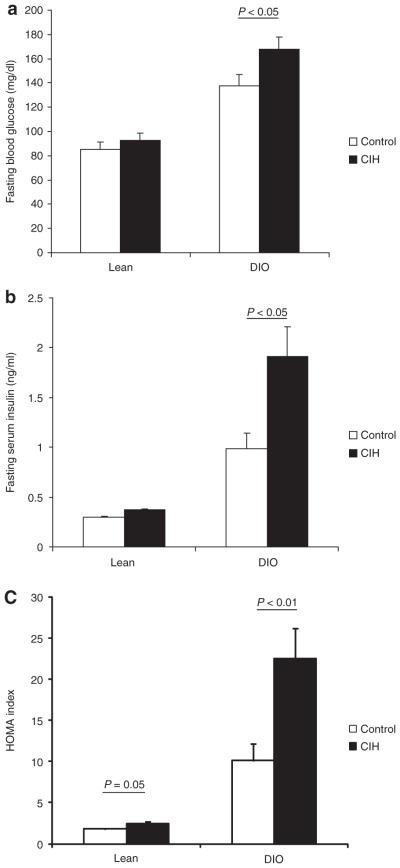
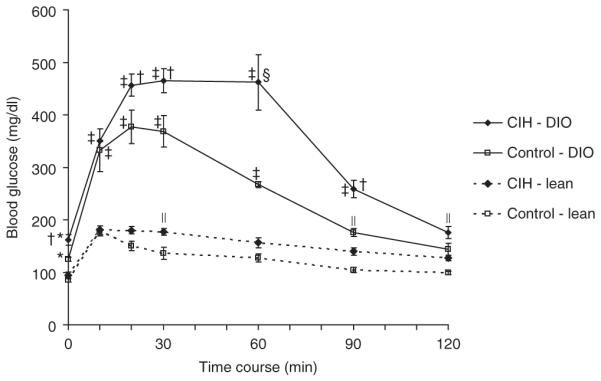
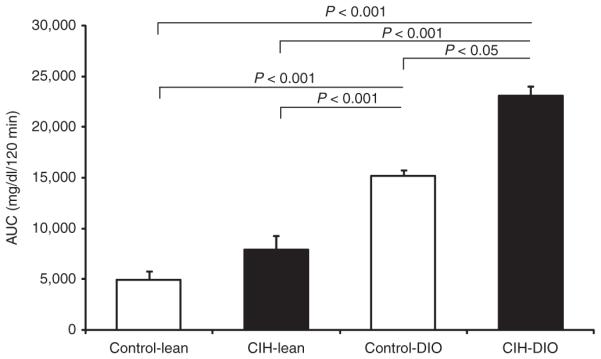
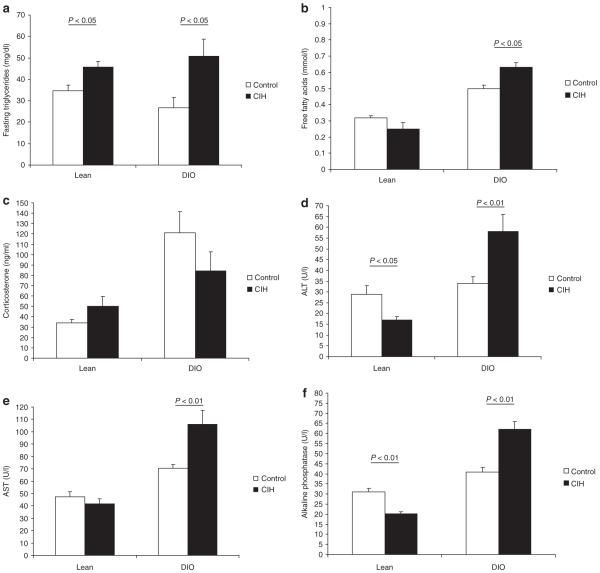
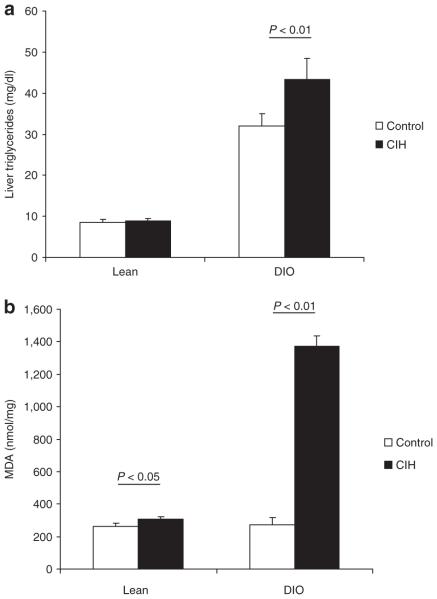
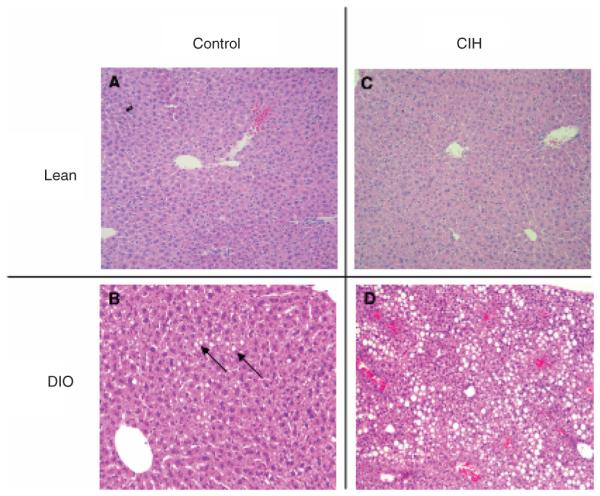
Obesity causes insulin resistance (IR) and nonalcoholic fatty liver disease (NAFLD), but the relative contribution of sleep apnea is debatable. The main aim of this study is to evaluate the effects of chronic intermittent hypoxia (CIH), a hallmark of sleep apnea, on IR and NAFLD in lean mice and mice with diet-induced obesity (DIO). Mice (C57BL/6J), 6-8 weeks of age were fed a high fat (n = 18) or regular (n = 16) diet for 12 weeks and then exposed to CIH or control conditions (room air) for 4 weeks. At the end of the exposure, fasting (5 h) blood glucose, insulin, homeostasis model assessment (HOMA) index, liver enzymes, and intraperitoneal glucose tolerance test (1 g/kg) were measured. In DIO mice, body weight remained stable during CIH and did not differ from control conditions. Lean mice under CIH were significantly lighter than control mice by day 28 (P = 0.002). Compared to lean mice, DIO mice had higher fasting levels of blood glucose, plasma insulin, the HOMA index, and had glucose intolerance and hepatic steatosis at baseline. In lean mice, CIH slightly increased HOMA index (from 1.79 ± 0.13 in control to 2.41 ± 0.26 in CIH; P = 0.05), whereas glucose tolerance was not affected. In contrast, in DIO mice, CIH doubled HOMA index (from 10.1 ± 2.1 in control to 22.5 ± 3.6 in CIH; P < 0.01), and induced severe glucose intolerance. In DIO mice, CIH induced NAFLD, inflammation, and oxidative stress, which was not observed in lean mice. In conclusion, CIH exacerbates IR and induces steatohepatitis in DIO mice, suggesting that CIH may account for metabolic dysfunction in obesity.
Figures
References
-
- Flegal KM, Carroll MD, Ogden CL, Curtin LR. Prevalence and trends in obesity among US adults, 1999-2008. JAMA. 2010;303:235–241. - PubMed
-
- Gade W, Schmit J, Collins M, Gade J. Beyond obesity: the diagnosis and pathophysiology of metabolic syndrome. Clin Lab Sci. 2010;23:51–61. quiz 62. - PubMed
-
- Young T, Peppard PE, Gottlieb DJ. Epidemiology of obstructive sleep apnea: a population health perspective. Am J Respir Crit Care Med. 2002;165:1217–1239. - PubMed
-
- Tufik S, Santos-Silva R, Taddei JA, Bittencourt LR. Obstructive sleep apnea syndrome in the Sao Paulo Epidemiologic Sleep Study. Sleep Med. 2010;11:441–446. - PubMed
-
- Lecube A, Sampol G, Lloberes P, et al. Asymptomatic sleep-disordered breathing in premenopausal women awaiting bariatric surgery. Obes Surg. 2010;20:454–461. - PubMed
Publication types
MeSH terms
Substances
Grants and funding
LinkOut - more resources
Full Text Sources
Medical
