


Serotonin Receptor 2A/C Is Involved in Electroacupuncture Inhibition of Pain in an Osteoarthritis Rat Model
- PMID: 21799685
- PMCID: PMC3139987
- DOI: 10.1093/ecam/neq016
Serotonin Receptor 2A/C Is Involved in Electroacupuncture Inhibition of Pain in an Osteoarthritis Rat Model
Abstract
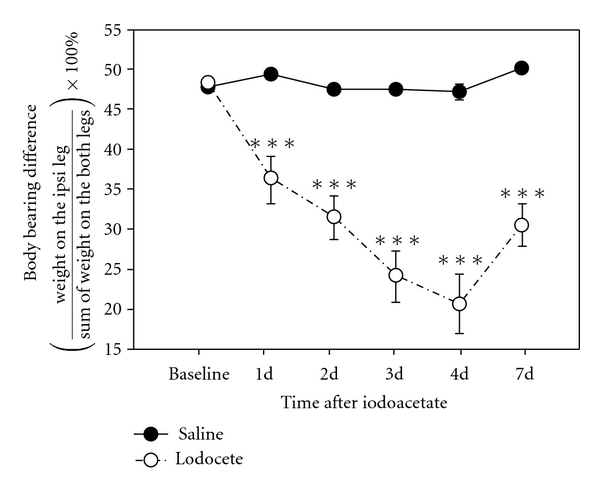
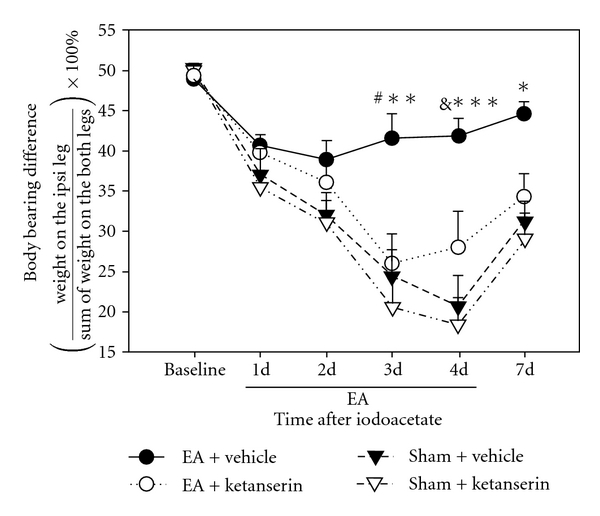
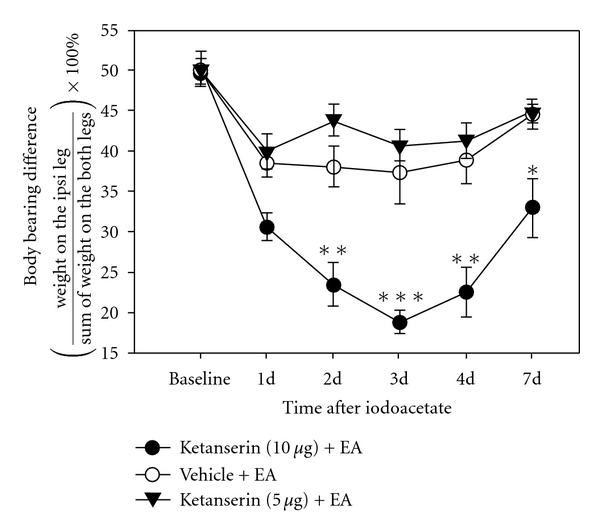
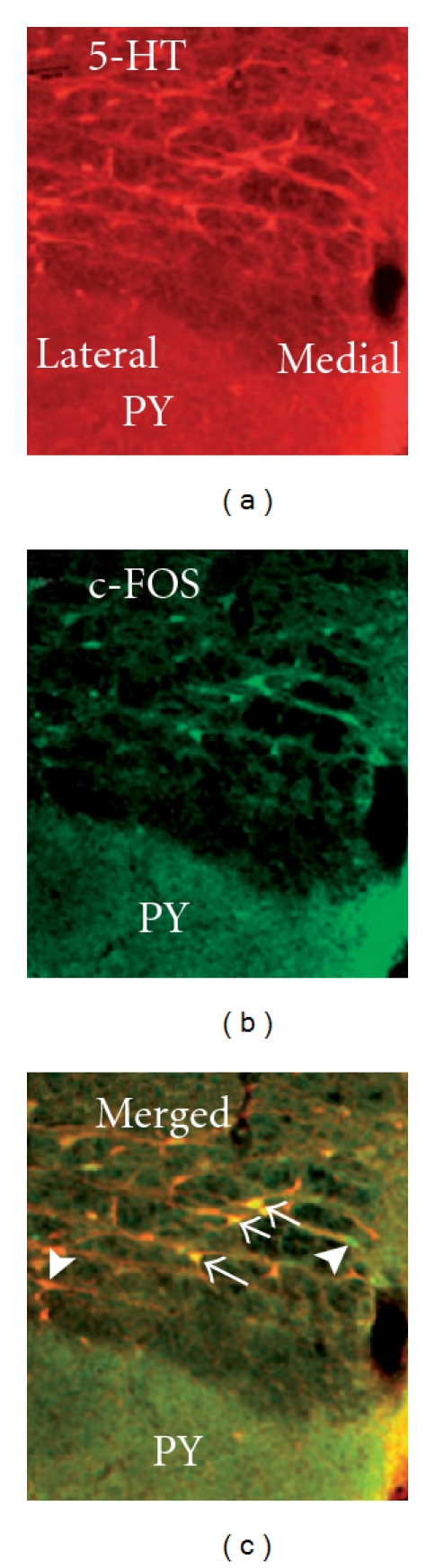
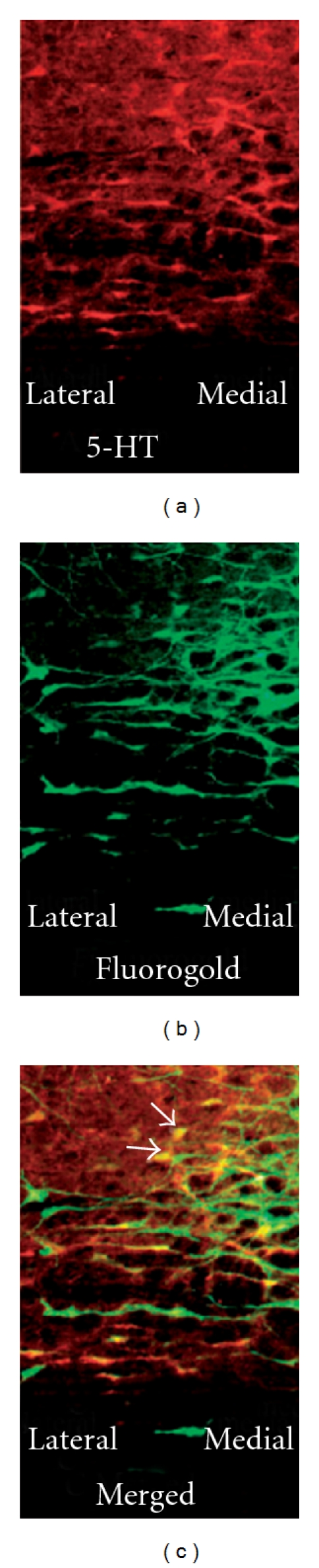
Osteoarthritis currently has no cure. Acupuncture can benefit patients with knee osteoarthritis by providing pain relief, improving joint function and serving as an effective complement to standard care. However, the underlying mechanisms of its effects are still not completely understood. The present study, an investigation of the effectiveness and mechanisms of electroacupuncture (EA) in attenuating osteoarthritis pain in a rat model, is focused on the involvement of 5-hydroxytryptamine 2A/C (5-HT2A/C) receptors, which play an important role in pain modulation at the spinal level. Osteoarthritis was induced under isoflurane anesthesia by a single intraarticular injection of monosodium iodoacetate (3 mg/50 μL/rat) into one hind leg of each rat. EA was given at acupoints GB 30 and ST 36 on days 1-4 after the injection. Vehicle or ketanserin, a 5-HT2A/C receptor antagonist, was given intraperitoneally (1 mg kg(-1)) or intrathecally (5 μg or 10 μg/10 μL), 30 min before each EA treatment. Assessment of weight-bearing difference between injected and uninjected hind legs was done on days 0, 1-4 and 7. Fos /serotonin and serotonin/Fluorogold double labeling were performed to determine EA activation of serotonergic neurons in the nucleus raphe magnus (NRM) that project to spinal cord. The results showed that EA significantly decreases weight-bearing difference compared to sham EA. Ketanserin pretreatment blocked the analgesic effect of EA but did not influence weight bearing in sham EA control rats. EA also activated serotonergic NRM neurons that project to the spinal cord. These data show that EA inhibits osteoarthritis-induced pain by enhancing spinal 5-HT2A/2C receptor activity.
Figures

References
-
- Sarzi-Puttini P, Cimmino MA, Scarpa R, et al. Osteoarthritis: an overview of the disease and its treatment strategies. Seminars in Arthritis and Rheumatism. 2005;35(1):1–10. - PubMed
-
- Green GA. Understanding NSAIDs: from aspirin to COX-2. Clinical Cornerstone. 2001;3(5):50–58. - PubMed
-
- Gutthann SP, Garcia Rodriguez LA, Raiford DS. Individual nonsteroidal antiinflammatory drugs and other risk factors for upper gastrointestinal bleeding and perforation. Epidemiology. 1997;8:18–24. - PubMed
-
- Liu T, Liu C. Acupuncture for treating osteoarthritis of the knee and the hip. Arthritis and Rheumatism. 2006;54(11):3375–3377. - PubMed
LinkOut - more resources
Full Text Sources
