


Frequent alterations of LOH11CR2A, PIG8 and CHEK1 genes at chromosomal 11q24.1-24.2 region in breast carcinoma: clinical and prognostic implications
- PMID: 21803008
- PMCID: PMC5528301
- DOI: 10.1016/j.molonc.2011.06.005
Frequent alterations of LOH11CR2A, PIG8 and CHEK1 genes at chromosomal 11q24.1-24.2 region in breast carcinoma: clinical and prognostic implications
Retraction in
-
RETRACTION: Frequent Alterations of LOH11CR2A, PIG8 and CHEK1 Genes at Chromosomal 11q24.1-24.2 Region in Breast Carcinoma: Clinical and Prognostic Implications.Mol Oncol. 2025 Jan;19(1):260. doi: 10.1002/1878-0261.13774. Epub 2024 Dec 3. Mol Oncol. 2025. PMID: 39627844 Free PMC article.
Abstract
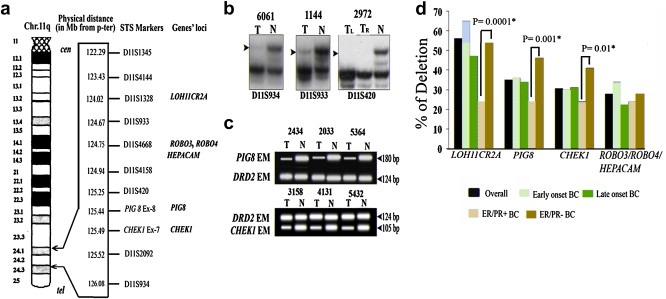
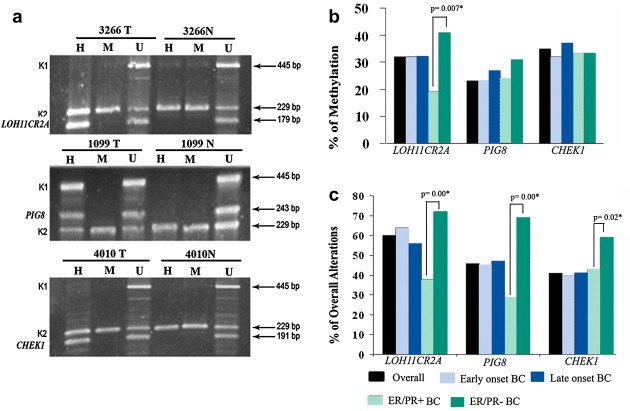
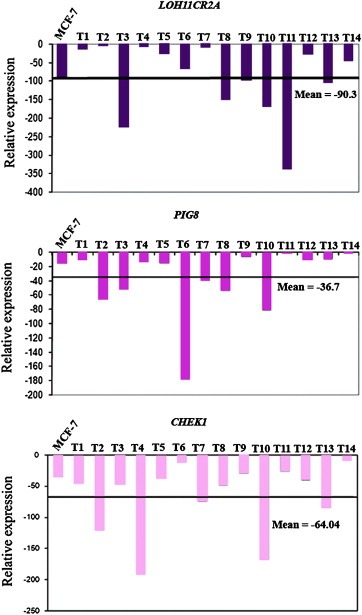
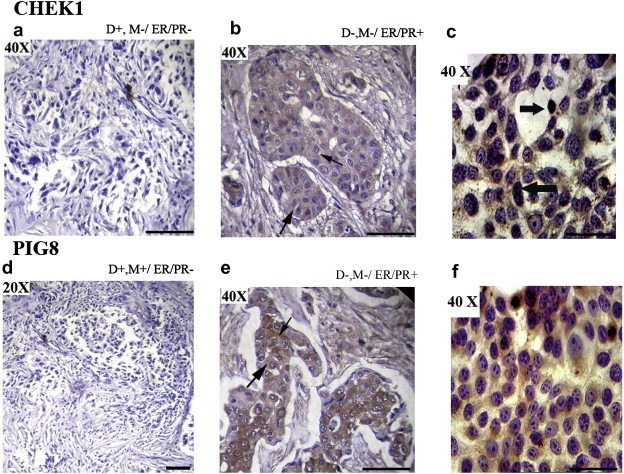
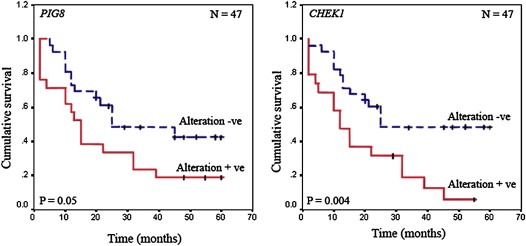
To understand the importance of frequent deletions at chromosome 11q24.1-24.2 region in breast carcinoma, alterations (deletion/methylation) of the candidate genes LOH11CR2A, ROBO3, ROBO4, HEPACAM, PIG8 and CHEK1 located in this region were analyzed in 106 breast carcinoma samples. Among these genes, LOH11CR2A showed highest frequency of deletion (56%), followed by PIG8 (35%), CHEK1 (31%) and ROBO3/ROBO4/HEPACAM loci (28%). Comparable frequency of promoter methylation (26-35%) was observed for LOH11CR2A, CHEK1 and PIG8. Overall alterations (deletion/methylation) of these genes were in the following order: LOH11CR2A (60%) > PIG8 (46%) > CHEK1 (41%) and showed significant association with each other. Breast carcinoma samples that were estrogen/progesterone receptor negative showed significantly high deletion and overall alterations than estrogen/progesterone receptor positive samples for LOH11CR2A, CHEK1 and PIG8. The methylation and overall alteration of LOH11CR2A were significantly associated with tumor stages in breast carcinoma. However, in early/late onset and estrogen/progesterone receptor positive/negative breast carcinoma, the overall alterations of LOH11CR2A, PIG8 and CHEK1 were differentially associated with advanced stages, tumor grade and lymph node metastasis. Alterations of PIG8 and CHEK1 were significantly associated with poor prognosis in patients with early age of onset of the disease indicating significant prognostic importance. Quantitative mRNA expression analysis detected reduced expression of the genes in the order LOH11CR2A > CHEK1 > PIG8. Immunohistochemical analysis showed reduced protein expression of PIG8 and CHEK1 that was concordant with their molecular alterations. Thus, our study suggests that LOH11CR2A, PIG8 and CHEK1 are candidate tumor suppressor genes associated with breast carcinoma and have significant clinical as well as prognostic importance.
Copyright © 2011 Federation of European Biochemical Societies. Published by Elsevier B.V. All rights reserved.
Figures
References
-
- Albain, K.S. , Allred, D.C. , Clark, G.M. , 1994. Breast cancer outcome and predictors of outcome: are there age differentials?. J. Natl. Cancer Inst. Monogr.. 16, 35–42. - PubMed
-
- Allinen, M. , Peri, L. , Kujala, S. , 2002. Analysis of 11q21-24 loss of heterozygosity candidate target genes in breast cancer: indications of TSLC1 promoter hypermethylation. Genes Chromosomes Cancer. 34, 384–389. - PubMed
-
- Bartek, J. , Lukas, J. , 2003. Chk1 and Chk2 kinases in checkpoint control and cancer. Cancer Cell. 3, 421–429. - PubMed
-
- Bertoni, F. , Codegoni, A.M. , Furlan, D. , 1999. CHK1 frameshift mutations in genetically unstable colorectal and endometrial cancers. Gene, Chromosome & Cancer. 26, 176–180. - PubMed
-
- Chunder, N. , Mandal, S. , Roy, A. , 2004. Analysis of different deleted regions in chromosome 11 and their interrelations in early- and late-onset breast tumors: association with cyclin D1 amplification and survival. Diagn. Mol. Pathol.. 13, 172–182. - PubMed
Publication types
MeSH terms
Substances
LinkOut - more resources
Full Text Sources
Medical
Research Materials
Miscellaneous
